
An LED lighting shop starts with choosing the job it does: decorative light for the home, light for the garden and grounds, or working light for sites and contractors. That choice determines the products, the average basket and how many technical questions the seller will have to answer. Below is how to settle on a format, build a starting range and plan purchasing around strong seasonality.
In brief
- There are three directions: decorative light (strips, candles), garden light (solar lights) and technical light (floodlights, street lights). One or two are enough at launch.
- Buyers care about the parameters: brightness, colour temperature, IP rating, power source. You need to know them and state them.
- Lighting products are electrical goods: CE marking, RoHS, and manufacturer's documents before payment.
- Seasonality is marked: garden in spring and summer, decorative light and candles in autumn and winter.
- Lead time is an estimated 20–60 days, so seasonal batches are ordered 2–3 months ahead.
The customer and the format
Private buyers come for atmosphere and convenience: backlighting a television or a shelf, decorating a terrace, lighting a path without laying a cable. They choose with their eyes, so a physical outlet needs a sample switched on, and an online shop needs photos in a room and video of the light. Such products suit marketplaces like Amazon, eBay or Etsy well: they are light, compact and understood without advice.
The second buyer is a homeowner, a tradesperson or a small contractor. They need a floodlight over the gate, a light for the car park, lighting in a storeroom. They ask about wattage, luminous flux, IP rating and voltage, compare specifications and take several units at once. An online shop with detailed listings and the option of an invoice works for them.
The third is organisations: property managers, sports venues, installation firms. These are project sales with long approval and delivery to the site; no stock is held for them. A new shop is wise to start with the first two groups and develop the project side once it has experience and installer partners.
The starting range: core items and trial items
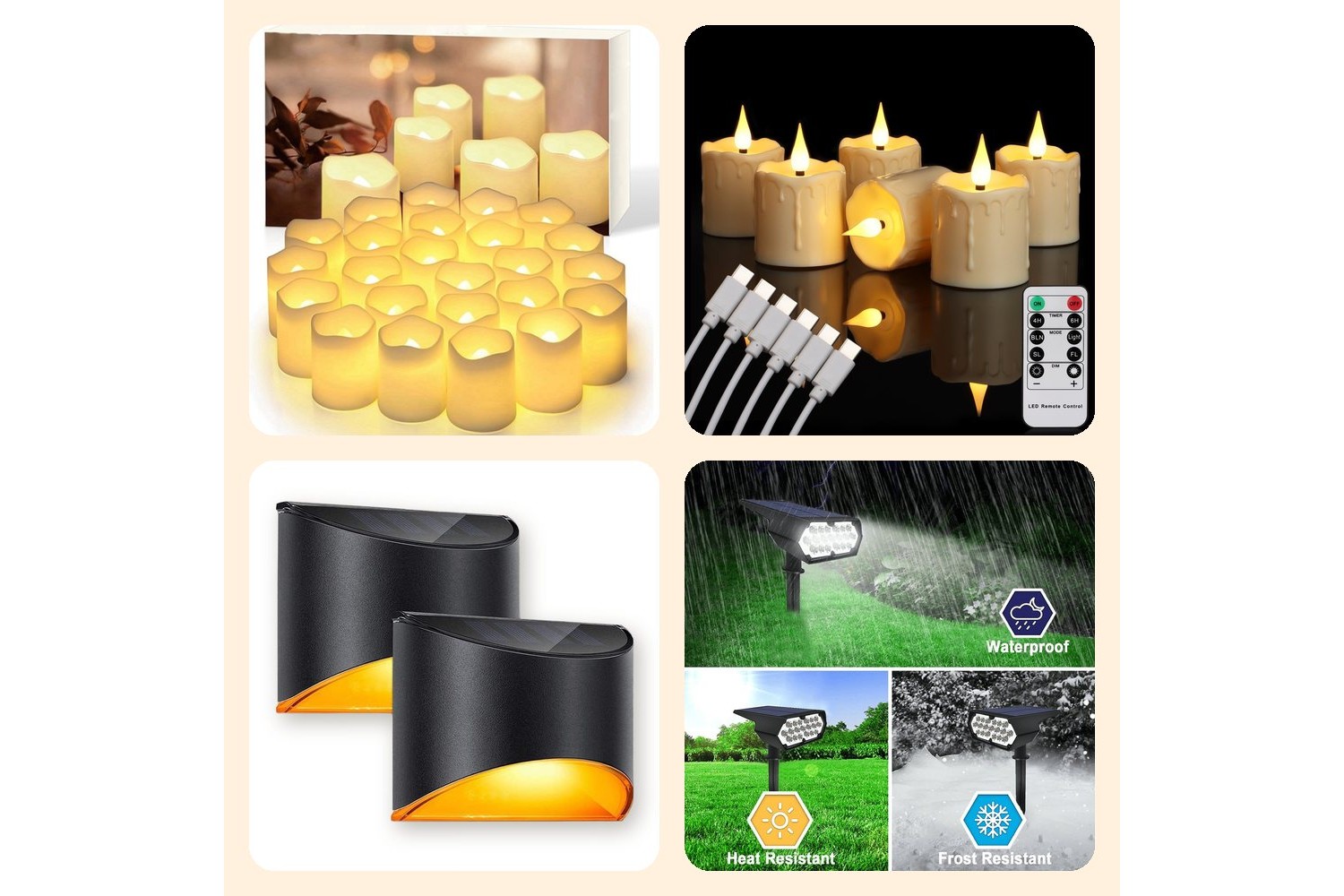
Decorative light. LED strips are the most versatile group: backlighting for televisions, furniture, alcoves and rooms. The core is USB-powered strips with a remote in various lengths; trial items are flexible neon and app-controlled models.

A USB-powered strip for TV backlighting: fitted without an electrician and an easy purchase to understand.
LED candles are bought for homes, cafés and event decoration: they are safer than an open flame and can be used again and again. Stock several sizes, sets and models with a timer.

A set of rechargeable candles with remote and timer: a ready-made gift and an item for cafés and hotels.
Garden light. Solar lights need no wiring, and that is the main argument for the buyer. The core is stake models for paths, wall models for fences and steps, and spotlights for plants and façades.

A solar garden spotlight: fits on a stake or mounts on a wall, with IP65 protection.
Technical light. Low-wattage floodlights with a motion sensor are a steady seller for private houses and garages. High-power models and street lighting for roads and grounds are made-to-order goods: a sample on display is enough, and the batch is brought in for the project.

A compact floodlight with a motion sensor: a mass-market item for entrances, garages and yards.
Which items are most often taken in a first order is shown in the selection of best-selling LED lighting products.
What the start-up budget consists of
The amounts depend on the direction chosen, but the list of items is the same:
- stock of core items;
- demonstration samples: a strip, a candle and a light switched on;
- a stand or display with a mains connection;
- delivery, calculated for the consignment and affected by bulky floodlights and luminaires;
- content for online sales: photos in the dark, video, specification tables;
- a reserve for returns and quality queries;
- the seasonal batch, which is paid for several months before it sells.
Rent, registration and advertising are budgeted separately. A feature of the niche is money committed in advance: garden lighting is paid for in winter and sold from spring. Plan cash flow month by month rather than as a single figure.
The supplier and the first order
Through EnjoyCommerce a range from several groups is assembled in one order: the minimum value is EUR 500 net, and the minimum quantity for many items is 1–10 pieces. Delivery is available to all EU countries.
- Register as a wholesale buyer to see net prices and volume tiers. The overall process is described in the buyer's guide.
- Send an enquiry with the list of items. For luminaires, state the parameters straight away: wattage, colour temperature, plug type, strip length.
- Receive a quotation from the manager with prices and delivery, then a pro forma invoice.
- Pay the invoice by transfer in EUR or PLN; details are on the page about payment.
- Wait for shipment or production. Before dispatch the batch undergoes quality control; afterwards you receive a tracking number and documents.
The seller is a Polish company, and invoices are issued with an EU VAT number. Buyers in the EU with a valid EU VAT number can use an intra-Community supply with reverse charge; check the accounting treatment with your accountant.
Documents and product requirements
Lighting products are electrical equipment, so the requirements are stricter than for ordinary household goods. The product must carry the CE marking and comply with RoHS; goods with built-in batteries, such as solar lights and rechargeable candles, are subject to additional EU battery requirements. Ask the manager to send the manufacturer's declarations and certificates before payment and keep them: a marketplace, an authority or a business customer may ask for them.
Check the practical details: a European plug and voltage for mains products, the stated IP rating for outdoor models, instructions in the language of the country of sale. Under the General Product Safety Regulation (GPSR), the product or packaging must show the details of the manufacturer and the responsible person in the EU. Rules for connecting fixed luminaires to the mains depend on the country, and such installation is usually left to an electrician; tell the buyer so. Check business registration and taxes with the local authority or an accountant.
Seasonality and the buying calendar
Demand for light follows day length and weather. Garden and solar lights sell from spring to the end of summer, and the order for them is placed in midwinter. Decorative strips, candles and everything to do with cosiness grow from autumn and peak in the weeks before the holidays; that batch is ordered at the end of summer. The general rule: seasonal goods are ordered 2–3 months ahead.
Floodlights with motion sensors sell better in autumn, when it gets dark early. Project street lighting is not tied to the retail season, but installation usually takes place in the warmer months, so enquiries arrive in late winter and spring. A calendar of three orders is convenient: a winter one for the garden, a summer one for autumn and the holidays, and an autumn one to replenish year-round items.
Common mistakes at the start
- Assembling "a bit of everything" from three directions and having depth in none.
- Selling without samples switched on and without photos of the light: light cannot be judged from a box.
- Not stating brightness, colour temperature and IP rating; the buyer goes to whoever did.
- Ordering garden lighting in April and receiving it in midsummer.
- Buying high-power luminaires for stock without a customer: these are project goods.
- Accepting electrical goods without the manufacturer's documents.
Frequently asked questions
Is a showroom needed to sell LED lighting?
Not for decorative and garden light: it sells online with good photos and video. A physical outlet needs only a stand with samples switched on. A showroom is justified once project customers appear.
Can a few units of different models be ordered as a trial?
Many items have a minimum quantity of 1–10 pieces, so a test order of different models is possible. The condition is a total order value of at least EUR 500 net.
How are high-power floodlights and street lights ordered?
For a project: send the manager the requirements, such as wattage, IP rating, quantity and desired date. They will prepare a quotation and calculate delivery for the consignment. Request the product documents before payment.
What should be done with seasonal leftovers?
Plan for them in advance: garden lighting does not spoil and sells the following season, but it ties up money. Order a cautious first batch and leave time to reorder, allowing for the lead time.
Choose one or two directions, list the core items and find them in the section of products for LED lighting shops. The next step after the first sales is a line under your own name: how to launch it is explained in the article on building your own LED lighting brand.
