
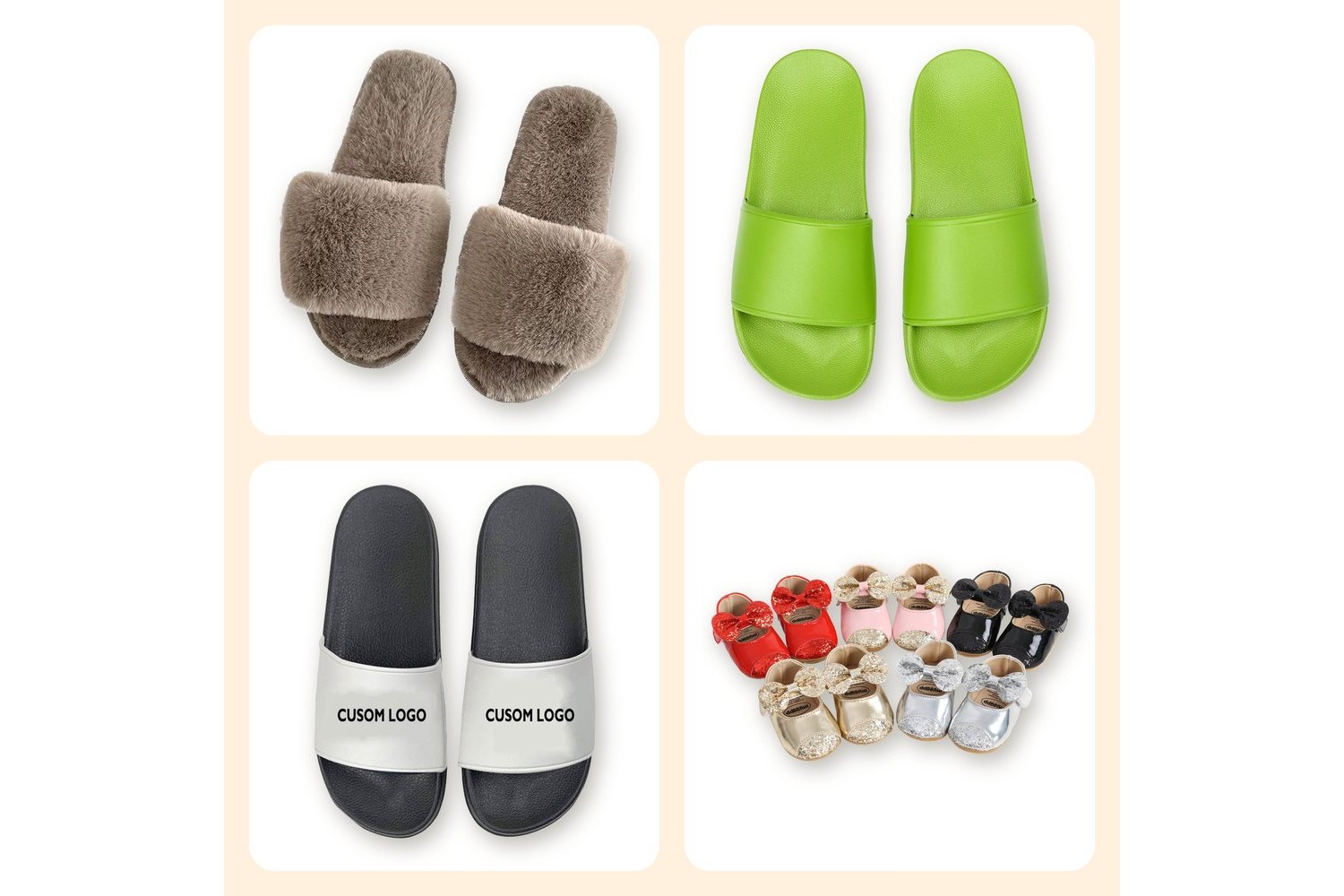
A slipper shop starts with a size chart and a calendar. People buy indoor footwear for themselves before winter, as a gift and for guests, while hotels and holiday lets order it in batches. The key decisions at the start are which groups to stock all year, which to bring in for the season and how many pairs to order per size. Below: how to choose a format, build the first range and place the order so that warm models arrive before the cold weather, not after it.
In brief
- The range rests on three groups: warm slippers for autumn and winter, light slides for the whole year, and children’s models.
- Sizes are the main risk: they may be dual or lettered, so the chart is checked against insole length in centimetres.
- Warm models are ordered 2–3 months before the season, which means in summer.
- The minimum order value is 500 EUR net, and many items have a minimum batch of 1–10 pieces, so the trial range can be wide.
- Hotels, holiday lets, spas and companies are a separate channel: they need batches of guest slippers, often with a logo.
Customer and format
There are four types of buyer. The first buys slippers for themselves: the old pair has worn out or it has turned cold. The second is looking for a gift – a warm pair with a playful design sells well before Christmas. The third is parents: children’s feet grow, and shoes for home and nursery are replaced often. The fourth is business: guest houses, hotels, spas, gyms and companies that need a batch of identical pairs.
Formats differ in how you get in. A small shop or a kiosk in a shopping centre lives on impulse purchases: slippers do not need a long fitting, but the customer wants to touch the material and the sole. An online shop and marketplaces such as Amazon, eBay or Etsy suit the niche well – the goods are light and unbreakable – but they demand an accurate size chart, otherwise returns rise. Christmas fairs and markets are handy for testing new models. Sales to businesses work differently: by sample, on request and per batch, with no shop window.
Starting range
Build the range from three groups and separate core and trial lines in each. What such a shop usually stocks is covered in the overview ‘Indoor footwear wholesale’.
Warm models carry autumn and winter turnover. Core: closed slippers and bootees in fleece and faux fur in calm colours, for women and men. Trial: animal-shaped models and bright colours for the gift shelf. The selection is in the ‘Slippers’ category.

Slipper boots with a knitted upper and faux fur – a warm model for the winter shelf, bought for oneself and as a gift.

Plush capybara slippers – an example of a trial gift model: people buy it for the design, not out of need.
Light slides sell all year: for home, the shower, the pool and travel. Core: plain PVC models in black, grey and navy; trial: bright colours and thick-soled models. See the ‘House shoes’ category.

Plain men’s slides with a wide strap – a core year-round line that is reordered as stock runs down.
Children’s models are warm slippers with appliqués and soft shoes for babies. There are more sizes here and the wearing period is shorter, so take a few pairs per size step and watch which ones sell first.
Plan size depth for core lines only. Middle sizes sell faster than the extremes, so an even ‘one pair per size’ split soon leaves only the smallest and largest pairs on the shelf. Take trial models in a small batch and in the best-selling sizes.
What the starting budget consists of
The amounts depend on the format and the town, but the items are the same:
- business registration and a till – under the rules of your country;
- rent and fittings: shelving, hooks and baskets for pairs, a bench, lighting;
- for the online channel – a website or marketplace account, photography, a size chart, packaging;
- the first batch of goods for the coming season and delivery, which is quoted per batch;
- a reserve for reordering best-selling sizes and for exchanging pairs that did not fit;
- promotion: signage, advertising, a winter window display.
The niche has an uneven year. Most of the money for the warm collection is needed in summer, when only slides are selling; allow for this in your working capital.
Supplier and first order
- Complete the wholesale buyer registration – after that you see net prices by volume tier.
- Put together a list of models, colours and quantities per size and send a request. The process is described in the buyer’s guide.
- The manager sends a quotation with prices, lead time and delivery cost. At this stage, ask for the manufacturer’s size chart in centimetres.
- Once agreed, you receive a pro forma invoice and pay by bank transfer in EUR or PLN.
- The goods are shipped or produced; before dispatch they go through quality control.
- You receive a tracking number and documents. The indicative lead time is 20–60 days; details are on the page about delivery within the EU.
Invoices are issued by a Polish company; for EU companies with a valid EU VAT number, an intra-Community supply under the reverse charge is possible.
Documents and product requirements
Business registration and taxes depend on the country – check with your accountant. The requirements for the goods themselves are few, but they exist. Footwear in the EU is sold with labelling of the materials of its main parts – the upper, the lining and sock, and the outer sole – given as pictograms or as text in the language of the country of sale. Under the EU General Product Safety Regulation, the product or packaging must carry the details of the manufacturer and of the responsible person in the EU. Requirements for children’s products are stricter: with models for the youngest, pay attention to small sewn-on parts. Claims such as ‘non-slip sole’ or ‘orthopaedic insole’ are acceptable only with evidence. Ask the manager for the material composition and documents before payment.
A separate risk is other people’s trade marks. Slippers with cartoon characters or brand emblems cannot be sold without a licence.
Seasonality and the buying calendar
The year splits into two unequal parts. Warm slippers start selling with the first cold days and peak in the weeks before Christmas; the order goes out in June–July so that the goods are on the shelf by early autumn. Slides sell steadily, with a rise before the holiday season; the summer order is placed in February–March. Business customers have their own calendar: hotels and holiday lets buy guest slippers before the tourist season, companies before events. At the end of winter it is better to clear warm models in bright colours and keep the core lines until next autumn.
Typical mistakes at the start
- Ordering the warm collection in autumn: with a 20–60 day lead time it arrives as the season ends.
- Not checking the size chart: the dual size 38–39 differs in insole length from one manufacturer to another.
- Splitting the batch evenly across sizes instead of weighting the middle ones.
- Stocking gift models only: without core lines there are no repeat purchases.
- Leaving no money to reorder sizes that run out at the height of the season.
Frequently asked questions
How can size-related returns be avoided?
State the insole length in centimetres for every size in the listing, with advice on which size to choose for in-between foot lengths. Before launch, measure a few pairs from the batch yourself.
Is it possible to start online only?
Yes. The goods are light and easy to post. What matters is an accurate size chart, close-up photos of the sole and material, and clear exchange terms.
How do you sell slippers to hotels?
Hotels, holiday lets and spas need identical pairs in a batch, usually in one or two universal sizes and with a logo. Prepare a sample and an offer with a price per batch; the order is put together for the specific customer and well ahead of their season.
How many models should the first order include?
A few models in each of the three groups are enough. Small minimum batches let you test more models for the same order value, but core lines should come in the full size run.
Start with the calendar: count back 2–3 months from the start of the coming season and put your request together in the ‘Slipper Shops’ section. Once you have regular customers and the first business orders, the next step is your own label – see the article ‘How to create your own slipper brand’.
