
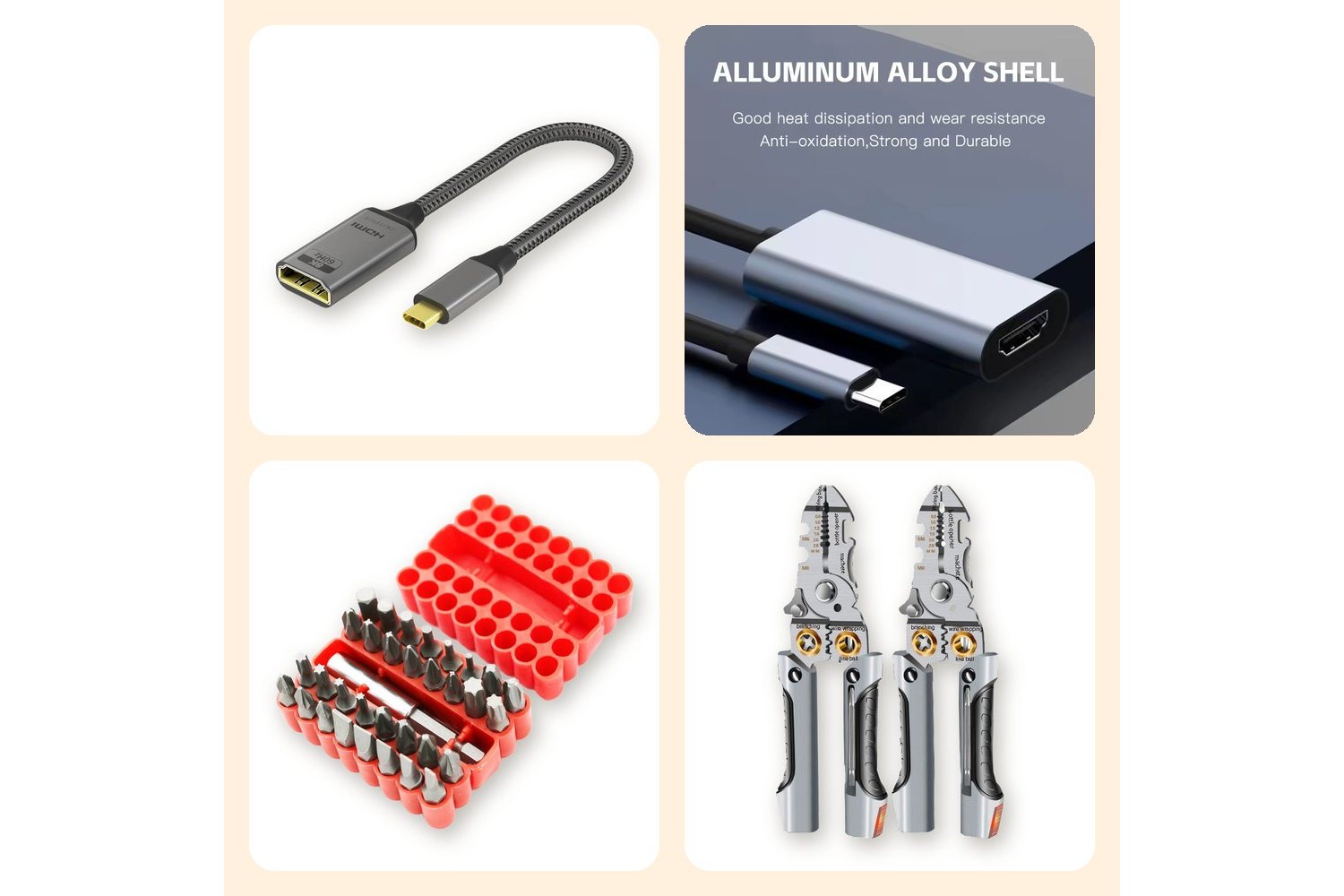
A phone and device repair shop starts with the workbench, not the sign: a table with good light, precision tools, soldering equipment and a clear list of the jobs you take on. The premises can be small – success depends on the technician’s skill and an orderly intake procedure. The second source of revenue is accessories: a customer who came to replace a screen often leaves with a cable or a screen protector. Below: how to choose a format, equip the workshop and place the first order.
In brief
- Equipment falls into three parts: tools and soldering equipment, consumables, spare parts.
- Parts are bought for the most frequent repairs and common models; the rest is ordered on request.
- Accessories on display – cables, adapters, screen protection – sell without taking up the technician’s time.
- The repair warranty and the handling of customer data are governed by national rules – write down the intake procedure before opening.
- The minimum order value is EUR 500 net per item and delivery takes 20–60 days, so fast-moving parts must always be in stock.
Customer and format
There are three types of customer. Private owners come with a cracked screen, a worn battery or a port that no longer charges; they care about turnaround and a clear price. Small businesses – offices, shops, delivery services – bring work phones, tablets and laptops and value a contract and predictability. The third type is electronics retailers that do not repair in-house and pass devices to a partner.
Formats differ in the cost of entry. A kiosk or small unit in a busy spot lives on while-you-wait repairs and accessory sales. A workshop with its own premises takes on complex work: soldering, liquid damage, laptops and household electronics. Call-out and mail-in repairs extend reach without a second location. Many start with a narrow list – screens, batteries, ports – and add harder jobs as experience grows.
Starter equipment and range
It is convenient to build the shopping list by group. What such workshops usually order is shown in the overview of wholesale components for repair service centres.
Tools. Precision screwdrivers with bits for different heads, tweezers, opening tools, suction cups, a screw mat. For laptops and household appliances, ordinary screwdrivers and pliers. Sets are in the ‘Screwdrivers’ category.

A cordless precision screwdriver with a bit set speeds up the disassembly of phones, tablets and laptops.
Soldering equipment and consumables. A temperature-controlled soldering station, a hot-air station, a magnifier or microscope, a bench power supply, a multimeter. Consumables: solder, flux, desoldering braid, isopropyl alcohol, adhesives and adhesive strips, anti-static wrist straps. Buy consumables with a margin: running out stops the work.
Spare parts. The core is what fails most often: screens, batteries, charging ports, speakers and flex cables for common models. Bring in rare items to order. See the ‘Phone parts’ category.

A speaker for a specific smartphone series – an inexpensive part kept in stock for a frequent repair.
Workbench. Protected power strips, extension leads, cable ties. All of this is in the ‘Electrical supplies’ category.

A power strip with surge protection – power for the soldering station and instruments on the workbench.
Accessories for sale. Cables, adapters, screen protectors, cases. Start with common standards from the ‘Cables and adapters’ category, and buy protectors and cases for the models most often brought in for repair.

A USB-C to HDMI adapter for the display: laptop and tablet owners pick it up along with a repair.
What the start-up budget consists of
Amounts depend on the town and the format, but the cost items are the same:
- business registration and a till – under national rules;
- premises or a kiosk, an intake counter, lockable storage for customers’ devices;
- the workbench: an anti-static table, lighting, solder fume extraction;
- tools and soldering equipment;
- consumables, the first batch of parts and delivery, which is quoted per consignment;
- a display and starting stock of accessories;
- job-tracking software, intake forms, packaging for handing devices back;
- a reserve for warranty rework and reordering parts.
The main feature of this niche is that money gets tied up in parts. The narrower the list of models at the start, the smaller the stock.
Supplier and first order
- Complete the wholesale buyer registration: after that you see net prices by volume tier.
- List the tools, parts and accessories with quantities and send an enquiry; the process is set out in the buyer’s guide.
- The manager sends a quotation with prices, lead time and delivery cost.
- Once agreed, you receive a pro forma invoice and pay by bank transfer in EUR or PLN.
- The goods are shipped or produced; before dispatch they go through quality control.
- You receive a tracking number and documents. The indicative lead time is 20–60 days; terms are on the delivery page.
Invoices are issued by a Polish company; EU businesses with a valid EU VAT number can use an intra-Community supply under the reverse charge.
Documents and requirements
Business registration and taxes depend on the country – check with your accountant. Settle two matters before opening. The first is the warranty on repairs and fitted parts: its length and the complaints procedure are set by national rules; record the terms on the intake receipt. The second is customer data: devices hold personal information, and your records hold contact details and passcodes. Collect only what is necessary, keep devices and records locked away and follow the data protection rules that apply in your country.
Product requirements are as follows. Electronics must carry the CE marking and meet EU requirements, including RoHS; batteries are subject to separate requirements. Under the EU General Product Safety Regulation, the product or packaging shows the details of the manufacturer and the responsible person in the EU. Removed parts and batteries are handed in as electronic waste under local rules. Tell the customer plainly which part was fitted – original or compatible. Request documents from the manager before payment.
Seasonality and purchasing calendar
Repairs run all year, but there are waves. In summer, during the holiday season, there are more cracked screens and liquid-damaged devices. In September, ahead of school and work, laptops and tablets come in. In December and January accessory sales rise: protectors, cases and cables are bought alongside gifts. Seasonal goods are ordered 2–3 months ahead: parts for summer in March or April, accessories for December in September. Reorder fast-moving parts as stock runs down, without waiting for zero.
Common mistakes at the start
- Taking on every model and every type of repair at once.
- Skipping the intake record: without a description of the device’s condition, a dispute cannot be settled.
- Stocking rare parts instead of a reserve of fast movers.
- Saving on lighting, magnification and anti-static protection.
- Not testing the part before fitting and the device afterwards.
- Forgetting the accessory display.
Frequently asked questions
Can you start with a kiosk and no soldering?
Yes. Replacing screens, batteries and ports as modules needs no complex equipment. Soldering and board repair are added later or passed to a partner workshop.
How many parts should be kept in stock?
Enough to complete frequent repairs of common models on the day. The rest is ordered on request; small minimum quantities allow a stock that is wide but shallow.
What warranty should a repair carry?
Minimum obligations are set by national law; anything beyond that is your decision. Record the terms and exclusions, such as liquid and drops, on the receipt.
How should data on a customer’s device be handled?
Do not browse the contents, ask for the passcode only when the repair cannot be tested without it, and advise the customer to back up beforehand. Data protection rules depend on the country – check them before opening.
Define the list of jobs, draw up the tools, consumables and parts, and put together an enquiry in the ‘Repair service centres’ section. Once there is a steady flow of customers, the next step is accessories under your own brand – see the article ‘Branded accessories under your repair shop’s name’.
