
A headwear shop starts with the calendar. The niche has two seasons: beanies sell in autumn and winter, caps and bucket hats in spring and summer, and each season is bought long before the first sale. The goods are compact and light and need neither a fitting room nor a long size run, so it is possible to start with a small space or online only. Below: how to choose a format, build the first range and buy so that the goods arrive before the season rather than after it.
In brief
- The range rests on three groups: baseball caps, bucket hats and knitted beanies.
- Most models are unisex, adjustable or one-size, so hardly any size stock is needed; depth comes from colours.
- Seasonal goods are ordered 2–3 months ahead: beanies in summer, caps and bucket hats in winter.
- The minimum order is EUR 500 net per item, so a trial range can be put together from several items.
- Avoid models carrying other parties’ logos and symbols without a licence.
Customer and format
There are four types of customer. The first buys by the weather: it turns cold or hot, and a beanie or a hat is needed today. The second chooses headwear as part of a look and comes for a specific shape and colour. The third is parents who need children’s models for the season. The fourth is companies, clubs and event organisers ordering a batch with a logo.
Formats differ in the cost of entry. A kiosk in a shopping centre or a small shop on a busy street lives on impulse purchases and needs good display: headwear must be seen from the front and on a head. In a tourist or seaside town, summer brings most of the revenue through bucket hats and caps. An online shop and marketplaces such as Amazon, eBay or Etsy suit the niche almost perfectly: the goods are light and unbreakable, and one-size fitting reduces returns. The fourth channel is fairs, markets and festivals, a convenient place to test new models.
Starting range
Build the range from three groups and separate staples from trial items in each. What such a shop usually stocks is covered in the selection What a headwear shop should buy wholesale.
Baseball caps sell the longest – from early spring to autumn, and all year round in cities. The staples are plain cotton models in black, white, beige and navy. Trial items: embroidered, 5-panel and sports models. The full choice is in the Baseball caps category.

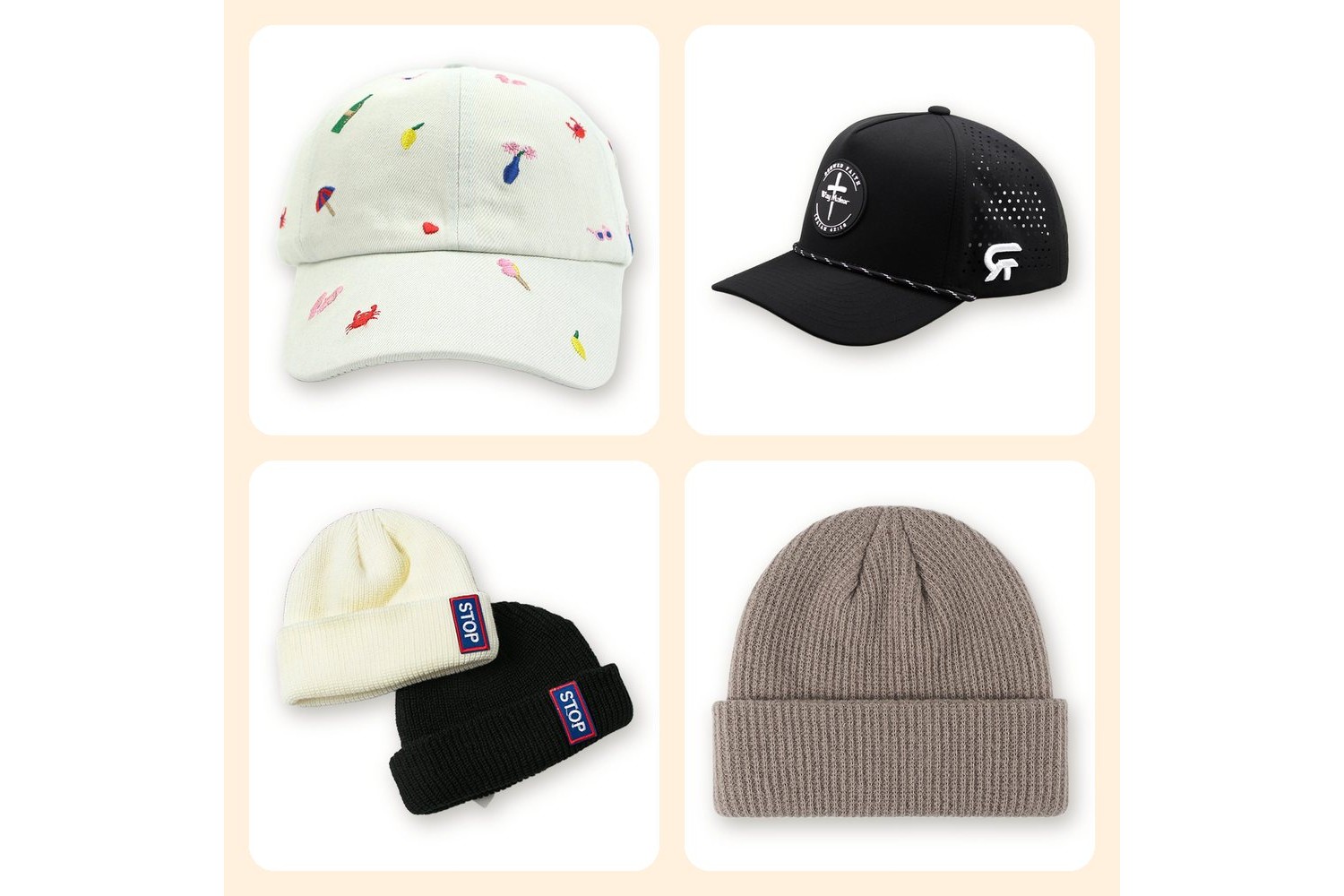
A white cap with small colourful embroidery is a typical trial model, bought for its design rather than its price.
Bucket hats are a summer product with a short, sharp peak. The staples are plain cotton ones; trial items are textured fabrics and children’s sizes. See the Bucket hats category.

A plain corduroy bucket hat for adults and kids extends the bucket hat season into cool spring and autumn.
Beanies carry autumn and winter revenue. The staples are cuffed knit beanies in calm colours, unisex. Trial items: models with patches and bright shades. Category: Hats and beanies.
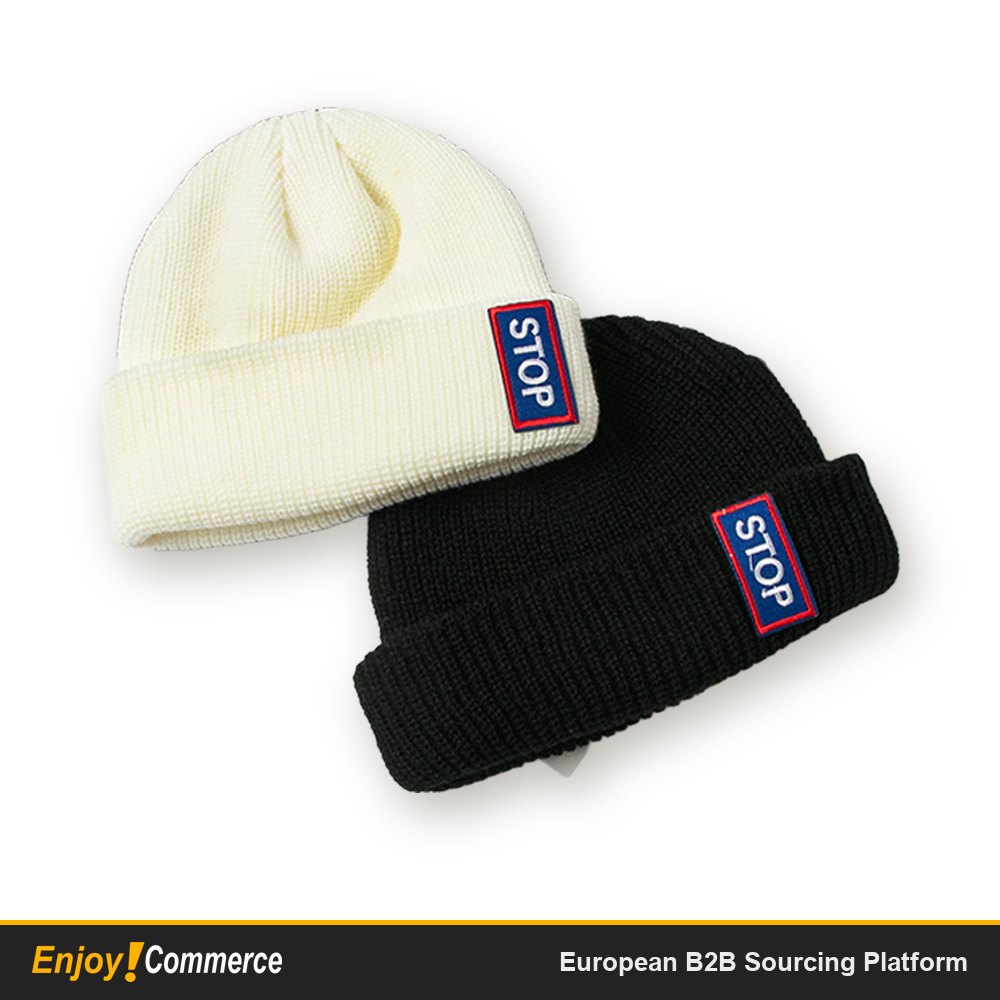
A cuffed knit beanie with a patch is a unisex model for the youth shelf that stands out on display.
For the first order, a sensible ratio is more staples and fewer trial items, but trial items must be there: they show where to extend the range next season. Plan colour depth for staples only: black and beige will always sell, while a bright shade may suit only a few customers.
What the start-up budget consists of
The amounts depend on the format and the city, but the items are the same:
- business registration and a till – under national rules;
- rent and fittings: stands, hooks, mannequin heads, mirrors, lighting;
- for the online channel: a site or marketplace account, photos on a model, packaging that does not crush the peak;
- the first batch for the coming season and delivery, which is calculated per shipment;
- a reserve for reordering popular colours and for buying the next season, which has to be paid for while the current one is still running;
- promotion: signage, advertising, window display.
The main feature of the niche is two purchasing cycles a year. The money for the winter collection is needed in summer, when summer stock has not yet sold through.
Supplier and first order
- Complete the wholesale buyer registration – net prices by quantity tier become visible afterwards.
- Put together a list of models, colours and quantities and send a request. The process is described in the buyer’s guide.
- A manager sends a quotation with prices, lead time and delivery cost.
- Once agreed, a pro forma invoice follows, with payment by bank transfer in EUR or PLN.
- The goods are dispatched or produced; before shipment they go through quality control.
- You receive a tracking number and documents. The indicative lead time is 20–60 days; details are on the page about delivery within the EU.
Invoices are issued by a Polish company; for EU companies with a valid EU VAT number, an intra-Community supply under the reverse charge is possible.
Documents and product requirements
Business registration and taxes depend on the country – check with an accountant. Requirements for the goods themselves are few, but they exist. Headwear is a textile product: fibre composition must be stated on the label in the language of the country of sale. Under the EU General Product Safety Regulation, the product or packaging must show the manufacturer and the responsible person in the EU. Children’s clothing is subject to additional safety requirements, including those for cords and drawstrings – bear this in mind when choosing children’s hats and beanies. UV protection claims are only acceptable with test reports. Ask the manager for documents and composition before payment.
A separate risk is third-party trade marks. Caps bearing the emblems of clubs, brands and characters may not be sold without a licence.
Seasonality and purchasing calendar
The year splits into two cycles. Autumn–winter: beanie sales rise with the first cold and last until the end of winter, with a gift peak in December; the order is sent in June or July. Spring–summer: caps start with the first sun, bucket hats before the holidays; the order goes in January or February. Baseball caps in staple colours stay on the shelf all year and are reordered by stock level. At the end of a season it is not worth storing leftovers in bright fashion colours for a year – better to sell them off and keep the staples.
Typical mistakes at the start
- Ordering a season once it has begun: with a 20–60 day lead time the goods arrive at its end.
- Taking one model in every colour instead of several models in popular colours.
- Forgetting children’s sizes or mixing them with adult ones on the same stand.
- Saving on display: a cap folded in a pile does not sell.
- Leaving no money for buying the next season.
Frequently asked questions
Is a wide size run needed?
Usually not: most caps adjust with a strap, and knitted beanies stretch. Only children’s sizes need to be kept separately, checking the head circumference given in the product listing.
Is it possible to start online only?
Yes. The goods are light and easy to post. It is important to show them on a head, not just on their own, and to pack them so that the peak is not crushed.
How many models should the first order include?
A few models in each of the three groups, in three or four colours, are enough. Low minimum quantities make it possible to test more models for the same order value.
What if a popular colour sells out mid-season?
A reorder takes the same 20–60 days, so stock of staple colours is planned from the start, while bright ones are bought with a full sell-through in mind.
Start with the calendar: identify the nearest season, count back 2–3 months and put together a request in the Headwear shops section. Once regular customers appear, the next step is an own brand – covered in the article How to create your own headwear brand.
