
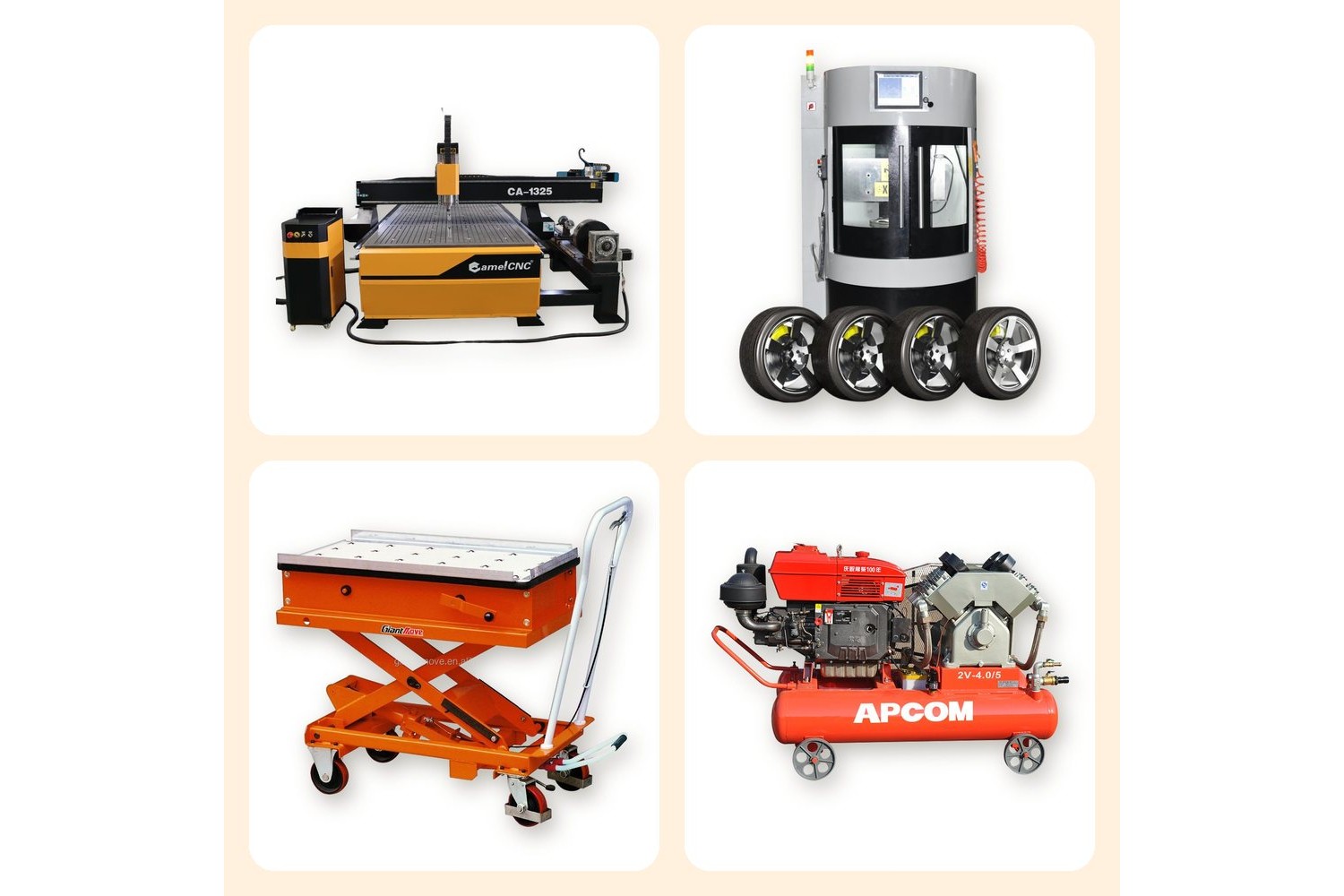
A small manufacturing business does not start with buying a machine. It starts with three questions: what exactly you make, in what premises, and who will buy it. The product defines the process, the process defines the equipment list, and the premises define the available power, door height and goods flow. Below: how to equip a workshop area by area, what the budget consists of, which machine documents to request and how to place the first order.
In brief
- Product and process chain first, equipment list second – not the other way round.
- A workshop is more than machines: storage, material handling, compressed air, tools and workwear take a noticeable share of the estimate.
- Machines need CE marking, a declaration of conformity and instructions in the local language – request the documents before payment.
- Before ordering, check the machine's voltage, number of phases and power against what the premises can supply.
- Estimated delivery time is 20–60 days, so equipment is ordered while the premises are still being prepared.
Production format and customer
A small workshop usually follows one of three formats. The first is your own product, sold by you: through your website, Amazon or eBay, or distributors. The second is subcontract work: cutting, milling, welding, assembly to the customer's drawings. The third is contract manufacturing, where goods leave under the client's brand.
The format shapes the workshop. Your own product needs a finished goods store and a packing area. Subcontract work needs versatile machines and quick changeovers. Contract work needs consistent quality from batch to batch. Before buying equipment, find your first customers or test demand with a short run: a machine bought “for future orders” stands idle and takes up floor space.
Starter equipment: workshop areas
Plan by area rather than as a shopping list: goods-in and raw material store, production, packing, finished goods store. For each area, decide which operations happen there, how loads are moved and where they are kept.
Core equipment. It is chosen for the operation and the material: the catalogue offers machine tools and, for flow production, conveyors. Choose the capacity you need for the next year or two with a sensible margin: an oversized machine needs more power and more floor space.
Compressed air. Air tools, blow-off, painting, fixture clamps – almost every workshop needs a compressor. Size it by the total air consumption of the equipment and the working pressure, not by tank volume.

An oil-free 220 V compressor: compressed air for tools and blow-off where the air must contain no oil.
Storage and handling. Raw materials arrive on pallets, and unloading by hand wastes time and risks injury. The minimum is hydraulic pallet trucks and shelving for blanks, tooling and finished items. Check the rated shelf load against the real weight of what you will store.

A 3 t pallet truck is the basic tool for unloading lorries and moving raw materials around the floor.
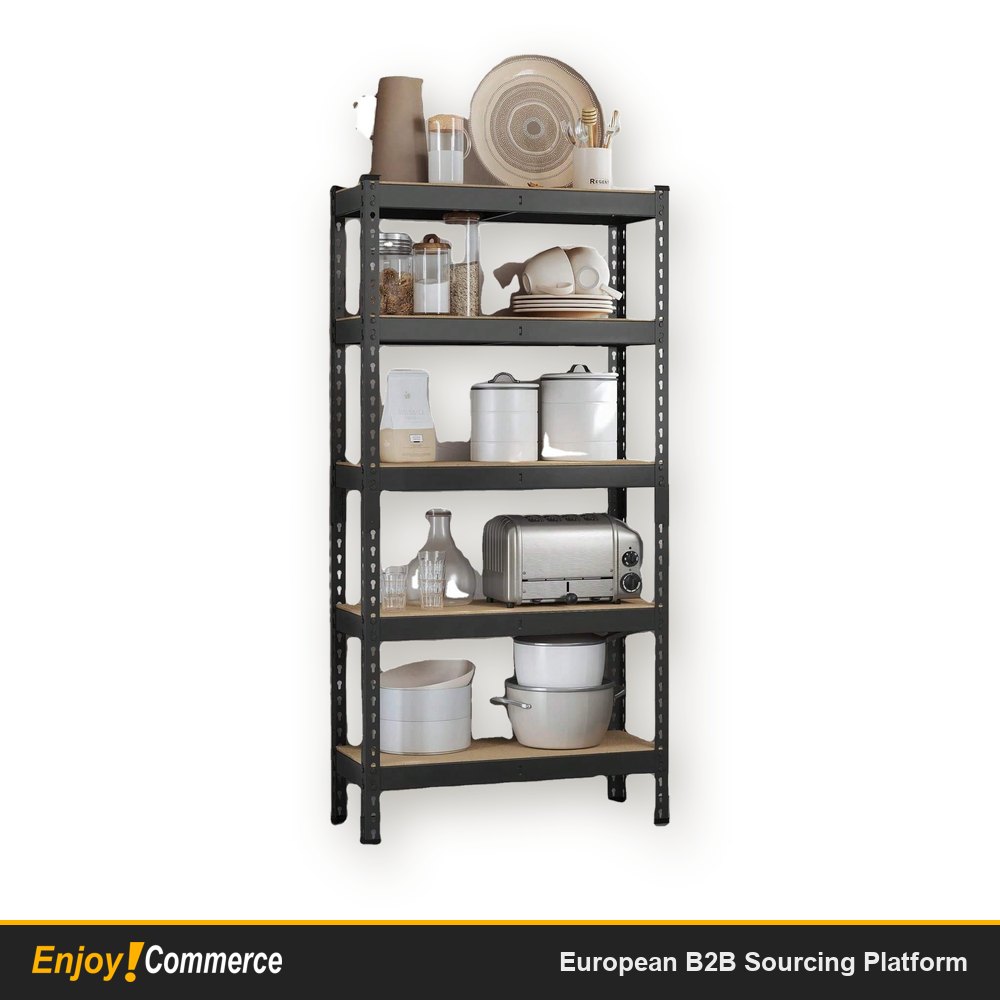
Boltless shelving goes up quickly and suits tooling, blanks and consumables.
Workstations. Workbenches, lift tables, containers, lighting. A height-adjustable table takes strain off the back during assembly and packing and shortens the operation.

A lift and tilt table brings parts to working height, so the operator does not bend to the container for every piece.
Tools, consumables, workwear. Hand and measuring tools, cutting tools and abrasives, fasteners, packing materials – the things that run out first. Workwear and protective equipment are bought per employee, with spare sets for replacement and new staff.
What the starting budget consists of
The total depends on the process, so it is more useful to know the cost items:
- premises: rent, flooring, ventilation, electrics for the required power;
- core equipment, its delivery, unloading, installation and commissioning;
- tooling, cutting tools and the first set of spare parts;
- warehouse equipment, shelving, containers;
- raw materials for the first batches;
- workwear, protective equipment, staff training;
- permits, design work and mandatory procedures – under national rules;
- a reserve for the run-in period while the process is refined.
A common mistake is to count only the machine price. Delivery of bulky freight is calculated per shipment, and the power connection, floor preparation, extraction and tooling add noticeably to the total.
Supplier and first order
EnjoyCommerce supplies machinery and equipment from China to all EU countries; invoices are issued by a Polish company. The procedure:
- Register as a wholesale buyer – net prices by volume tier become visible.
- Compile your list and send a request. For machines, state the material, workpiece sizes, required output, and the voltage and number of phases on site.
- The manager prepares a quotation: configuration, lead time, delivery cost for your shipment.
- Before payment, request the declaration of conformity, instructions, technical data and a spare parts list.
- Pay the pro forma invoice by bank transfer in EUR or PLN.
- The goods pass quality control before dispatch; you then receive a tracking number and documents.
The minimum order value is EUR 500 net; many items have a minimum quantity of 1–10 units, so a machine, pallet trucks and shelving can go in one order. Details are in the buyer's guide and on the delivery terms page. EU companies with a valid EU VAT number can use intra-Community supply.
Documents and requirements
The business itself. Business registration, permitted use of the premises for production, fire safety, occupational safety and environmental rules (emissions, noise, waste, waste water) depend on the country and the activity. Clarify them with the local authority and your accountant before signing the lease: not every unit can lawfully be used as a workshop. Food, cosmetics, chemicals and other regulated activities need separate permits under national rules.
Equipment. Machines put into service in the EU must carry CE marking and come with a declaration of conformity and instructions in the local language. Request these from the manager before payment – they are hard to obtain after delivery. For equipment in contact with food, also request the material documents. The employer is responsible for safe operation: guards, emergency stop, operator training.
Technical fit. Check the voltage and number of phases (single-phase or three-phase supply), the available power, and the machine's dimensions and weight against the door and the floor's load capacity. Clarify who carries out installation and commissioning, which parts count as wear parts and how spares are ordered.
Seasonality and purchasing calendar
Your season is set by your customer: some peak before the holidays, others in the building season or ahead of summer. Count back from the date of the first batch: process refinement, installation and run-in, delivery – an estimated 20–60 days, agreeing the configuration and documents. Equipment for a seasonal peak is sensibly ordered 2–3 months ahead, earlier for non-standard configurations. Plan consumables and spare parts as a separate regular order, so the workshop does not stop for a roller or a filter.
Typical mistakes at the start
- Buying a machine before the product, material and order volume are clear.
- Not checking the electrics: a three-phase machine in premises with a single-phase supply.
- Forgetting internal logistics – aisles, pallet positions, door height.
- Paying for equipment without a declaration of conformity and instructions.
- Not ordering spare parts and consumables together with the machine.
- Saving on protective equipment and operator training.
Frequently asked questions
Can I order a single machine rather than a batch?
Yes. Many items have a minimum quantity of 1 unit; the only condition is an order value of at least EUR 500 net. The manager calculates delivery for the specific load.
Who installs and commissions the equipment?
It depends on the machine. Simple equipment – pallet trucks, shelving, compact compressors – can be set up in-house from the instructions. For complex machines and lines, clarify installation, commissioning and training with the manager before payment and have them written into the quotation.
What about spare parts?
Ask for a list of wear parts and order the first set with the machine: spares take as long to arrive as the equipment, and downtime costs more than stock.
Does a small workshop need permits?
Requirements depend on the country, activity and premises. At a minimum, check the permitted use of the premises, fire safety, occupational safety and waste handling – with the local authority or a specialist adviser.
Machinery, warehouse equipment and fittings are gathered in the Manufacturing Companies section. If you plan to make goods under your own brand or for other brands, read how to build your own brand and contract manufacturing.
