
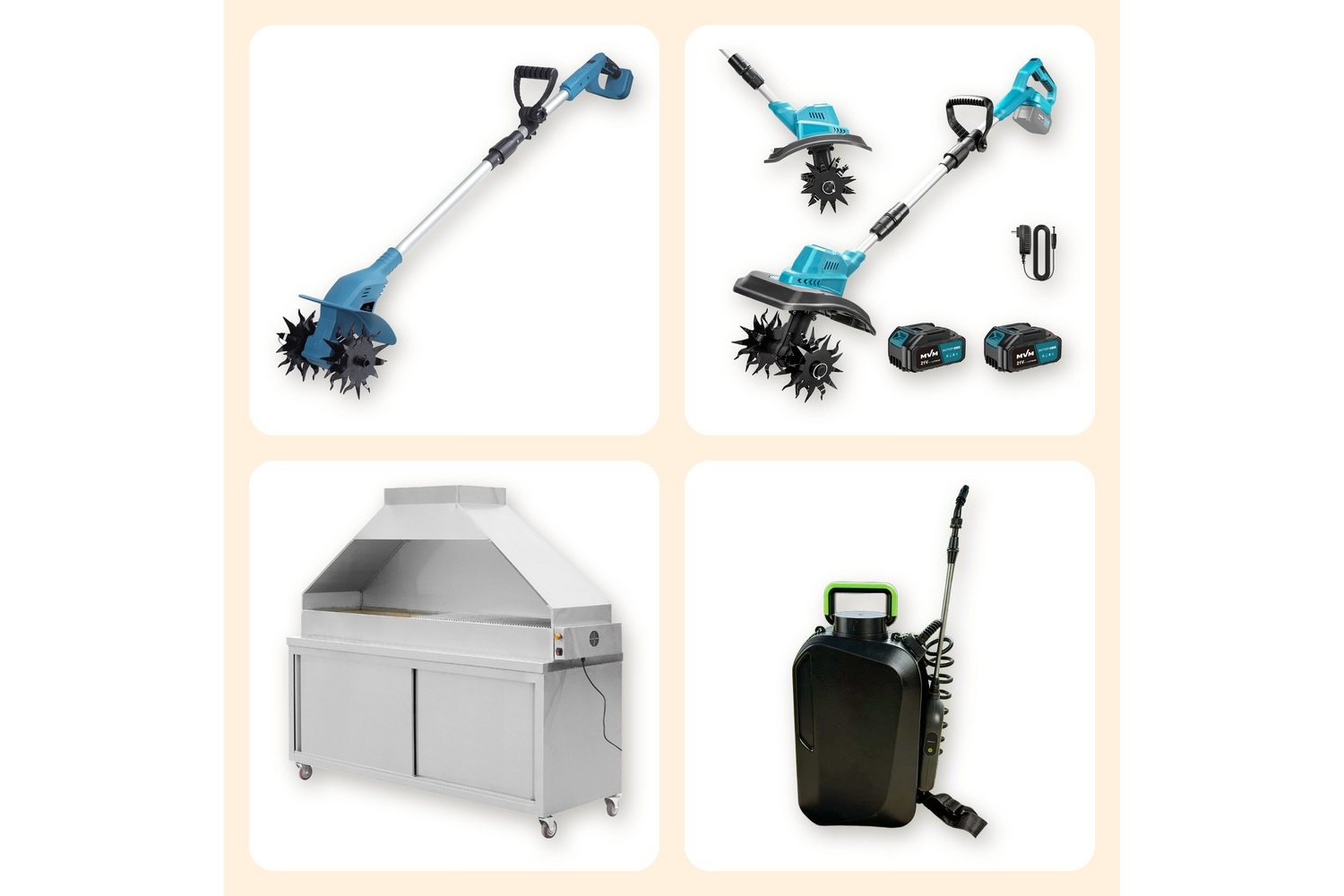
A garden centre starts with two decisions: whether you will handle live plants, and how much of the range will be bulky goods – machinery, furniture, greenhouses. Plants, seeds, fertilisers and plant protection products are regulated separately under national rules; this article covers the unregulated part of the range: watering, tools and machinery, furniture, barbecues, greenhouses. Demand is sharply seasonal, so the owner’s main skill is ordering early and not tying up money in bulky stock.
In brief
- The core is watering equipment and hand tools; machinery, garden furniture, barbecues and greenhouses bring the larger sale but need space.
- Plants, seeds, fertilisers and plant protection products require permits and record-keeping under national rules – clarify these before opening.
- Motor- and battery-powered machinery means documents (CE, declaration of conformity), instructions in the customer’s language and questions about spare parts.
- Furniture, greenhouses and generators are bulky and heavy: delivery is calculated per consignment, and they need room in the stockroom.
- Delivery takes an estimated 20–60 days; the spring range is ordered 2–3 months ahead, that is, in winter.
Customers and format
There are three types of customer. The first owns a house with a garden or an allotment and needs watering, lawn care, tools, a greenhouse and somewhere to sit. They arrive in spring with a long list and return for small items all season. The second lives in town with a balcony or terrace: compact furniture, a small barbecue, drip watering for pots. The third is a professional: a gardener, a landscaping firm, the manager of a hotel or a café with a terrace.
A physical shop works on the edge of town, in the suburbs, next to DIY stores – wherever people arrive by car. Its strength is that goods can be judged in person: holding the pruner, sitting in the chair, seeing the assembled greenhouse. In an online shop and on Amazon or eBay, what sells well is what ships easily: watering equipment, tools, barbecue accessories. On the listing give assembled and packed dimensions, weight, material, voltage and battery capacity, and what is included. For bulky goods, plan delivery to the customer and assembly in advance.
Starting range: core lines and trial lines
Watering equipment is the group to start with. Hoses, connectors, spray guns, drip systems and sprayers are bought often and topped up during the season, and they take little space. Compatibility matters: connectors and hoses must match in diameter, otherwise the customer comes back with a complaint.

Cordless 12 l sprayer with a telescopic lance: a fast-moving line for the garden and the greenhouse.
Garden care. Lawnmowers, cultivators and pruners are increasingly chosen as cordless models: they are quieter and easier to maintain than petrol ones. One or two models of each type are enough to begin with.

Cordless self-propelled 40 V lawnmower: a machine for mid-sized gardens and a display model for the shop.
Leisure. Garden furniture and barbecues bring the largest sale of the season. Furniture in synthetic rattan and on aluminium frames stands up to rain, and customers build modular sets to fit their terrace. Tools, grates and covers sell alongside the barbecue – small items that raise the basket value.

Modular PE rattan furniture: sections from which the customer builds a set to fit the terrace.
Try greenhouses in one or two sizes: the product is large, but a greenhouse buyer comes back for watering equipment and tools.

Tunnel greenhouse with reinforced film and windows: an option for a vegetable plot with no permanent structure.
Pumps and generators are a narrow group for homes without mains water and for professionals; add them when customers ask. The groups that bring a garden centre its turnover are covered in the overview of best-selling product groups for a garden centre.
What the starting budget consists of
The amounts depend on format and range width, but the structure of stock costs is similar for everyone:
- core group: watering equipment, hand tools, small consumables;
- machinery: a few models of mowers, cultivators and pruners, plus spare batteries;
- seasonal group: furniture, barbecues, greenhouses;
- delivery – a noticeable item for furniture, greenhouses and machinery, calculated for the specific consignment;
- fittings and yard: shelving, platforms, an outdoor display, room for large cartons;
- a reserve for reorders at the height of the season.
Rent, registration, the till and advertising are budgeted separately. If you plan to add plants, seeds and fertilisers, set aside a separate item for that group and the permits that go with it.
Supplier and first order
EnjoyCommerce supplies goods to companies and sole traders in EU countries. The minimum order value is 500 EUR net per item, so machinery, furniture and watering equipment can be combined in one order, each item from 500 EUR net.
- Read the buyer’s guide and complete the wholesale registration: after that, net prices by volume tier are visible.
- Draw up a list: product type, model, power or voltage, plug type, material, quantity. Send the request – a manager will prepare a quotation and calculate delivery for the consignment.
- Approve the quotation and receive a pro forma invoice. Payment is by bank transfer in EUR or PLN.
- The goods are dispatched or produced and go through quality control before shipping. Ask for completeness, motor and battery operation and the packaging of large items to be checked.
- After dispatch you receive a tracking number and documents. Build the delivery terms into your calendar: the estimated lead time is 20–60 days.
Invoices are issued by a Polish company with an EU VAT number. For EU companies with a valid EU VAT number, an intra-Community supply (reverse charge) is possible; your accountant will advise how to record it.
Documents and product requirements
Business registration, taxes and trading rules depend on the country – check them with an accountant or the local authority. Trade in live plants, seeds, fertilisers and plant protection products is regulated separately: permits and record-keeping under national rules are required. A sprayer is equipment; what goes into it is already a regulated product.
Motor-driven machinery, electrical equipment, pumps and generators fall under CE marking; they come with a declaration of conformity and instructions in the language of the country of sale. Batteries and electronics have their own requirements, including RoHS. For barbecue grates and tools, ask about documents for food contact materials. Under the General Product Safety Regulation (GPSR), the product or packaging shows the details of the manufacturer and of the responsible person in the EU. Request all documents from the manager before payment.
Seasonality and buying calendar
The season begins in early spring: greenhouses, cultivators, watering. In late spring and summer lawnmowers, furniture, barbecues and pumps sell. In autumn demand shifts to clearing the garden and preparing for winter, and generators are bought ahead of the cold season.
Seasonal goods are ordered 2–3 months ahead: the spring consignment in December and January, the summer one at the end of winter.
Common mistakes at the start
- Ordering the spring range in spring and receiving it when customers have already bought.
- Putting most of the budget into furniture and greenhouses and having no money left for fast-moving watering equipment and tools.
- Selling machinery without documents, instructions in the local language or a source of spare parts.
- Not checking the plug type and voltage for your country.
- Adding plants, seeds or plant protection products without clarifying the rules for selling them.
Frequently asked questions
What is the smallest amount to start buying with?
The minimum order value is 500 EUR net per item. It can be a combined consignment: a small shop can test demand with a few lines, each from 500 EUR net.
Can a garden shop open without plants?
Yes. Tools, watering equipment, machinery, furniture and barbecues form a range in their own right, and it needs none of the permits linked to plants and agrochemicals. Plants are added later, once the rules of your country are clear.
What about spare parts and consumables for machinery?
Before ordering, ask the manager which spare parts and consumables are available for the chosen model – blades, batteries, chargers – and order them together with the machinery. The seller’s warranty obligations to the customer are set by the laws of your country.
Can a trial batch be ordered before a large purchase?
A sample or a small trial batch is arranged by agreement with the manager. For machinery and furniture this is a sensible step: assembly, material quality and motor operation are best judged before the main order.
Choose the format, divide the range into core, machinery and seasonal parts, and pick the lines in the section of goods for garden centres. Once it is clear what sells steadily, part of the range can be released under your own name – see the article on building a garden products brand.
