
An electronics shop starts not with a smartphone display but with a choice of product groups in which a small retailer can be more useful than a large chain. These are audio and headsets, smart home and security devices, in-car electronics, small household appliances and gift gadgets. One more thing has to be settled before the first order: how returns and warranty claims will be handled, because in electronics this is part of the business itself.
In brief
- Do not compete with chains on smartphones and laptops: build the range on groups where selection and explanation matter.
- A workable base is audio, smart home and security, in-car electronics, small appliances, and charging and power.
- Warranty and returns are planned before buying: who tests the device, what replaces it, where the reserve comes from.
- Documents are requested before payment: declarations of conformity (CE, RoHS), battery details, plug type.
- The minimum order value is 500 EUR net and delivery takes roughly 20–60 days; stock for December is ordered in late summer.
Customers and format
Buyers can be grouped by task. The first solves an everyday problem: a headset for calls, a camera for a holiday home, a simple phone for an elderly relative. This buyer expects advice and help with set-up. The second is choosing a gift – packaging and a clear benefit matter here. The third is business: cafés, offices, delivery services and CCTV installers that need identical devices in quantity and an invoice.
A physical shop wins through demonstration: sound is heard, a camera picture is shown on screen, a door intercom is seen working. A seller who can pair a device with the customer’s phone sells what an online listing cannot. An online shop or a marketplace such as Amazon or eBay requires precise specifications and readiness for returns: in distance selling, consumers in the EU may withdraw from a purchase within the statutory period, and this belongs in the calculation. Sales to businesses and installers rely on constant availability, consistent batches and technical support.
Starting range: core items and trial items
Audio and communication. Headsets, headphones and speakers are bought often and replaced regularly. Mono headsets for drivers, couriers and call handlers are a niche of their own: an inexpensive item with a clear purpose. This group also includes feature phones – simple handsets with large keys for older users, and spare phones.

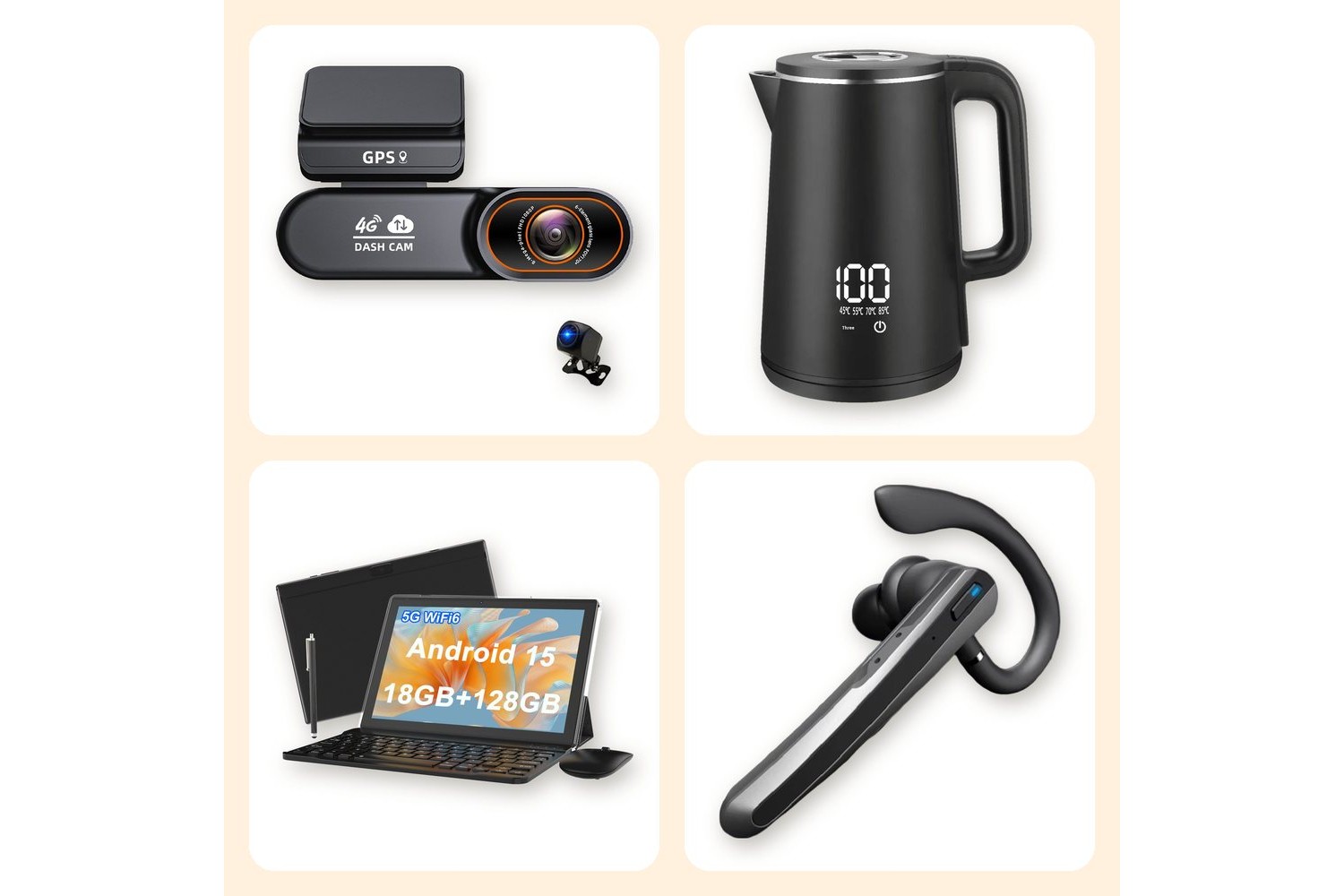
A single-ear Bluetooth headset with noise cancelling and a charging case: a working tool for drivers and couriers.
Smart home and security. Surveillance cameras and video intercoms sell as kits and attract installers who buy regularly. For private buyers, an app in their language and straightforward installation matter – confirm both with the manager before ordering.

An IP video intercom kit with a 10.1-inch monitor and door station: a ready solution for a private house.
In-car electronics. Dash cams are a group with steady demand, bought when changing cars and as gifts. Dual-camera models with an app sell better when the seller explains installation.

A screenless 4G dash cam with two cameras and GPS: an item for car owners and small fleets.
Small household appliances. Kettles, humidifiers and small kitchen and care devices raise the basket value and bring in customers who were not looking for electronics.

A 2-litre electric kettle with temperature control and display: a small appliance bought for home use and as a gift.
Tablets, projectors and action cameras are worth trying in small quantities. Chargers, cables and power banks work as an add-on group at the till. The groups that give a shop its turnover are covered in the article on wholesale electronics.
What the starting budget consists of
The amounts depend on the format, but the structure of stock costs is similar:
- main groups – a few models in each, across price tiers;
- demonstration units: devices unpacked and running on the shop floor;
- add-on products – charging, cables, mounts, memory cards;
- delivery, calculated for the specific batch;
- a reserve for warranty replacements and returns – essential in electronics;
- lockable display cases, a demonstration stand, shipping packaging.
Rent, registration, tills and advertising are budgeted separately. A marketplace adds commission and reverse logistics costs.
Supplier and first order
EnjoyCommerce supplies goods to companies and sole traders in EU countries. The minimum order value is 500 EUR net and many items have a minimum quantity from 1–10 pieces, so the first range can be assembled from different groups to test demand.
- Read the buyer’s guide and complete the wholesale registration: net prices by volume tier become visible afterwards.
- Prepare a list and state for each item the plug type, the language of the interface and manual, and the kit contents.
- The manager prepares a quotation, calculates delivery for the batch and requests documents from the manufacturer.
- Once agreed, a pro forma invoice is issued; payment is by bank transfer in EUR or PLN.
- The goods are shipped or produced and pass quality control before dispatch.
- The buyer receives a tracking number and documents. Invoices are issued by a Polish company; for EU companies with a valid EU VAT number an intra-Community supply is possible.
Documents and product requirements
Business registration and taxes depend on the country – check with an accountant. Product requirements are common across the EU. Electronics belong to the categories that carry CE marking and are subject to restrictions on hazardous substances (RoHS); devices with Bluetooth, Wi-Fi or mobile connectivity, and batteries, have requirements of their own. Ask the manager for declarations of conformity and certificates before payment and check that they name the exact model.
Under the General Product Safety Regulation (GPSR), the product or packaging shows the details of the manufacturer and of the responsible person in the EU. A manual is needed in the language of the country of sale. In many countries sellers of electronics and batteries must take part in a scheme for collecting and recycling end-of-life equipment – the rules are national and should be checked locally.
Warranty. The seller is responsible to the consumer for the conformity of the goods; the period and procedure are set by national law. Decide in advance how claims are handled: testing, replacement from the reserve, refund. Agree the handling of defective goods with the manager before ordering.
Seasonality and buying calendar
The main peak is November and December: sales events and gifts. A delivery time of 20–60 days means the order for this season is placed in August or September. The second rise comes at the end of summer and the start of the school year: tablets, headphones, inexpensive devices for study. In spring and summer demand grows for in-car electronics, action cameras and cameras for holiday homes. Humidifiers and heaters are ordered for autumn, fans for late spring. Plan seasonal items 2–3 months ahead.
Common mistakes at the start
- Building the shop on smartphones and laptops, where large chains set the price.
- Buying goods without documents, with the wrong plug or without a manual in the required language.
- Not setting aside a reserve for returns and replacements.
- Taking one piece each of dozens of models: neither depth nor data on demand.
- Selling smart devices without checking that the app works in the customer’s language.
Frequently asked questions
What amount is enough to start buying?
The minimum order value is 500 EUR net. It can combine several groups – audio, in-car electronics, small appliances. How much a full range requires depends on the format and the number of groups.
Is it worth selling smartphones and laptops?
As an addition, yes; as the base of a small shop, no. In these categories the customer compares prices in one click, and service requirements are higher. Simple phones and tablets for specific tasks are a calmer sale.
How should returns and warranty be handled?
Describe the procedure before the first sale: response time, testing, replacement or refund. Keep a reserve of fast-selling items. Consumer rules depend on the country and the sales channel – check them with a lawyer or accountant.
Which documents should be requested for electronics?
A declaration of conformity and certificates for the specific model, battery details and the manual. The request goes to the manager before payment, which leaves time to swap an item.
Start with three or four groups and one mixed batch: browse the section of goods for electronics shops, prepare a list and send a request to the manager. Once stable sellers emerge, the next step is an own electronics brand.
