
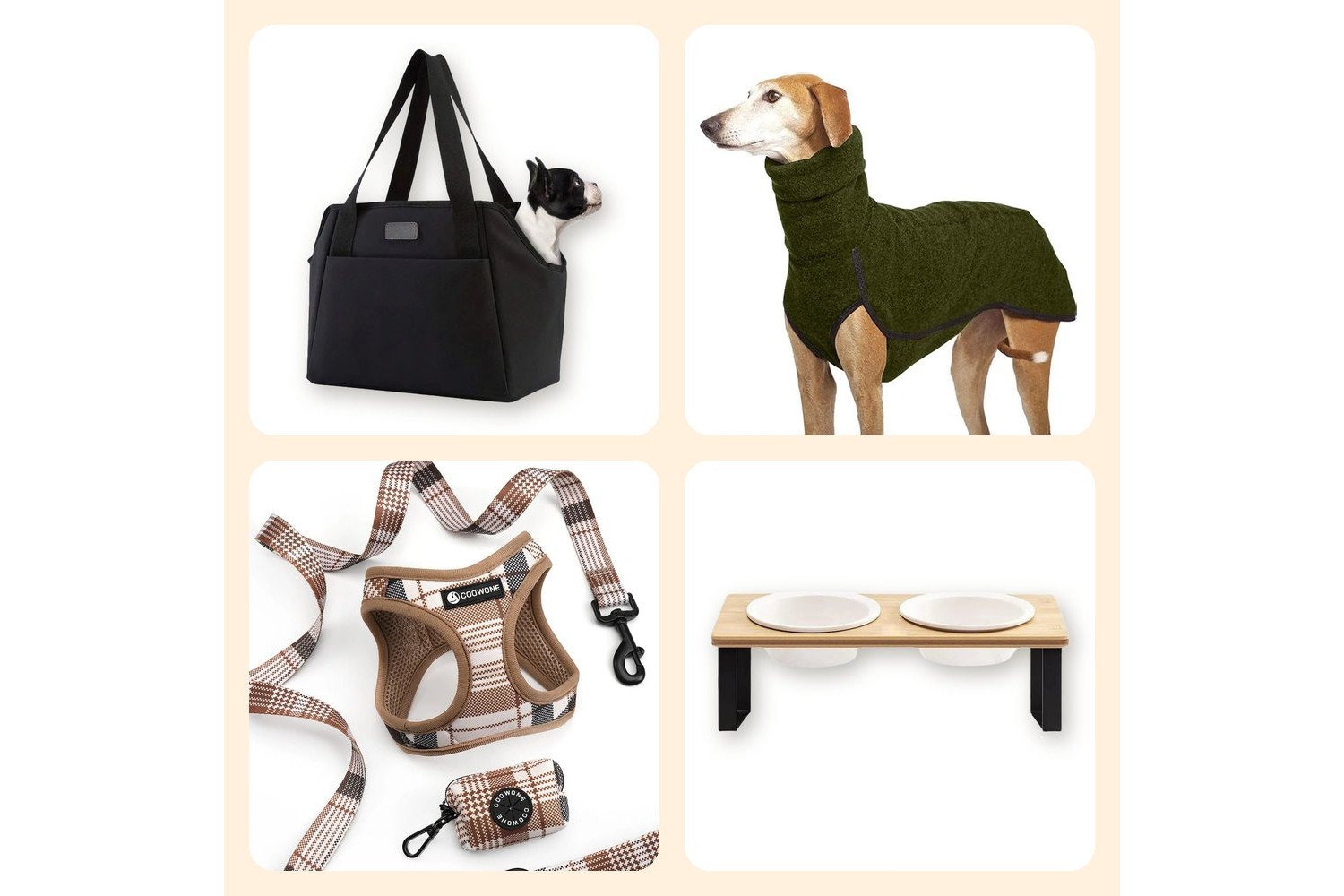
A pet shop starts with a decision about what exactly you will sell. Pet food, veterinary medicines and live animals are regulated separately: they require registration, permits and storage conditions under national rules. Accessories – leads and harnesses, bowls, beds, toys, grooming items, carriers – are generally sold without special permits, have no expiry date and give the shop its character. They are a convenient place to start, with food added later. Below: how to choose a format, build the first range and place the order.
In brief
- Pet food, veterinary medicines and live animals are the regulated part of the trade: check the conditions with the national veterinary authority. This article is about accessories.
- The range rests on five groups: leads and harnesses, bowls and feeders, beds, toys, grooming.
- The key parameter is the size of the animal: a harness or a bed is needed in several sizes.
- Seasonal stock is ordered 2–3 months ahead.
- The minimum order is 500 EUR net and many items start from 1–10 pieces, so you can begin with a wide trial range.
Customer and format
There are four types of customer. A dog owner buys what wears out on walks: leads, harnesses, toys; while a puppy is growing, the kit is replaced size by size. A cat owner furnishes the home: beds, bowls, toys. A new owner comes for everything at once and values a ready-made set and advice. The fourth type is looking for a gift for a pet owner.
Formats differ in the cost of entry. A neighbourhood shop lives on regular customers and repeat visits. A concession or island in a shopping centre works on impulse purchases: toys, clothing, bright harnesses. An online shop and marketplaces such as Amazon, eBay or Etsy suit accessories well – the goods neither spoil nor break; only bulky beds need to be allowed for in delivery costs. A separate channel is business customers: grooming salons, veterinary practices, pet hotels and breeders buy accessories in batches.
Starting range
Build the range from five groups, separating core lines from trial items in each. Dog and cat products should be run in parallel: they are different customers and different shelves.
Leads, collars and harnesses. This is a dog owner’s most frequent purchase. Core: nylon models in muted colours in a full size run; on trial: sets and light-up collars for the dark months. The choice is in the ‘Chains, leads and collars’ category.

Harness, lead and poop bag holder set in sizes XS–XL – a ready-made solution for a new dog owner.
Bowls and feeders. Every animal needs a bowl; the second purchase is a stand, an automatic feeder or a drinker. Core: simple bowls in various capacities; on trial: models chosen to match the interior. See the ‘Feeders and drinkers’ category.

Bamboo stand with two bowls for cats and small dogs: an item chosen to match the home interior.
Beds. Large, eye-catching goods: one bed in the window sells better than a catalogue. Core: two or three sizes in neutral colours; on trial: window hammocks and cat houses. Category: ‘Beds’.

Faux fur donut bed for cats and dogs – a self-explanatory product for the window and for gifting.
Toys. These bring customers back most often: toys wear out and lose their appeal. For dogs, chews and puzzle toys with compartments; for cats, teaser wands and balls. Go for breadth rather than depth: the ‘Dog toys’ and ‘Cat toys’ categories.

Cat teaser wand with a feather bird and replacement attachments: an inexpensive toy with repeat sales of refills.
Grooming, clothing and carriers. Take microfibre towels, brushes, dog clothing and carrier bags on trial in small quantities: demand for them depends on the season and the area.
What the starting budget consists of
The amounts depend on the format and the city, but the cost items are the same:
- business registration and a till – under national rules; separate permits if food or animals are planned;
- rent and fittings: shelving, hooks and pegboards for leads and harnesses, space for large beds;
- for the online channel: a site or marketplace account, photography, packaging for bulky goods;
- the first batch of goods and delivery, which is quoted per consignment;
- a reserve for reordering popular sizes and for the seasonal purchase;
- promotion: signage, advertising, contact with local pet owner communities.
The trade is marked by size runs: one model in five sizes ties up money and shelf space like five items, so the number of models is kept limited at the start.
Supplier and first order
- Complete the wholesale buyer registration – net prices by volume tier become visible afterwards.
- Draw up a list of models, sizes and quantities and send a request. The process is described in the buyer’s guide.
- The account manager sends a quotation with prices, lead time and delivery cost.
- Once agreed, a pro forma invoice follows, paid by bank transfer in EUR or PLN.
- The goods are dispatched or produced; before shipping they pass quality control.
- You receive a tracking number and documents. The indicative lead time is 20–60 days; details are on the page about delivery within the EU.
Invoices are issued by a Polish company; EU businesses with a valid EU VAT number can use an intra-Community supply under the reverse charge.
Documents and product requirements
Business registration and taxes depend on the country – ask an accountant. Selling pet food, veterinary medicines and animals requires separate permits; check the conditions with the local veterinary authority before buying. Accessories fall under the EU General Product Safety Regulation: the product or its packaging must carry the details of the manufacturer and of the responsible person in the EU. Items with a battery and electronics – light-up collars, automatic feeders – are subject to the requirements for electronics and batteries (CE, RoHS). Flavoured chew toys are a borderline group: clarify the composition and whether the item counts as a feed product in your country. Request the documents from the account manager before payment.
Do not attribute therapeutic properties to accessories: claims about animal health already belong to the field of veterinary rules.
Seasonality and purchasing calendar
The trade sells all year round, but each group has its own peaks. In autumn and winter demand grows for dog clothing, light-up collars and warm beds; the order for this period is sent in summer. Spring opens the season of long walks – leads, harnesses, outdoor toys; before the holidays people buy carriers and travel bowls, so the request is made in late winter. In December accessories are bought as gifts: toys, beds, sets. Core items – bowls, leads, popular harness sizes – stay on the shelf permanently and are reordered by stock level, allowing for the lead time.
Typical mistakes at the start
- Starting with food and animals without checking national requirements.
- Taking many harness models in one or two sizes instead of a few models in a full run.
- Saving on the quality of leads and harnesses: the clip and the stitching are a matter of the animal’s safety.
- Filling the stockroom with large beds that turn over slowly.
- Forgetting cats – or, conversely, dogs.
- Ordering winter stock when it has already turned cold.
Frequently asked questions
Can a pet shop open without pet food?
Yes. An accessories shop is a workable format, especially online and in a shopping centre. Food brings regular visits, so many shops add it later, once the necessary permits are in place.
Do accessories need special documents?
Special permits are not usually required, but general product safety rules apply, with separate requirements for items containing electronics and batteries. Request the documents before payment.
How many sizes should the first order include?
For harnesses and clothing, the full run of a model, weighted towards popular medium sizes. For beds, two or three are enough. Low minimum quantities allow a few pieces of each.
Is it possible to start online only?
Yes. Accessories do not spoil and ship well. State exact dimensions and the weight of the animal the model suits in the product listing – this reduces returns.
Start by choosing the groups: put together a request in the ‘Pet shops’ section, with full size runs for core lines and small quantities for trial. Once regular customers appear, the next step is a brand of your own – see the article ‘How to create your own pet accessories brand’.
