
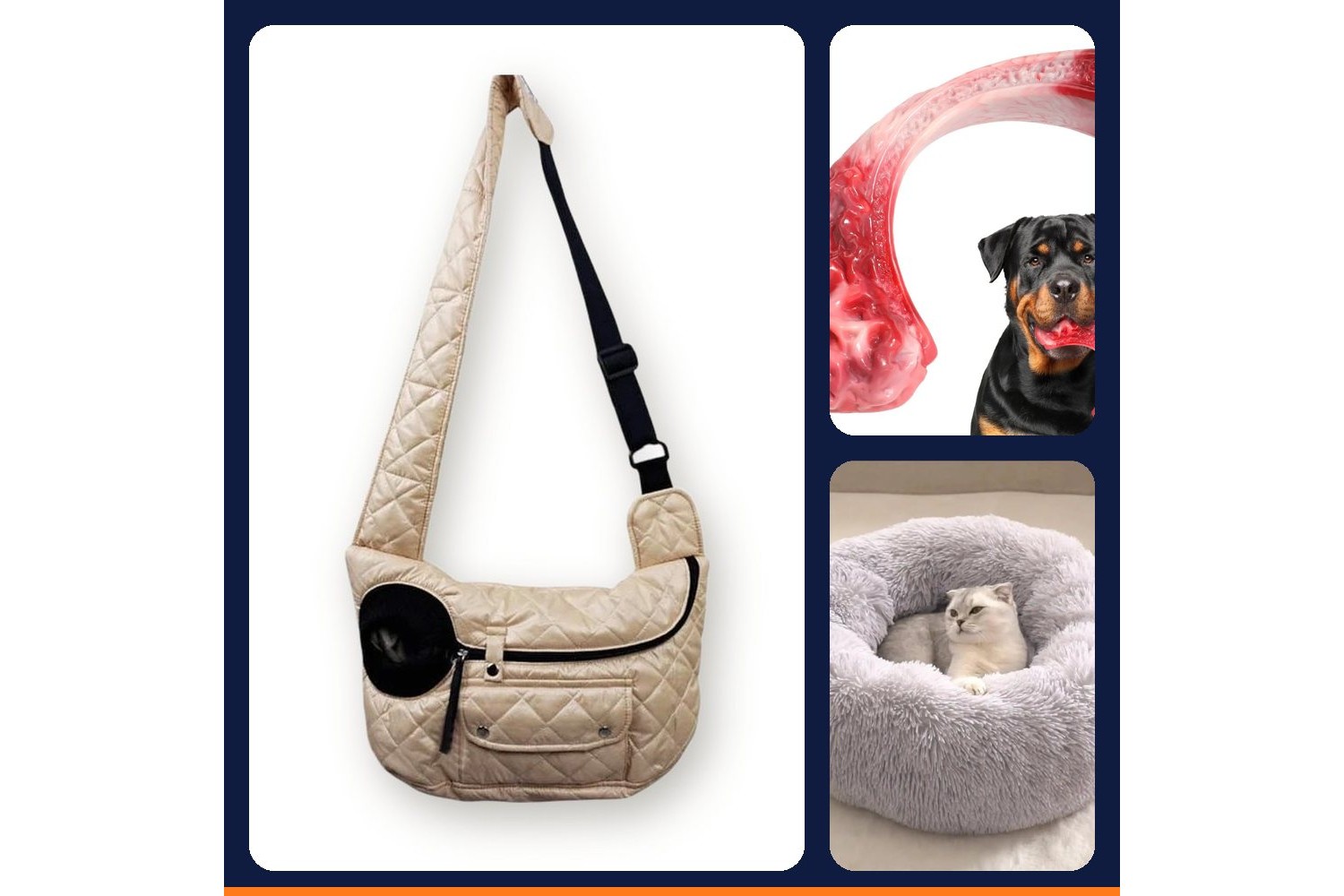
A pet brand of your own is easiest to start with accessories rather than food. Pet food, treats and veterinary products are regulated separately: offering them under your own name requires registration and documents under national rules. Leads and harnesses, clothing, bowls, beds and carriers are subject to general product safety requirements, and almost every such item has room for a sign. Below: which products to choose, how the three levels of branding differ and how to get from sample to batch.
In brief
- Start with a logo on a ready-made item; your own packaging is the second step, your own construction the third.
- Own-brand food, treats and veterinary medicines are a separately regulated subject; this article is about accessories.
- A brand is built around a narrow line – walks, home or travel – not around the whole range at once.
- Collars, beds, bowls and toys fall into different trade mark classes: the list is defined before filing.
- Branding lengthens the lead time, so a seasonal line goes into work well in advance.
Why a brand in this niche
The first reason is repeat purchases. A pet owner buys accessories for years: if the harness fits, they return to the same brand for a lead and a collar. The name on the item gives them a way to find you again.
The second reason is to escape price comparison. Unbranded leads and bowls are sold by many, and on a marketplace the customer picks the cheapest offer. An item with its own sign, packaging and size chart has nothing to be compared with directly.
The third reason is trust. Leads and harnesses are a matter of the animal’s safety, and a brand with a name, contact details and clear instructions is seen as more reliable than a nameless product.
The fourth reason is business orders. Grooming salons, veterinary practices, pet hotels and kennels order bandanas, leads and other accessories with a logo. Once the branding process runs smoothly, this is a second sales channel alongside retail.
Which products suit your own brand
Choose basic models without third-party decoration and with a clear place for the sign. It is practical to start with one theme and gather three or four items around it.
Clothing and bandanas. Textiles are the simplest carrier for a logo: print or embroidery on flat fabric. A bandana is an inexpensive entry item and a ready product for corporate orders. Models are in the ‘Clothing’ category.

Plain dog bandana for logo printing – a simple first product for the brand and a basis for orders from salons.
Leads, collars and harnesses. On a harness the sign goes on the chest or back panel; on a collar and lead, as a patch, a woven label or a print on the webbing. A shared colour and hardware turn separate items into a set. See the ‘Chains, leads and collars’ category.

Harness, lead and poop bag holder set, XS–XL: three items in one style make a ready ‘walk’ line.
Bowls and stands. Engraving looks good on wood and bamboo, printing on metal and plastic. This is a product for the home, chosen to match the interior, so a discreet sign is appropriate. Category: ‘Feeders and drinkers’.

Bamboo stand with two bowls: on wood the logo can be engraved, with no inks at all.
Carriers. A carrier bag is a large item with plenty of space for the sign and close attention paid to quality. It belongs in a ‘travel’ line together with small travel accessories; models are in the ‘Carriers’ category.

Soft foldable carrier bag for cats and small dogs: a clearly visible place for the logo on the side panel.
Three levels: logo, packaging, OEM/ODM
Logo on a ready-made item. You choose the model, colours and sizes, and the manufacturer applies the sign; the method – printing, engraving, embossing – is matched to the material. This is the fastest route and a convenient test of demand. The terms are set out on the Private Label page; branding is available for more than 8,000 catalogue items.
Your own packaging. A card holder for a collar, a box for a bowl, a hang tag with a size chart, labelling for your market. From this point the item looks like a branded product and is ready for the shelves of other shops.
OEM/ODM. Production to your specification: your own webbing and hardware, bed fabric and filling, harness construction, colour matched to a sample. Move to this level once the basic line sells and it is clear what customers are missing. Details are on the OEM/ODM manufacturing page.
Name and trade mark
The name should be short: there is little room on a collar or lead webbing. Make two versions of the sign – a full one for packaging and tags and a simplified one for patches and engraving – and check how it reads in one colour and at small size.
A trade mark is registered with a national office or with the EUIPO for the whole EU. Pet products are spread across several classes: leads and collars, beds, bowls and toys are claimed separately, and the list of goods should leave room for the future line. Search the public databases before ordering the first batch; procedure and cost depend on the office, and if in doubt, consult a trade mark attorney.
Packaging and labelling
In this trade, packaging works as an adviser. It should state what the customer would ask a shop assistant: the item’s dimensions, neck or chest girth, the weight of the animal it suits, material and care. A clear size chart reduces returns more than any design.
Labelling is the brand owner’s responsibility. Under the EU General Product Safety Regulation, the item or packaging carries the details of the manufacturer and of the responsible person in the EU, plus any necessary warnings. Items with a battery and electronics are subject to the requirements for electronics and batteries (CE, RoHS). Do not mention therapeutic or health-improving effects on the packaging: such claims fall under veterinary rules. Request the documents from the account manager before payment.
From sample to batch
- Complete the wholesale registration and send a request: models, sizes, colours, quantities, branding method and position.
- A sample or a small trial batch – by agreement with the account manager. Check the fit on your own animal and the strength of the clip, buckles and stitching.
- Prepare the artwork: vector logo, size in millimetres, colours, hang tag and packaging layouts with a size chart.
- Approve the proof and the quotation. A pro forma invoice follows, paid by bank transfer in EUR or PLN.
- Production: items, branding, packing, labelling.
- Quality control before dispatch: position of the sign, hardware, stitching, completeness by size.
- Dispatch and tracking number. The indicative lead time is 20–60 days plus time for artwork and production; terms are on the delivery page.
What the budget consists of and typical mistakes
A brand budget has several parts: the items themselves, logo branding, packaging and tags, development of the sign and artwork, trade mark registration, delivery quoted per consignment, product photography with animals. The minimum order is 500 EUR net per item; an order under your own brand starts at 5000 EUR; the unit price depends on the volume tier. Plan the first batch as a test: one theme, three or four items, popular sizes.
What to avoid:
- launching every direction at once – from toys to carriers;
- ordering a batch without testing the sample for strength;
- packaging without a size chart and the weight of the animal;
- a sign resembling well-known pet brands;
- claims about benefits for the animal’s health;
- equal quantities of all sizes: the extremes sell more slowly than the middle ones.
Frequently asked questions
Can food or treats be sold under your own brand?
This is a separately regulated area: composition, production, labelling and registration of the seller are covered by national rules. It is simpler to start the brand with accessories and move to food after consulting the veterinary authority.
What quantity can you start with?
Branding terms depend on the model and the method and are agreed in the request. An order under your own brand starts at 5000 EUR; other orders start at 500 EUR net per item.
Where is the best place for a logo on a harness and collar?
On a harness, the chest or back panel; on a collar, the webbing or a small patch by the buckle. The sign must not obstruct the hardware or chafe; the account manager will advise on the method for a given model.
Can a line be built from a single model?
Yes: one harness in several colours and sizes with the same sign is already a line. A lead and collar in the same colours are added later.
Choose a theme and three or four basic items in the ‘Pet shops’ section, simplify the sign for patches and engraving and start with a small batch. If there is no shop yet, first read the article ‘How to open a pet shop’.
