
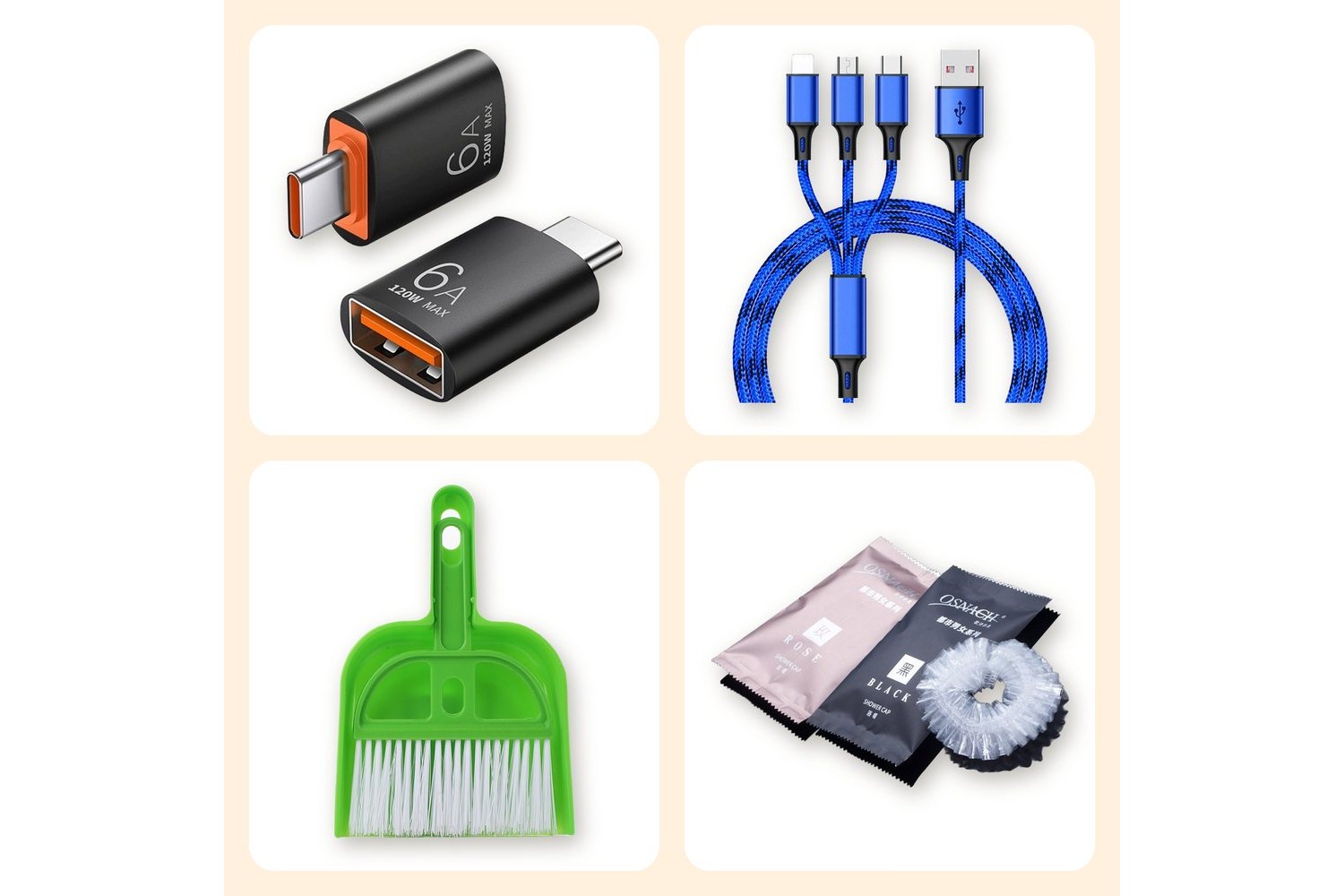
A minimarket starts with premises close to where people live and a decision about what goes on the shelves. Food, alcohol and tobacco are sold under national rules: they require registrations and licences, and the local authority and your accountant are the right people to ask. This article covers the other part of the shop, the non-food range: household goods, small items at the checkout, charging cables, stationery and seasonal lines. It takes little space, does not spoil, needs no refrigeration, and customers pick it up alongside their main purchase.
In brief
- The non-food shelf in a minimarket holds goods for today: the sponges have run out, the bag has torn, the phone is flat.
- The core is household consumables, the checkout zone and one seasonal block that changes several times a year.
- The range is narrow: one or two lines per need, not ten versions of the same product.
- The minimum order value is 500 EUR net per item, so new lines can be tested item by item.
- Delivery takes roughly 20–60 days: stock of fast-moving lines is planned ahead and seasonal goods are ordered 2–3 months in advance.
Customer and format
The customer of a neighbourhood shop lives or works a few minutes' walk away. They come in often, buy little and do not plan household purchases: they remember them on seeing them on the shelf. The non-food range therefore runs on two mechanisms – “needed right now” and “saw it and took it”.
The format shapes the shelf. In a residential area, cleaning and kitchen items sell. Near offices and schools it is small stationery, cables and chargers. In a tourist spot or by a station it is travel items, shopping bags and disposable tableware for picnics. In a late-night shop the share of emergency purchases grows. With several shops, keep the core range common and leave a small part of the shelf for local needs: that makes it easier to buy in one batch and compare sales between sites.
Starting range
Space is tight, so each line should answer a clear need. How to set priorities between product groups is covered in the overview “Non-food range for a minimarket”. Four blocks are enough to start.
Household consumables. Sponges, microfibre cloths, brushes, bin bags and gloves are bought regularly – a core with steady turnover. Choose packaging that hangs on a hook or stands in a display box. See the category “Cloths and sponges”.

A dense microfibre kitchen cloth is a core line on the household shelf that customers buy again and again.
Gloves and hand protection. Disposable gloves are used in the kitchen, for cleaning and for hair colouring; a box takes little space and sells all year. The choice is in the category “Aprons and household gloves”.

A box of 100 disposable gloves is a consumable for kitchen and cleaning with even demand through the year.
Checkout zone: charging and small items. A cable is a typical urgent purchase: the old one broke or was left at home. Keep the main connectors and universal models at the till. Batteries, lighters, pens and notepads belong here too. Cables are in the category “Cables and adapters”.

A 3-in-1 cable covers three connector types with a single line – practical for a narrow checkout range.
Bags and on-the-way goods. A foldable shopping bag sells right at the till, when the customer realises there is nothing to carry the shopping in. Options are in the category “Shopping bags”.

A foldable bag in water-resistant polyester fits on a checkout hook and sells at the moment of payment.
As trial lines, take the seasonal block and one or two new groups, such as disposable tableware for summer or small cleaning tools. The core should take most of the shelf; the trial lines show where to expand.
What the starting budget consists of
Amounts depend on the country, town and floor space, but the cost structure is the same:
- business registration, till and licences for the food part – under national rules;
- rent and fit-out, shelving, checkout stands, hooks and baskets;
- the first batch of non-food goods and its delivery, which is calculated per batch;
- price labels, signage and the seasonal display;
- a reserve for reordering fast-moving lines – needed before the first batch sells out.
Non-food goods have the advantage of no short shelf life: leftover stock is not written off, it waits for a buyer. But money is tied up in it, so deep stock is planned for core lines only.
Supplier and first order
- Complete wholesale buyer registration: after that, net prices by volume tier become visible.
- Draw up a list of lines by block and send a request. The minimum order value is 500 EUR net per item.
- The account manager prepares a quotation with prices and a delivery cost calculated for your batch.
- You receive a pro forma invoice and pay by bank transfer in EUR or PLN. The invoice is issued by a Polish company; for EU companies with a valid EU VAT number an intra-Community supply is possible. Details are on the payment page.
- The goods pass quality control before dispatch; after shipment you receive a tracking number and the documents.
The whole process is set out step by step in the buyer's guide. Delivery takes roughly 20–60 days, so reorders are placed while there is still stock on the shelf.
Documents and product requirements
Consumer goods in the EU fall under the General Product Safety Regulation: the product or packaging must carry the details of the manufacturer and of the responsible person in the EU. Cables, chargers and other electronics are subject to CE marking, and batteries have requirements of their own. Disposable tableware is covered by the rules on food contact materials and the restrictions on single-use plastics. Ask the account manager for certificates and declarations before payment. Consumer information must be in the language of the country of sale – agree the labelling for your market with the manager.
Seasonality and buying calendar
Household goods and checkout items sell evenly all year. The seasonal block changes: cleaning and garden items in spring; picnic, beach and travel goods in summer; school stationery in late summer; umbrellas, gloves and festive items in autumn and winter. Seasonal goods are ordered 2–3 months before sales begin: summer lines in early spring, school lines in early summer, Christmas lines in early autumn. A yearly calendar and one combined request per quarter work well: core range plus the coming season.
Common mistakes at the start
- Trying to copy the range of a hardware shop: a minimarket needs one good line, not a choice of ten.
- Putting non-food goods in a far corner where nobody sees them.
- Ordering seasonal goods when the season has already begun.
- Not requesting documents for electronics and food contact items.
- Not tracking sales by line and reordering by guesswork.
Frequently asked questions
How much space should non-food goods get?
There is no single rule. Typically it is one or two shelving bays, the checkout zone and a spot for the seasonal display. Start small and expand what sells.
Can small quantities of different goods be ordered?
Yes. Several items can go into one order; the only limit is the order value from 500 EUR net per item.
How to buy for several shops in a chain?
With one request for the common range: a larger volume means a better price tier. You distribute the goods between sites yourself once the batch arrives.
What to do with leftover seasonal stock?
Part is sold off at the end of the season and part is stored until next year: such goods do not spoil. Next time, order less or earlier.
Start with a list of the needs customers meet in your shop on the way home, and build a request around them in the “Minimarket chains” section. Once the core lines sell steadily, they can be released under your own label – see the article “How to create an own brand for a minimarket chain”.
