
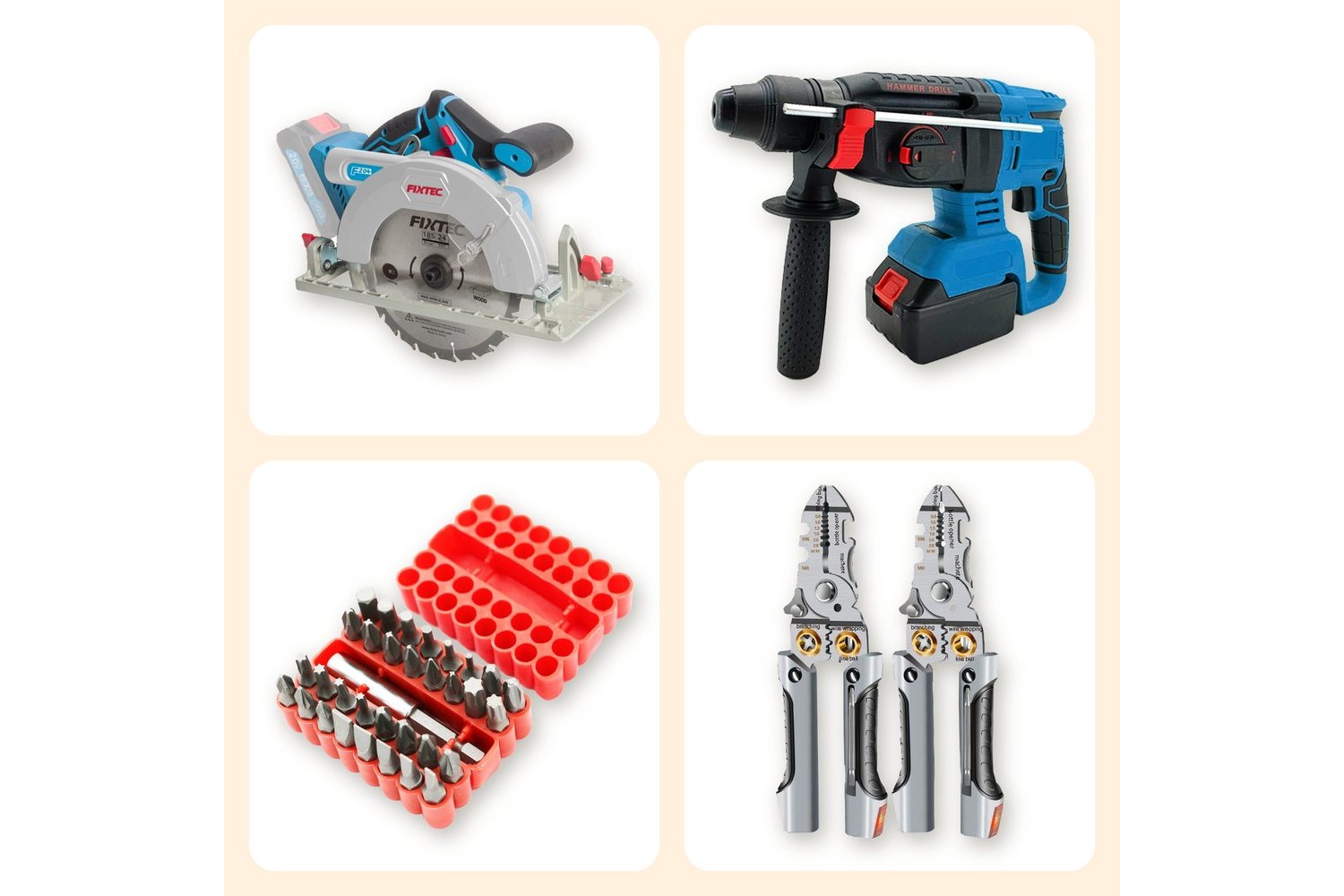
A DIY shop – a shop for tools and home improvement supplies – starts with a decision about depth. A small retailer cannot stock everything a large home improvement store carries, so the first step is to decide whose jobs the shop solves: the home DIYer, the trade crew, or both. A workable starting range is built around hand tools, cordless power tools and consumables that bring customers back. Below: format, first range, budget structure and the ordering process.
In brief
- Define the customer first: tool class, depth of accessories and packaging – single items or sets – all depend on it.
- Hand tools and accessories form the base, power tools raise the basket value, fasteners and consumables drive repeat visits.
- Cordless tools sell best as a line on one voltage; check battery compatibility between models before ordering.
- The minimum order value is 500 EUR net and many items start from 1–10 pieces, so the first order can be mixed.
- Delivery takes roughly 20–60 days, so stock for the spring renovation season is ordered in winter.
Customers and format
There are three types of buyer. The home DIYer repairs and assembles things personally and needs a clear set in a case, a drill driver with two batteries and some advice. The tradesperson – decorator, electrician, plumber – buys often, knows the specifications and looks at durability, available accessories and speed of replacement. The third type is business: property managers, workshops and small manufacturers that need identical items in quantity and an invoice.
A neighbourhood shop earns on urgency: a drill bit, wall plugs or a spanner are needed today, and the customer will not wait for delivery. Breadth of small items and display matter here. An online shop or a marketplace such as Amazon or eBay is better for power tools and sets: they are chosen by specification, and the listing must answer questions about voltage, torque, kit contents and chuck type. Sales to crews and companies rely on constant availability and terms for repeat orders. Many sellers combine formats: the shop brings daily footfall, online brings turnover on larger items.
Starting range: core items and trial items
Hand tools are the base that neither dates nor needs charging. The first order includes screwdrivers and bit sets, spanners and sockets, pliers, hammers and measuring tools. Sets in a case sell better than loose items: the customer gets a ready solution and the shop gets a higher ticket per item.

A set of three 6″ pliers – combination, long nose and diagonal cutters – a core item for the home DIYer.

A 33-piece bit set with magnetic holder: an inexpensive accessory bought together with a drill driver.
Power tools. Start with the types in highest demand: drill drivers and drills, angle grinders, then rotary hammers and saws. Cordless models on the same voltage are best displayed side by side so the customer sees a line. A kit with two batteries and a case suits a beginner; a bare tool suits someone who already owns batteries.

A brushless 20 V cordless hammer drill with two batteries and a case: the first purchase for home and renovation.
Consumables and small items. Fasteners, drill bits, discs and bits are used up on the job, so customers return for them. This group takes little space and needs a wide spread of sizes rather than a large stock of each item.
Bulky items. Ladders are needed at home and on site, but they take space in transport and storage – a few models are enough to start with.

An aluminium multi-purpose hinged ladder, 4 × 5 steps: one model replaces a stepladder, a leaning ladder and a platform.
Plumbing fittings, specialist tools for electricians and precision screwdrivers for device repair are worth trying in small quantities. The groups that shops in this niche order first are covered in the article on the range of a DIY shop.
What the starting budget consists of
The amounts depend on format and floor space, but the structure of stock costs is similar:
- hand tools and sets – a wide selection with a small stock of each item;
- power tools – fewer models, but the most expensive part of the order;
- accessories and consumables: bits, drill bits, discs, fasteners by size;
- delivery – calculated for the specific batch and noticeable for heavy, bulky goods;
- shop fittings: pegboard panels, hooks, a display case for expensive items;
- a reserve for reordering fast sellers and for warranty claims.
Rent, registration, tills and advertising are budgeted separately. A marketplace adds commission and its own logistics fees.
Supplier and first order
EnjoyCommerce supplies goods to companies and sole traders in EU countries. The minimum order value is 500 EUR net and many items have a minimum quantity from 1–10 pieces, so a trial range of tools fits into one order.
- Read the buyer’s guide and complete the wholesale registration: net prices by volume tier become visible afterwards.
- Prepare a list: item, kit contents, quantity. For power tools state the plug type and mains voltage; for cordless tools say whether batteries and a charger should be included.
- The manager prepares a quotation and calculates delivery for the batch.
- Once agreed, a pro forma invoice is issued. Payment is by bank transfer in EUR or PLN.
- The goods are shipped or produced and pass quality control before dispatch.
- The buyer receives a tracking number and documents. Invoices are issued by a Polish company; for EU companies with a valid EU VAT number an intra-Community supply is possible.
Documents and product requirements
Business registration and taxes depend on the country – check with an accountant or the local authority. Requirements for the goods themselves are common across the EU. Power tools belong to the categories that carry CE marking; electronics are also subject to restrictions on hazardous substances (RoHS), and batteries have rules of their own. Ask the manager for declarations of conformity and certificates before payment.
Under the General Product Safety Regulation (GPSR), the product or packaging shows the details of the manufacturer and of the responsible person in the EU. A tool comes with instructions and safety warnings in the language of the country of sale. For ladders, ask for confirmation of compliance with the EN 131 standard. In many countries sellers of electrical equipment and batteries must take part in a collection and recycling scheme – the rules are national and should be checked locally. Construction chemicals and mixes follow labelling rules of their own; order them only after checking the requirements.
Seasonality and buying calendar
Tools sell all year, but demand rises twice. In spring renovations and garden work begin – stock for that period is ordered in December and January. In autumn sites are finished before the frost and homes are prepared for winter. Gifts form a separate peak: in December and before Father’s Day, cased sets and cordless tools are bought as presents, so the goods should be on the shelf several weeks earlier. Order seasonal items 2–3 months ahead, allowing for the 20–60 day delivery time.
Common mistakes at the start
- Trying to copy a large home improvement store: a wide range without depth, where the right size is missing.
- Buying power tools without accessories and consumables – the customer goes elsewhere for them.
- Stocking cordless models with different batteries and being unable to explain what fits what.
- Not checking the plug, the instructions and the documents before payment.
- Leaving warranty handling undefined: who accepts the tool, how fast it is replaced and what happens to returns.
Frequently asked questions
What amount is enough to start buying?
The minimum order value is 500 EUR net. It can combine different groups: hand tools, accessories and a few power tool models. How much a full range requires depends on the format of the shop.
What comes first – hand tools or power tools?
Both, in different proportions. Hand tools and consumables cover everyday demand and tie up little money per item. Power tools start with a few models of the most popular types and expand according to sales.
What about the warranty on power tools?
The seller is responsible to the buyer for the goods, and the terms are set by national law. Before ordering, agree with the manager how defective goods are handled and plan a reserve for replacements. Explain to customers in advance the difference between domestic and intensive use.
Can tools be sold under an own brand?
Yes. The logo is applied to the housing, the case or the packaging, and with larger volumes a custom kit is possible. Details are in the article on building a brand, linked below.
Start with a short list and one mixed batch: browse the section of goods for DIY shops, choose the items and send a request to the manager. Once the fast sellers are clear, move on to the next step – an own tool brand.
