
A camping shop starts with one question: how exactly do your customers spend time outdoors? In a tent beside the car, in a motorhome, on the beach or on a day trip with a picnic. The answer shapes the range, the storage space you need and the date by which stock has to be on the shelf. The season is short and delivery takes weeks, so purchase planning matters more here than shop fitting.
In brief
- Pick one type of trip as your focus and build a complete kit for it rather than one item from every category.
- The core groups are folding furniture, sleeping, cooking and picnic, plus small safety and wet-weather items.
- Bulky goods need storage and a workable way of shipping to the customer – settle that before ordering.
- The main summer order is placed in winter: the estimated delivery time is 20–60 days.
- Test unfamiliar products with a small quantity and expand after the first sales.
Customers and shop format
Camping has several audiences, and each needs different things. A family driving out for the weekend buys comfort: chairs, a table, a large cool bag, an air bed. A backpacker counts every gram and looks at packed size. An angler wants a sturdy chair and rain protection. A motorhome owner looks for collapsible cookware and anything that saves space. A beachgoer takes a wagon, a bag and an umbrella.
Choose the sales format to suit the audience. A physical shop near a main road, a lake or a campsite lives on impulse purchases: a forgotten chair, a torn poncho, one more mattress. An online shop lets you carry a wide range but means solving the shipping of large boxes. Amazon and eBay bring fast traffic in season, although price competition is tougher there and reviews carry more weight.
There are trade buyers too: campsites and holiday parks, equipment hire points, organisers of children’s camps and festivals, companies ordering kits for staff away days. They buy the same item in quantity and return every season, so even a small shop should have a separate offer for them.
Starter range: core lines and trial lines
Camp furniture. Chairs, stools and tables are the most obvious purchase in this trade and usually the place to begin. In the folding camping furniture section, choose models with a stated load rating and a carry bag: those are a buyer’s first questions.

A chair with armrests and a steel frame – a core line for family camping and fishing.
Sleeping and gear. Air mattresses and beds, mats, torches, cord and small equipment from the Tourism category. A bed with a built-in pump is bought for house guests as well as for the tent, so it sells for longer than the season lasts.

An air bed with a built-in pump: made for car camping, bought for the spare room as well.
Cooking and picnic. Collapsible cookware, cool bags, blankets and sets from the picnic category. These products are inexpensive, take up little room and add well to a larger purchase in the same basket.

A collapsible silicone kettle with mugs saves space in the boot and the rucksack – easy to explain on display.
Safety and bad weather. Emergency blankets, rainwear, small first-aid items. People rarely search for them, but readily add them to an order if they sit by the till or appear in the online basket.

An emergency thermal blanket is a low-cost extra that goes into every hiking first-aid kit.
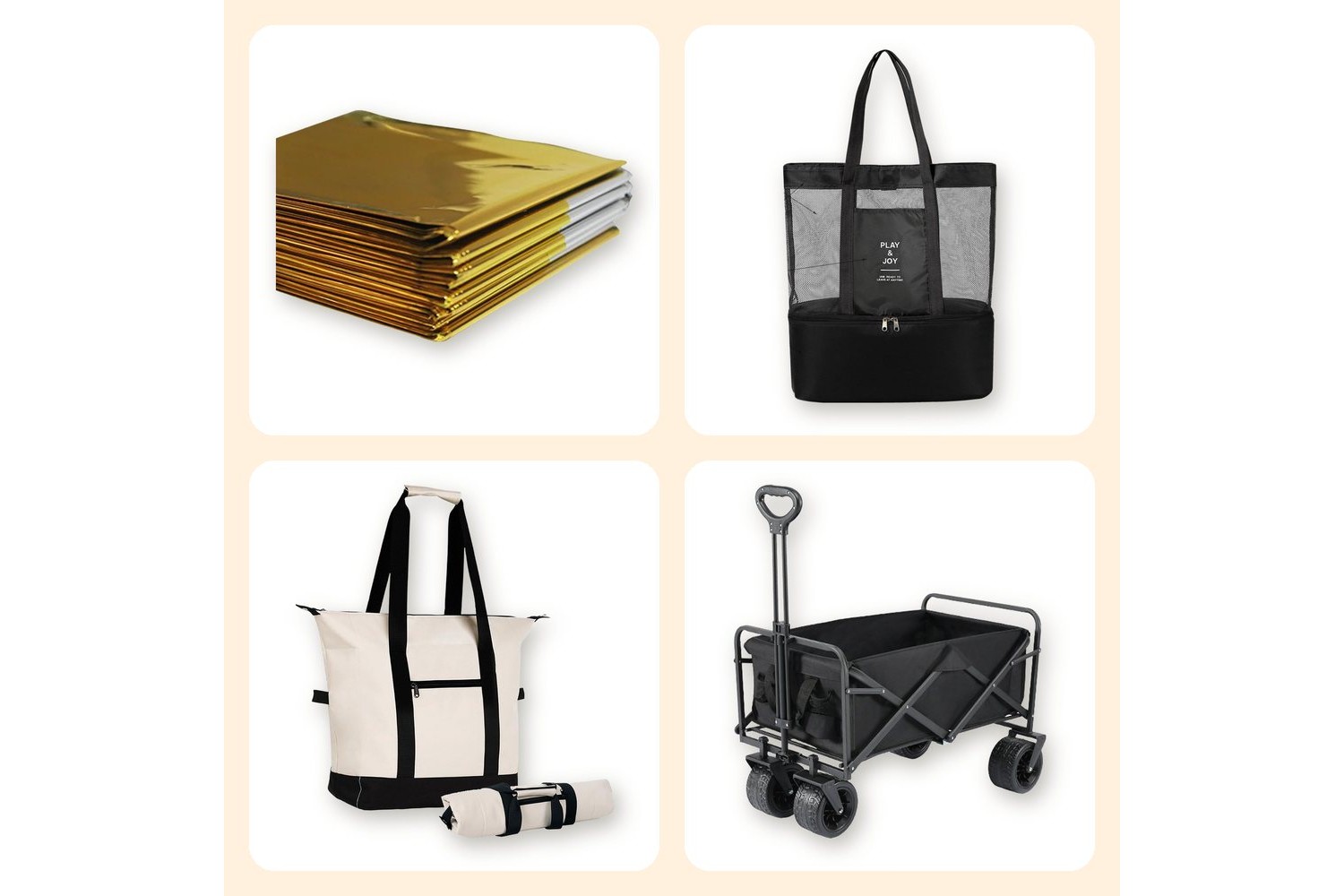
For trial lines, look at neighbouring uses: wagons and bags from the beach holiday section, board games for evenings at camp, outdoor products for children. A ready list of steady sellers is in the article on what to buy wholesale for a camping shop.
What the starting budget consists of
The amounts depend on your format and the depth of the range, so it is more useful to know the cost items:
- stock: core groups in several variants and trial lines in small quantities;
- delivery of the consignment – for bulky furniture and mattresses this is a noticeable share, calculated per order;
- storage: chairs, tables and wagons take up room even when folded;
- shipping to the customer and packaging for large boxes;
- photographs and descriptions: leisure products sell through pictures of them in use;
- pre-season promotion and marketplace fees if you sell there;
- a reserve for reordering lines that run out in midsummer.
Rent, shop fitting and taxes are counted separately – they depend on the country and the format.
Supplier and first order
On EnjoyCommerce the minimum order value is EUR 500 net per item. That makes it possible to mix groups in a first order, each item from EUR 500 net, and test demand without buying every model in bulk. The purchase goes like this:
- Read the buyer’s guide and set up a wholesale account – once registered, you can see net prices by quantity tier.
- Draw up a list with quantities for each group and send a request. The account manager replies with a quotation and a delivery cost for your consignment.
- Once agreed, you receive a pro forma invoice. The payment methods and terms are simple: bank transfer in EUR or PLN.
- The goods are dispatched or produced and then go through a quality check before shipment.
- After dispatch you receive a tracking number and documents. Delivery covers every EU country, with an estimated lead time of 20–60 days.
Invoices are issued by a Polish company with an EU VAT number. If your business holds a valid EU VAT number, an intra-Community supply (reverse charge) is possible – ask your accountant how to record it.
Documents and product requirements
Business registration, taxes and trading rules depend on the country: check them with an accountant or the local authority. Products sold in the EU fall under the General Product Safety Regulation (GPSR): the item or its packaging must carry the details of the manufacturer and of the responsible person in the EU.
Part of the range is subject to separate requirements. Electrical items – pumps, torches, devices with rechargeable batteries – must carry CE marking. Cookware and food containers must comply with EU rules on food contact materials. Children’s products classed as toys and personal protective equipment are regulated separately as well. Request certificates and declarations from the manufacturer through your account manager before payment, not after the consignment arrives.
Seasonality and the buying calendar
Demand for camping products rises from spring and holds until the end of summer, so the shop’s year is built around that wave. Seasonal goods are ordered 2–3 months ahead: the main summer order is placed in winter so that it is in storage and listed by the first warm weekends.
In spring comes a top-up order based on early sales – small and precise. By midsummer it is too late to buy bulky goods for the current season: they would arrive as it ends. Autumn and winter are the time for rainwear, umbrellas, insulated products and gift sets, and for a review: what sold, what stayed, what to order for next year.
Common mistakes at the start
- Ordering the summer range in spring and receiving it when the season is already under way.
- Taking one item from ten categories instead of a complete kit for one type of trip.
- Ignoring volume and weight: large furniture changes delivery costs and storage needs.
- Selling chairs and beds without stating load rating, folded dimensions and weight.
- Buying a new model in a large quantity without a trial order.
- Leaving documents until later, particularly for electrical and children’s products.
Frequently asked questions
Can a first order combine different categories?
Yes. The EUR 500 net minimum applies to each item, and different items can go in the same request. Chairs, mattresses, cookware and small items can travel as one consignment with a single delivery.
When should the summer order be placed?
In winter. The estimated delivery time is 20–60 days, plus the time to agree the quotation and pay; once the goods arrive they still have to be received and listed.
How is delivery calculated for bulky goods?
The delivery cost is calculated for the specific consignment, taking volume and weight into account. It is included in the quotation, so the total is known before payment.
Do camping products need certificates?
It depends on the category. Electrical items, food-contact cookware, children’s products and protective equipment are covered by separate EU requirements. Documents are requested from the manufacturer before the order is paid.
Define how your customer camps, build the kit for that and check your dates against the seasonal calendar. Lines for a first request are easy to pick in the products for camping shops section. Once the first regular customers appear, the article on launching your own outdoor brand will be useful.
