
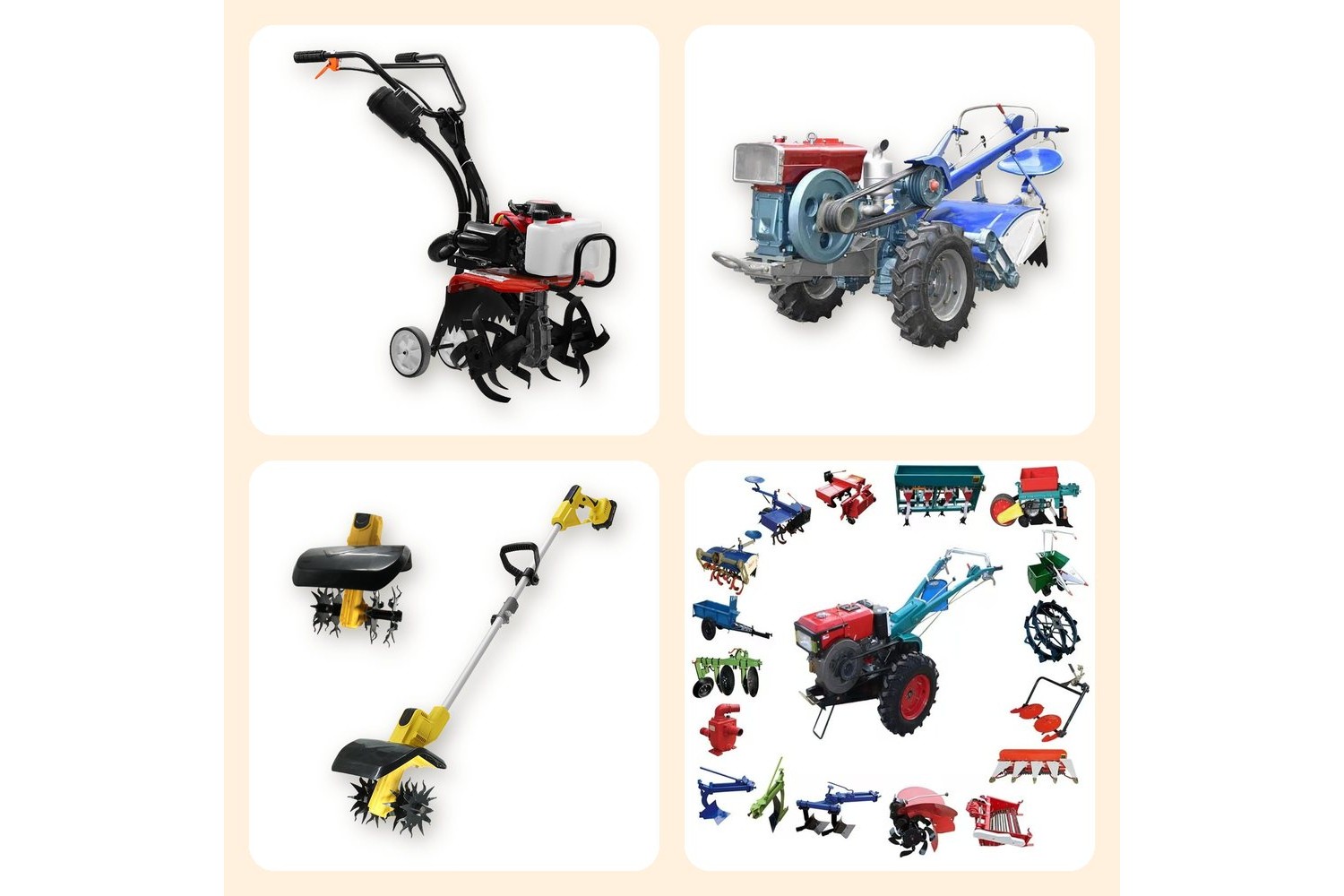
A small farm does not start with buying a tractor; it starts with a work plan: what to grow, on how much land and with how many hands. The plan gives a list of operations – tillage, irrigation, transport, power supply – and machines are chosen to match those operations. Below: how to pick the class of machinery, put together a starting set, what the budget consists of, and how to place the first order so that everything arrives before field work begins.
In brief
- Machinery is chosen by area and operations: a cultivator for beds and tunnels, a walk-behind tractor for a larger plot, a mini tractor when work is daily and measured in hectares.
- A power unit without tools is half the job: implements and spare parts go into the same order.
- Irrigation and backup power are planned together with the machinery, not after the first drought.
- The indicative delivery time is 20–60 days, so the spring order is sent in winter.
- Farm registration, subsidies, veterinary and plant health requirements depend on the country – clarify them before buying.
Type of farm and customer
Everything else follows from the type of farm. Vegetables and herbs in the open field and under cover need frequent shallow tillage and reliable irrigation. Soft fruit and orchards mean work between rows, where the size of the machine matters. Small livestock and poultry mean moving feed, water, light and a reserve in case the grid goes down. A mixed farm that receives visitors adds grounds maintenance.
The second question is who you sell to. Direct sales at a market, in a farm shop or through box subscriptions bring a better price but require an even harvest all week, which means irrigation and machinery that is not standing in repair. Supplying restaurants and shops requires a steady volume on the agreed day. Selling to a processor or a cooperative is simpler, but unit cost decides there, and mechanisation only pays for itself at full load. Write the operations down month by month – that list becomes the purchasing specification.
Starting equipment
The set is built from five groups. What usually goes into a farm's supply is covered in the overview of the basic supply set for agribusinesses.
Power units. A cultivator is enough for beds, tunnels and row spacing. A plot that has to be ploughed, ridged and served with a trailer is worked with a walk-behind tractor: it takes a wide range of tools, and a diesel engine is built for long hours under load. Models are in the “Walk-behind tractors” category.

A diesel walk-behind tractor in three power versions: the class is matched to the area and how heavy the soil is.
When work is daily and the area is counted in hectares, farms move up to mini tractors: four-wheel drive and a power take-off allow wider implements and a loader.
Implements. Plough, rotary tiller, cultivator, harrow, ridger, trailer – the set depends on the crops. The basics are tools for primary and seedbed tillage; on trial goes whatever is needed once or twice a season and can be hired at first. Before ordering, check the hitch type and the tractor power required. The range is in the “Implements” category.

A mounted spring tine cultivator prepares the soil for sowing in a single tractor pass.
Irrigation. The water source defines the pump type: borehole, well, open water or mains with weak pressure. Compare depth, head and flow with the model's specifications. DC pumps run from solar panels and help where a cable cannot reach the field. See the “Pumps” category.

A 12/24 V borehole pump runs from solar panels – irrigation on a plot with no grid connection.
Power supply. A cold room, milking machine, incubator and pumps will not survive a long outage. A generator is sized by the total power of the consumers that must run at the same time, with a margin for starting currents.

A diesel generator in a sound-attenuated enclosure – backup for the cold room, pumps and lighting.
Spare parts and consumables. Belts, filters, tiller blades, cage wheels. Order them with the machine: in season you cannot wait several weeks for a part.
What the starting budget consists of
The amounts depend on area, type of farming and country, but the cost items are the same:
- land or lease, farm registration – under national rules;
- power units and the tools for them;
- irrigation: pump, main line, tanks, filters;
- power supply and backup;
- buildings: machinery shelter, store, tunnels;
- seed, planting material, feed, fertiliser;
- delivery of the machinery, calculated per consignment, assembly and first service;
- parts, fuel, oils and a reserve for in-season repairs.
Many EU countries run support schemes for new farmers. Conditions, application windows and eligible costs differ from country to country – check them with the local agricultural authority before paying for machinery: some schemes do not reimburse purchases made before the application is filed.
Supplier and first order
- Complete wholesale buyer registration – after that, net prices by volume tier are visible.
- List the machines, implements and parts with the specifications you need and send a request. The process is described in the buyer's guide.
- The manager sends a quotation: prices, lead time and delivery cost for your consignment.
- Once agreed, you receive a pro forma invoice and pay by bank transfer in EUR or PLN.
- The goods are shipped or produced; before dispatch they go through quality control.
- You receive a tracking number and documents. The indicative delivery time is 20–60 days.
The minimum order value is EUR 500 net; for many items the minimum batch starts at 1–10 units, so buying one machine with implements and parts is an ordinary case. Invoices are issued by a Polish company; for farms with a valid EU VAT number, intra-Community supply under the reverse charge is possible.
Documents and requirements for machinery
Farm registration, taxes, veterinary and plant health rules depend on the country and the type of farming – clarify them with local authorities and your accountant. The machinery itself is also subject to EU requirements. Machines must carry CE marking and come with a declaration of conformity and instructions in the language of the country; engines are subject to emission requirements. Driving a tractor on public roads and registering it are governed by national rules – find them out before buying. Electrical equipment such as generators and pumps also falls under CE rules. Ask the manager for the documents for the specific model before payment.
Seasonality and purchasing calendar
Count back from the first field operation. Tillage machinery and implements are ordered in autumn and early winter, leaving time before spring to assemble them, run them in and buy what is missing. Pumps and everything for irrigation – at the end of winter, before the first heat. A generator – ahead of the season when it matters most: summer for cooling the harvest, winter for livestock. The parts list for the season is drawn up after the autumn inspection. Seasonal goods are safest ordered 2–3 months ahead.
Typical mistakes at the start
- Buying a machine “to grow into”: a powerful tractor on a small area stands idle and ties up money needed for irrigation.
- Taking a power unit without tools and finding out on planting day.
- Not checking hitch type and power against the chosen implements.
- Leaving parts and consumables out of the first order.
- Paying for machinery before the subsidy conditions are known.
- Putting irrigation off until the second year.
Frequently asked questions
Walk-behind tractor or mini tractor?
Area and regularity of work decide. A walk-behind tractor covers a plot where machinery is needed a few days a month. If work is daily and you need a loader and wide implements, cost out a mini tractor.
Can a single machine be ordered?
Yes, if the order together with implements and parts reaches the minimum of EUR 500 net. The minimum batch per item is shown on the product page.
Who assembles and services the machinery?
Machines arrive in transport packaging and need assembly and initial adjustment. Find a workshop near the farm in advance and confirm the scope of supply and parts availability with the manager.
What if a part is needed in season?
Delivery takes the same 20–60 days, so fast-moving parts are kept on the shelf from the start of the season. Draw up the list for your model with the manager.
Start with the list of operations for the year and build your request around it in the “Agribusinesses” section. Once regular customers appear, the produce will need a name – see the article “How to create a farm brand”.
