
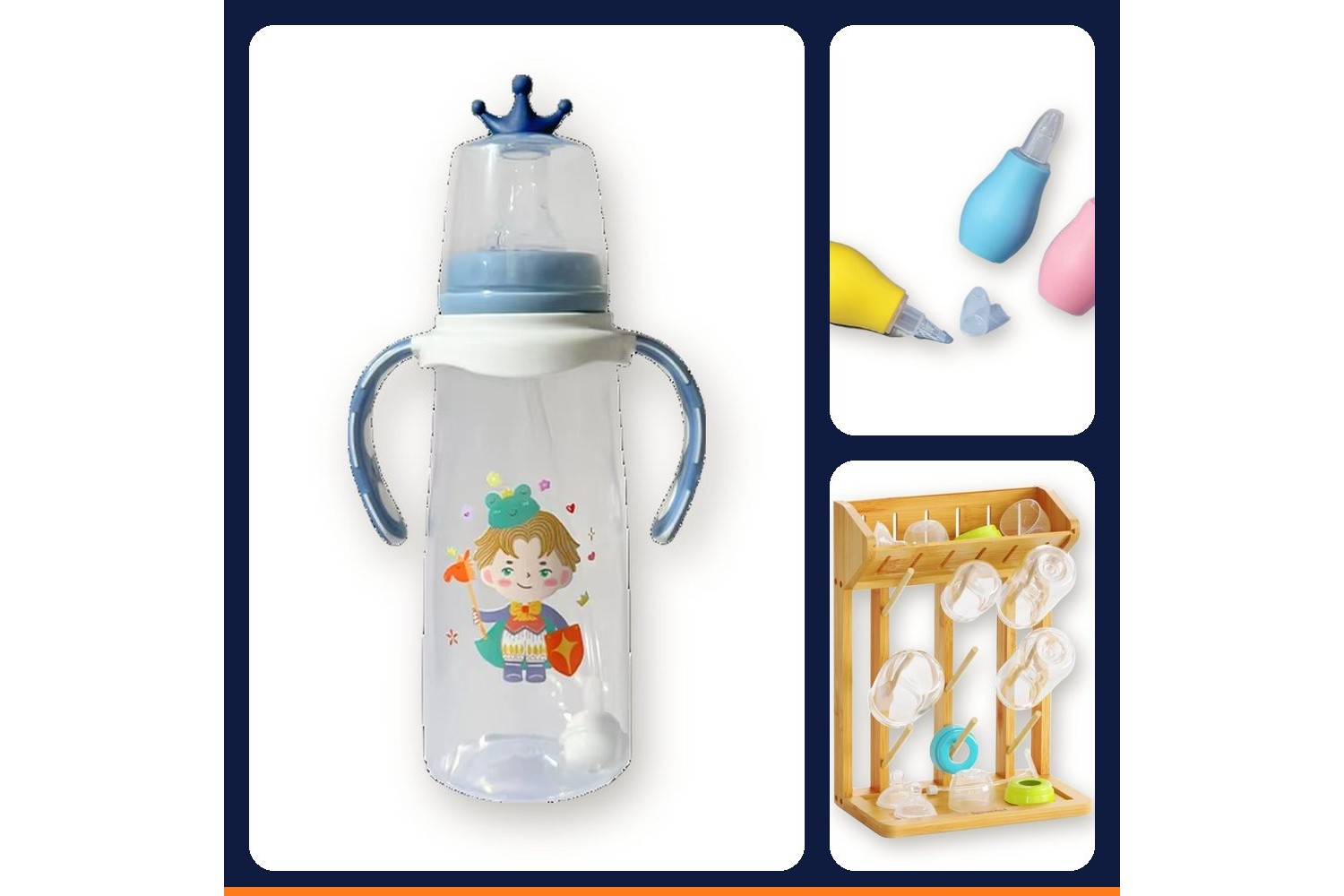
A pharmacy’s own brand does not start with medicines. Making and selling medicines, like running the pharmacy itself, is strictly licensed under national rules; food supplements and cosmetic formulations are also outside this article, as they have requirements of their own. This is about complementary products: baby hygiene items, tableware for young children, bibs and care accessories. A brand can be put on them quickly and without your own production: a logo on a ready-made item, your own packaging and, later, an item made to your requirements. Below: which products suit, how the three levels of branding work and how to get from sample to batch.
In brief
- Simple non-medicinal products are chosen for an own brand: silicone and textile items for children, care accessories.
- Medical devices are better left under the manufacturer’s brand: your own name on them changes your obligations.
- The first step is a logo on a ready-made item, the second your own packaging, the third OEM/ODM.
- The name and the packaging must not hint at a therapeutic effect.
- Branding lengthens the lead time: artwork and production are added.
Why a pharmacy needs its own brand
The first reason is trust. Customers transfer the reputation of the place to the product: an item carrying the name of a familiar pharmacy is seen as vetted. That is an advantage but also a commitment – you cannot sell random quality under your own name.
The second reason is escaping price comparison. Identical unbranded cups and brushes are sold by many, and on Amazon or eBay they are compared by a single figure. A product with its own mark and packaging has nothing to be compared with directly.
The third reason is a coherent shelf. A dozen different packs from different suppliers look patchy; one line in one design reads as a department and makes choosing easier.
The fourth reason is repeat purchases. Parents who were happy with one item return for the next in the same series, and the brand reminds them where to find it.
Which products suit an own brand
Choose items of simple construction, with a flat surface for the mark and no third-party decoration.
Bibs. Silicone and textile models are a convenient first item: the space for the mark is in plain view, and the colour can be matched to the house palette. Models are in the category “Bibs”.

A silicone bib with colours to order: the item can be produced in the brand’s own palette.
Baby hygiene items. Small goods where the brand is carried mainly by the packaging and the case: there is little room on the item itself. See the category “Toothbrushes”.

A finger toothbrush in a travel case: the mark goes on the case and the packaging, not on the small item.
Sippy cups. The mark is applied to the body, and the line is built from one model in several colours. Category: “Children’s cups”.

A 2-in-1 cup in ten colours: one model, one mark – and the brand’s colour line is ready.
Bamboo accessories. Wood and bamboo take engraving well, and a larger item stands out on the shelf. The items are in the category “Bottle drying racks”.

A foldable bamboo bottle drying rack: a flat surface for engraving and a gift-worthy look.
Do not include blood pressure monitors, thermometers or other medical devices in the first line. Whoever places such a device on the market under their own name may take on the manufacturer’s obligations – that is a separate project with a lawyer, not a question of a logo.
Three levels: logo, packaging, OEM/ODM
Logo on a ready-made item. You choose the item and colours, and the manufacturer applies the mark: printing, engraving or embossing, depending on the material. It is the fastest route and a convenient test of demand. The terms are on the Private Label page; branding is available for more than 8,000 catalogue items.
Own packaging. A box or hanging card in the brand’s design, labelling for your market, instructions in the customer’s language. For a pharmacy shelf this is the key level: small goods are bought by their packaging.
OEM/ODM. An item made to your requirements: colour to sample, shape, the contents of a set. Businesses move to this level when the core line sells and it is clear what ready-made models lack. Details are on the OEM/ODM production page.
Name and trade mark
The simplest option is the name of the pharmacy or chain itself: customers already know it. If the line needs a separate name, choose a short, neutral one. Words promising treatment or health carry a risk: a claim you cannot substantiate is transferred to a non-medicinal product.
A trade mark is registered with the national office or with the EUIPO for the whole EU. Tableware, hygiene items and textiles belong to different classes, so define the list of goods in advance and check the name in open databases before ordering a batch. The procedure and cost depend on the office; if in doubt, consult a trade mark attorney.
Packaging and labelling
Packaging for a pharmacy shelf has three jobs: it protects the product from handling, explains the purpose without an assistant and hangs neatly on a hook. Keep the design calm: one brand colour, the item name in large type, age, material.
Labelling is the brand owner’s responsibility. Under the EU General Product Safety Regulation, the product or its packaging must show the details of the manufacturer and of the responsible person in the EU. Tableware and cups fall under EU rules on food contact materials; for textiles the composition is stated. Text on the packaging is in the language of the country of sale and free of therapeutic promises. Request the material documents from the manager before payment.
From sample to batch
- Complete the wholesale registration and send a request: items, colours, quantity, branding method and position.
- A sample or a small trial batch is by arrangement with the manager. Assess the material, smell, colour in real life and ease of use for child and adult.
- Prepare the artwork: logo in vector format, size in millimetres, colours, the packaging dieline with text.
- Approve the artwork and the quotation. Then comes a pro forma invoice and payment by bank transfer in EUR or PLN.
- Production: the items, branding, packaging, labelling.
- Quality control before dispatch: position of the mark, colour, completeness, condition of the packaging.
- Dispatch and tracking number. The indicative delivery time is 20–60 days plus time for artwork and production; the terms are on the delivery page.
What the budget consists of and typical mistakes
A brand budget has several parts: the items themselves, applying the mark, the packaging and its design, artwork and copy, translation of the labelling, trade mark registration, delivery quoted per shipment, and photography. The minimum order value is 500 EUR net; the unit price depends on the volume tier. Plan the first batch as a test: two or three items in a few colours.
What to avoid:
- a name and copy hinting at a therapeutic effect;
- medical devices under your own brand without a legal review;
- ordering a batch without a sample and approved artwork;
- a complex logo with small text – on a small item it cannot be read;
- too wide a first line: ten items are hard to keep in stock;
- packaging without the details that are mandatory in your market.
Frequently asked questions
Can food supplements or cosmetics be launched under an own brand?
These are separate regulated categories with their own requirements for composition, documents and notifications. This article covers objects and accessories only; for the rest, consult a specialist lawyer.
What quantity can you start with?
Many items start from 1–10 pieces, but the terms for branding and own packaging depend on the item and the method and are confirmed in the request. The overall order starts at 500 EUR net.
What should go on small items?
A short mark or monogram. The full name, description and mandatory details go on the packaging.
How long does a launch take?
The 20–60 days of delivery are extended by preparing and approving the artwork and by production. A line for the gift season is prepared several months ahead.
Choose two or three simple items in the section “Pharmacies”, prepare the mark and start with a small batch. If there is no non-medicine shelf yet, first read the article “How to build a pharmacy’s non-medicine range”.
