
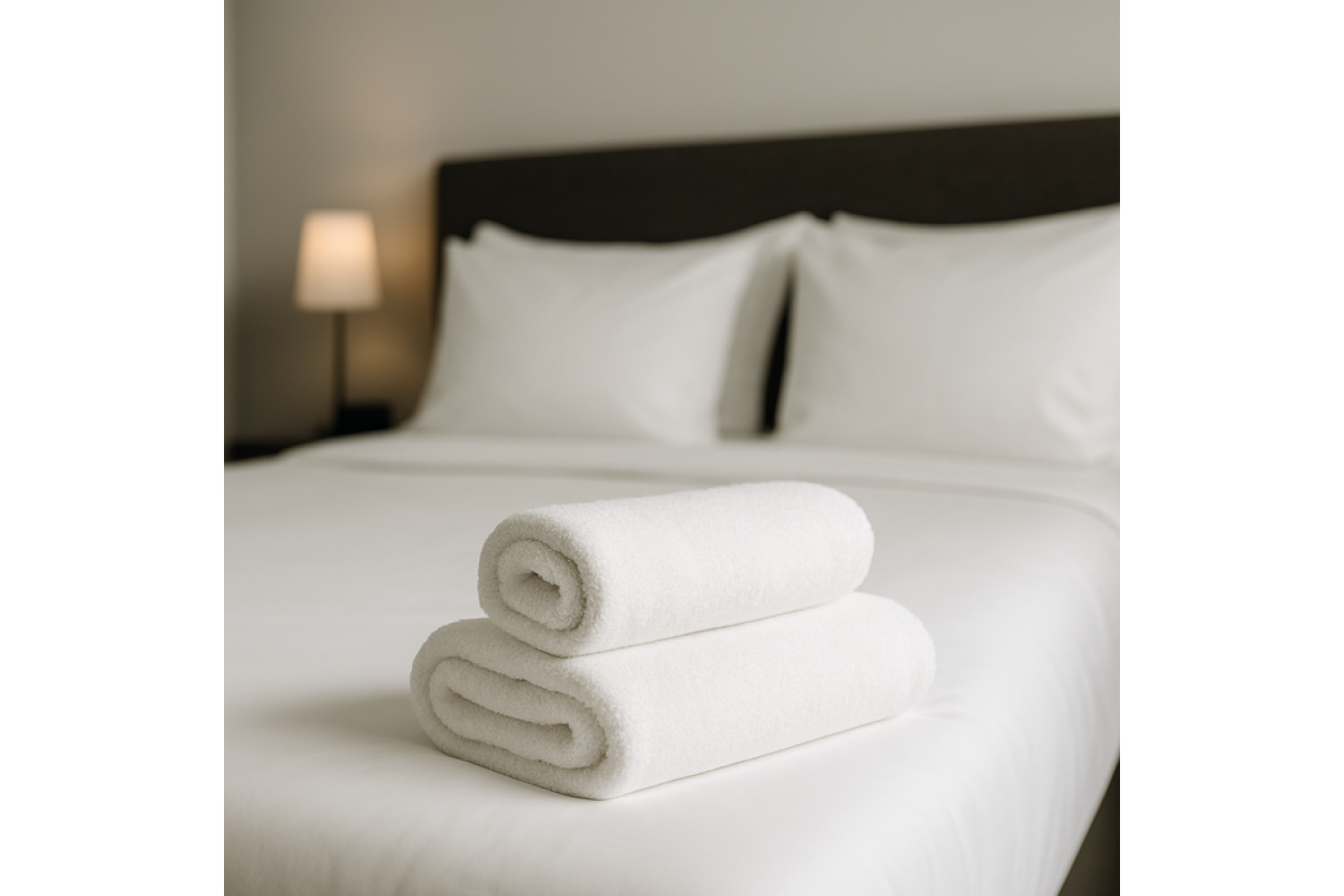
A hotel's guest rooms are refreshed on a strict wear schedule rather than at the manager's discretion — bed linen, towels and amenities lose their presentable condition predictably fast under daily laundering and changeovers between stays. That makes hotels one of the most stable wholesale channels: buying here is rarely a one-off, more often a regular line of operating costs.
Textiles for guest rooms
Bed linen
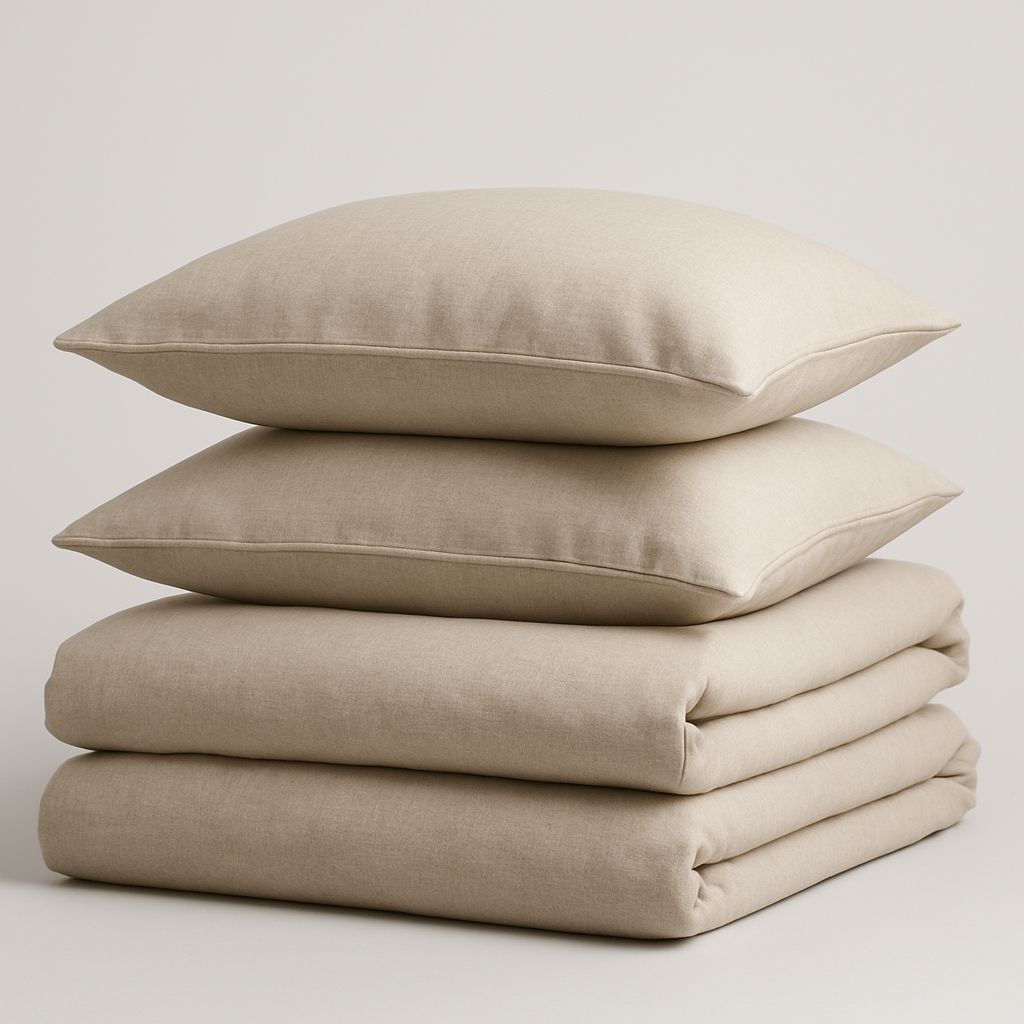
The basic and largest purchasing line — sets are chosen for a specific fabric density and durability, since the intensity of laundering in a hotel is many times higher than at home.
Towels in various sizes
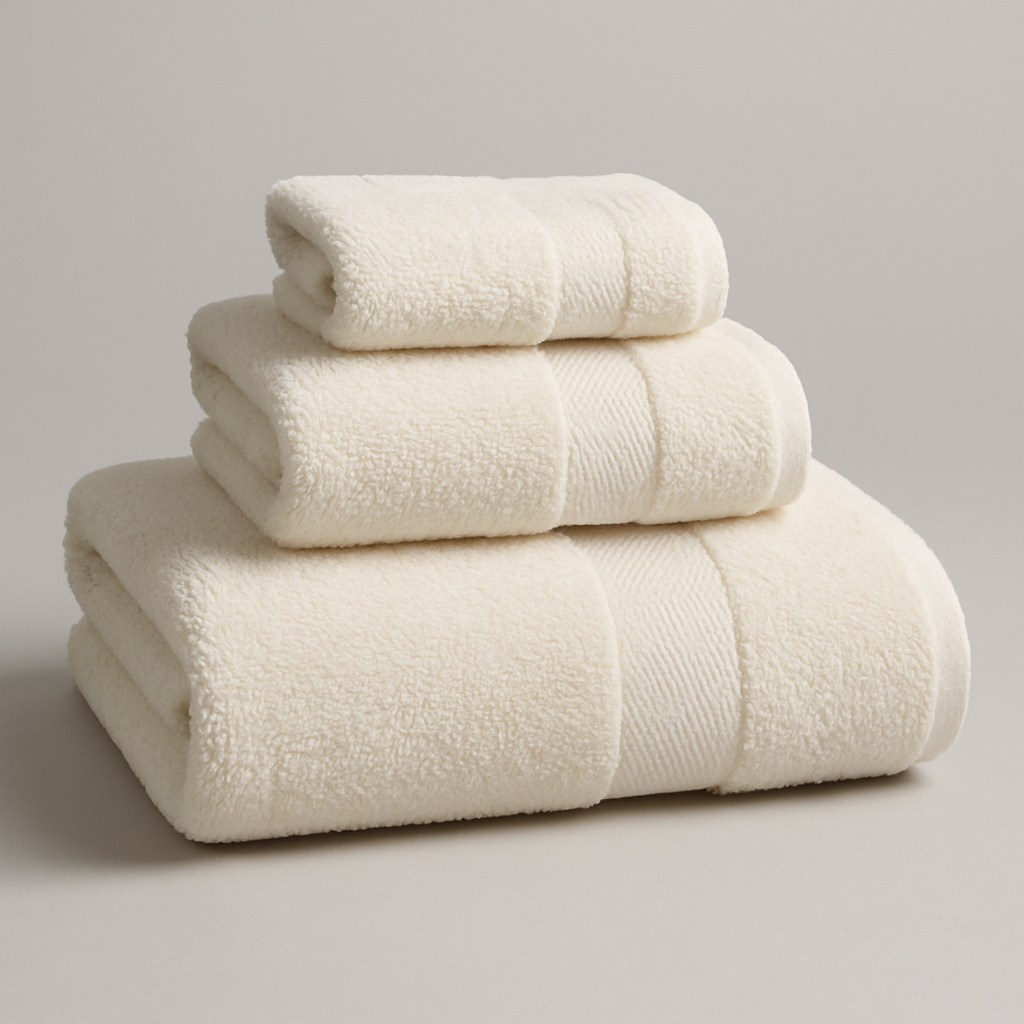
Hotels buy several formats at once — bath, face and foot towels — and here consistency of the batch in density and colour between deliveries matters.
Throws and bedspreads
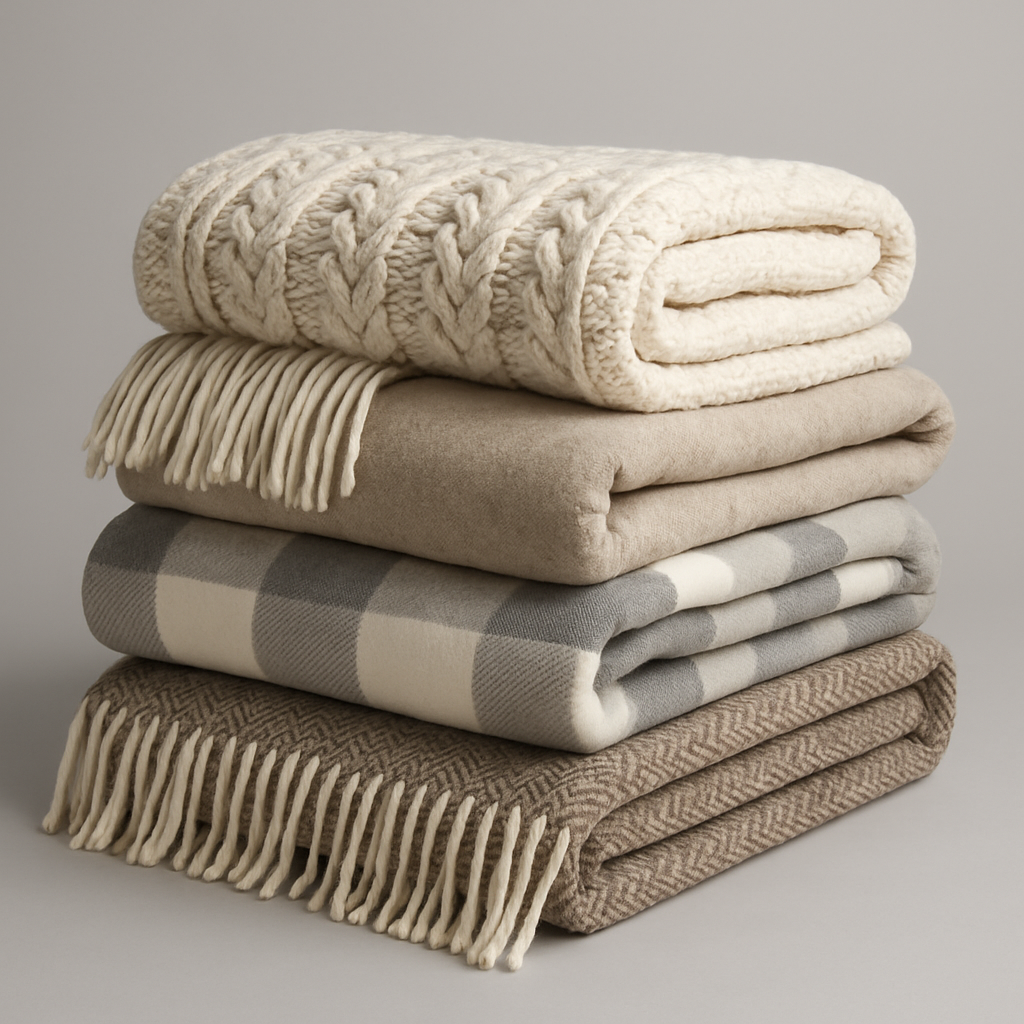
A decorative and practical element of the room at once — replaced less often than linen, but it has to withstand frequent dry cleaning.
Mattress protectors and covers
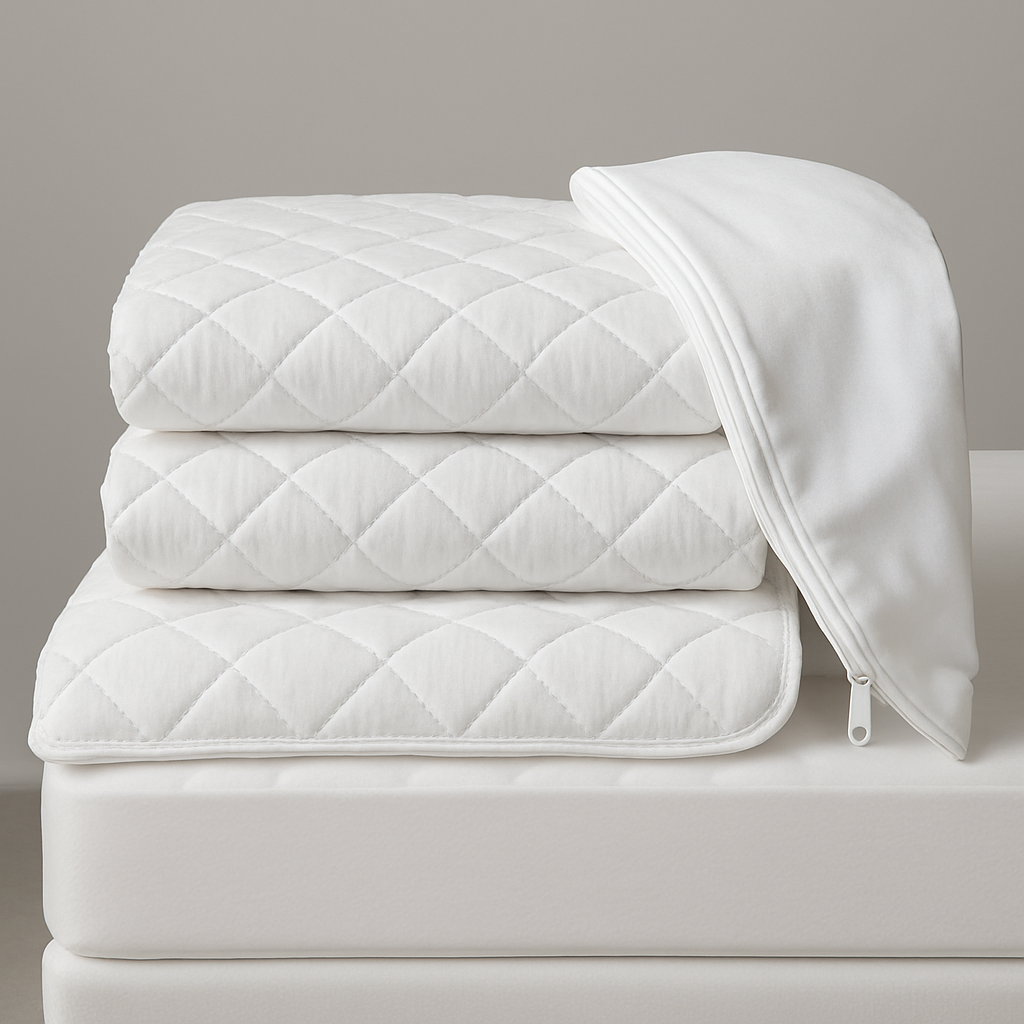
A hygienic necessity that directly affects the service life of more expensive mattresses — the hotel has an interest in buying this item regularly precisely as a way of saving on capital expenditure.
Bathrobes for guest rooms
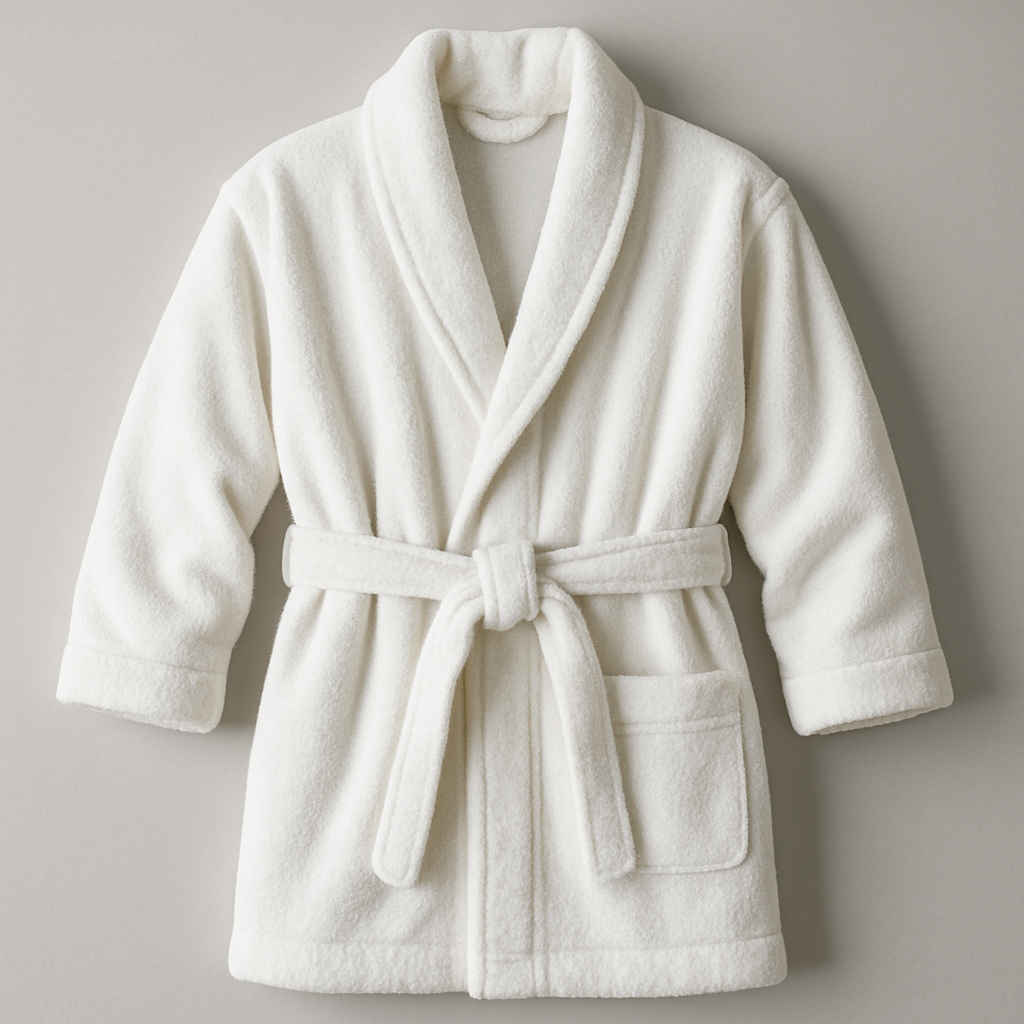
In demand in mid-range and upper-segment hotels as part of the service — replaced less often than linen, but with a constant need for topping up because of natural wear and damage by guests.
Amenities and hygiene items
Miniature bathroom cosmetics
Shampoo, shower gel, lotion — the classic amenity set, which a hotel replenishes practically daily in proportion to room occupancy.
Disposable slippers
An inexpensive but essential item for most hotel segments — from budget to premium.
Disposable dental kits
An additional service that many hotels offer as an option at reception — a steadily consumed item.
Sewing kits and shoe cleaning kits
Small service items that create the sense of attention to detail — an inexpensive item with constant demand.
Shower caps
A standard element of the amenity set in most hotels — used up along with the rest of the set and ordered in the same volumes.
Room equipment
Clothes hangers
One of the most frequently disappearing items in guest rooms — hotels buy hangers regularly and in noticeable volumes precisely because of this natural attrition.
In-room electric kettles
Standard equipment for most hotel price categories — needs replacing when it breaks or the heating element wears out.
Breakfast-in-room trays
Relevant for hotels with room service — a practical and long-lasting item, but still subject to mechanical wear.
Cleaning and housekeeping supplies
Professional cleaning chemicals
A separate category of consumables for the housekeeping team — bought regularly and in a volume proportional to the number of rooms.
Housekeeping trolleys
A less frequent purchase, but with a predictable renewal cycle as the wheels and body wear out.
Throws and cushions for lounge areas
Relevant for hotels with shared spaces — lobbies, terraces, relaxation areas — where textiles work not only on guest comfort but also on the overall impression of the interior.
Bins and containers for rooms
A simple but essential item of the guest room — replaced as mechanical wear sets in, and part of the basic equipment set of every room.
Alarm clocks and electronic clocks for rooms
A small but steadily purchased item of equipment — many guests still expect to see an ordinary clock in the room regardless of having a smartphone to hand.
How to assess a supplier on the first order
For textiles it is critical to agree in advance on the option of reordering the same article several months later without a change in fabric density or shade — a hotel cannot afford mismatched linen sets in different rooms, and production batches quite often differ slightly over time. It is worth discussing the minimum volume of a top-up order with the supplier separately for exactly this reason, as well as lead times for a repeat delivery if occupancy rises sharply in high season.
The logic of a long-term relationship
Unlike retail shops, a hotel rarely changes its textile and amenity supplier without good reason — moving to a new partner means renegotiating quality standards across the whole room stock. That makes the first order a kind of investment in a long-term relationship: the more precisely the basic set matches the requirements of a particular hotel, the higher the likelihood of regular repeat orders for years ahead. Seasonal peaks in hotel occupancy deserve separate attention — resort properties buy textiles and amenities noticeably ahead of the high tourist season rather than evenly through the year.
