
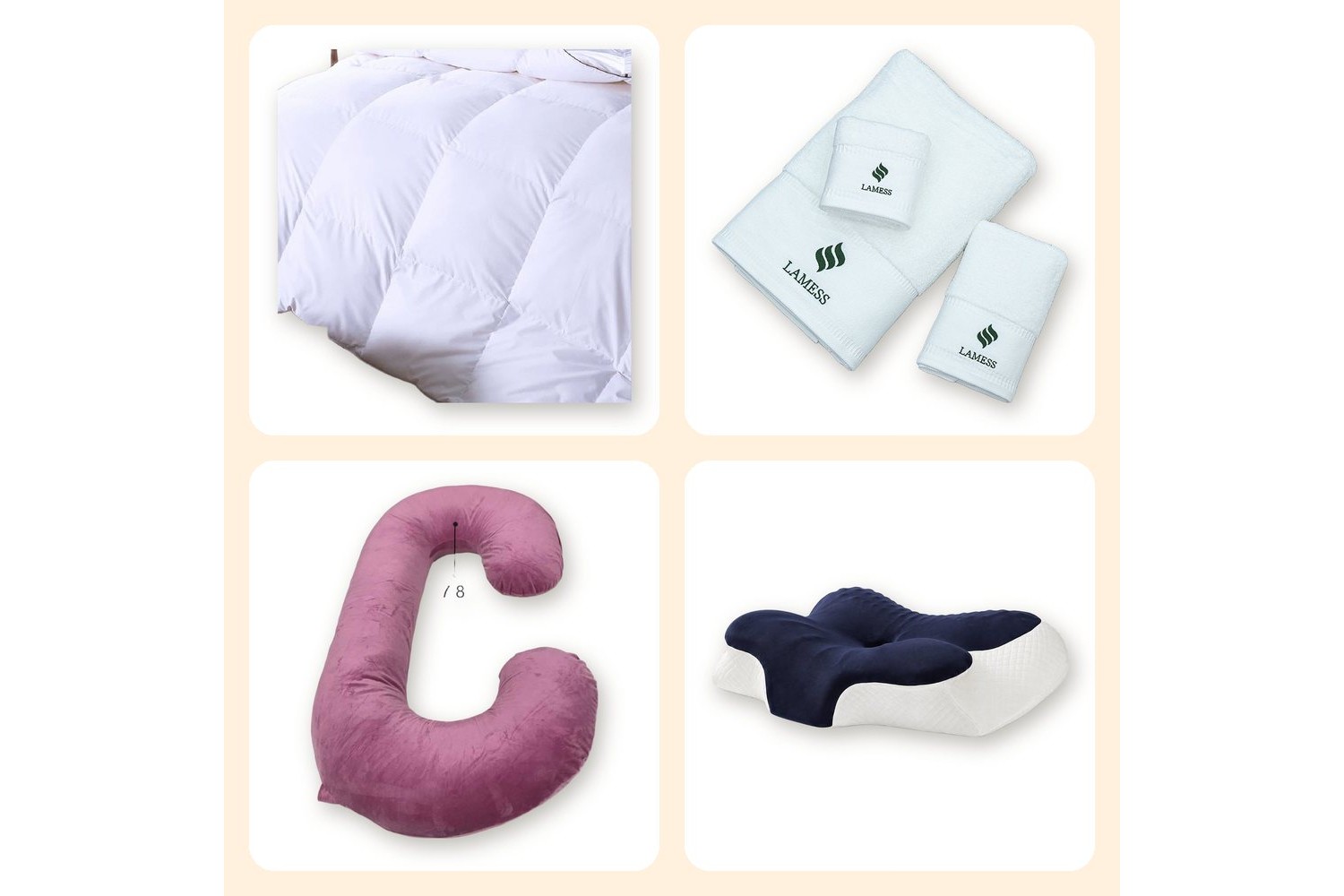
A home textiles and curtain shop starts with one decision: what forms the base – ready-made goods for the bedroom and bathroom, bought regularly, or curtains, chosen rarely and for a specific window. That decision shapes floor space, display and how much money is tied up in sizes and colours. A stable range combines both: bed linen, towels and throws bring steady purchases, curtains bring the larger sale. Below is how to choose a format, build the first range and buy without unnecessary leftovers.
In brief
- The core is bed linen, duvets and pillows, towels and throws; curtains and bathrobes complete it.
- The main risk is sizing: duvet, pillow and duvet-cover sizes differ between EU countries, and the ones to buy are those used in your market.
- Duvets and pillows are bulky: they determine storage space and the delivery cost, which is calculated per consignment.
- The first order should be narrow: best-selling sizes in calm colours plus a reserve for reorders.
- Delivery takes an estimated 20–60 days; warm lines for autumn are ordered 2–3 months ahead.
Customers and format
There are three types of customer. The first is refreshing a home: a move, a renovation, a new bed. They arrive with measurements and buy several things at once – a bedding set, a duvet, pillows, bedroom curtains. The second buys replacements: towels, pillowcases, a throw. The third is choosing a gift – a boxed towel set, a throw, a bathrobe – and cares about packaging and a neat finish.
A physical shop works in a residential area, a shopping centre or near furniture and DIY stores. Its strength is that fabric can be touched: the weight, the softness of terry, how a curtain drapes and how much light it lets through. In an online shop and on Amazon or eBay the listing replaces that check: exact sizes in centimetres, composition, fabric weight, type of fastening, a close-up of the texture and a photo in a room. Decide on the returns procedure in advance.
Businesses are a separate channel. Small hotels, holiday lets, guest houses and salons buy white bed linen, towels, duvets and blackout curtains in identical batches. They need an invoice, repeatable quality and predictable lead times.
Starting range: core lines and trial lines
Bedroom. Bed linen is the heart of the shop. Two fabrics are enough to begin with – sateen and a simpler cotton, for example – in white and two or three calm colours, but in every common size for your country. Take bold prints in small quantities: tastes vary and leftovers build up quickly.

White cotton sateen duvet cover set in four sizes: a core line for homes and for small hotels alike.
Duvets are divided by filling and warmth: light summer, all-season, warm winter. Pillows are either classic or contoured memory foam. A contoured pillow is bought for a specific need, so it requires a clear description of shape and height.

Memory foam pillow with a neck recess: a line for customers who are looking for sleeping comfort.
Bathroom. Towels are bought more often than anything else. Keep three sizes – hand, face and bath – in several colours so that customers can put a set together. Boxed gift sets are displayed separately: a ready answer for anyone who has come in for a present.

Set of three terry towels in a gift box: a ready-made present that needs no wrapping.
Window. At the start it is sensible to stock curtains ready-made: standard width and drop, a few neutral colours, blackout for bedrooms. Made-to-measure is a service with measuring and a different workflow, and is added later.

Velvet blackout curtain with pinch pleats: a ready-made option for bedrooms and living rooms.
Try throws and bathrobes ahead of the cold season. The lines such shops order most often are covered in the overview of best-selling goods for textile and curtain shops.
What the starting budget consists of
The amounts depend on format and range width, but the structure of stock costs is similar for everyone:
- bedroom group: bed linen in common sizes, duvets, pillows;
- bathroom group: towels in three sizes, gift sets;
- curtains in standard sizes and seasonal throws;
- delivery – a noticeable item for duvets and pillows, calculated for the specific consignment;
- shop fittings: shelving, curtain display rails, a made-up sample bed, good lighting;
- a reserve for reordering the sizes that sell out first.
Rent, registration, the till and advertising are budgeted separately. Do not buy the full width in the first order: fewer colours with no gaps in sizes, and money left for a repeat order, is the better choice.
Supplier and first order
EnjoyCommerce supplies goods to companies and sole traders in EU countries. The minimum order value is 500 EUR net per item, so the first range can be put together as one order of several items, each from 500 EUR net.
- Read the buyer’s guide and complete the wholesale registration: after that, net prices by volume tier are visible.
- Draw up a list: product, size in centimetres, composition and fabric weight, colour, quantity. Send the request – a manager will prepare a quotation and calculate delivery for the consignment.
- Approve the quotation and receive a pro forma invoice. Payment is by bank transfer in EUR or PLN.
- The goods are dispatched or produced and go through quality control before shipping. Ask for sizes, seams, colour consistency across the batch and sewn-in labels to be checked.
- After dispatch you receive a tracking number and documents. Build the delivery terms into the opening plan: the estimated lead time is 20–60 days.
Invoices are issued by a Polish company with an EU VAT number. For EU companies with a valid EU VAT number, an intra-Community supply (reverse charge) is possible; your accountant will advise how to record it.
Documents and product requirements
Business registration, taxes and trading rules depend on the country – check them with an accountant or the local authority. Product requirements are common across the EU. A textile product carries its fibre composition – on the label and in the language of the country of sale; care symbols are normally given alongside. Under the General Product Safety Regulation (GPSR), the product or packaging shows the details of the manufacturer and of the responsible person in the EU.
State the composition precisely: microfibre is polyester and must not turn into cotton in the description. If the product name mentions a certificate such as OEKO-TEX, or a particular type of down, ask the manager for supporting documents. Children’s items – throws, bathrobes – are subject to stricter requirements; check these separately. Request certificates and declarations before payment, not after the consignment arrives.
Seasonality and buying calendar
The trade has two large waves. In autumn and early winter demand rises for warm duvets, throws, bathrobes and heavy curtains; that order is placed in summer. In December textiles are given as presents: towel sets, throws and bathrobes need to be on the shelves before gift shopping begins. In spring and early summer customers buy light duvets, pale bed linen and curtains – the season of moves and renovations; that consignment is ordered at the end of winter.
Seasonal goods are ordered 2–3 months ahead, so it is worth drawing up the buying calendar a year in advance and checking it against the delivery time.
Common mistakes at the start
- Buying sizes used in another country: a duvet cover that does not fit local duvets will not sell.
- Taking many colours and leaving gaps in sizes: the customer leaves empty-handed and the leftovers stay.
- Describing the composition loosely or promising a “natural” material without confirmation.
- Ordering warm lines in October and receiving them after demand has peaked.
Frequently asked questions
What is the smallest amount to start buying with?
The minimum order value is 500 EUR net per item. It can be a combined consignment: a small shop can test demand with a few lines, each from 500 EUR net.
What should come first – bed linen or curtains?
Bed linen, towels and pillows: they are bought regularly and quickly show what your customers need. Curtains start as a narrow group of ready-made sizes and are widened once demand is clear.
How can sizing mistakes be avoided?
Write down the duvet, pillow and mattress sizes used in your country and check every line of the request against them. On the listing and the price label give the size in centimetres, not just a name such as “double”.
Can a trial batch be ordered before a large purchase?
A sample or a small trial batch is arranged by agreement with the manager. For textiles this is a sensible step: weight, softness and colour are best judged in the hand, and the sample should be washed before the main order.
Choose the format, divide the range into bedroom, bathroom and window, and pick the lines in the section of goods for textile and curtain shops. Once it is clear what sells steadily, those products can be released under your own name – see the article on building a home textiles brand.
