
A car parts shop starts with a decision about which need it serves: routine servicing, urgent repair or equipping a garage. That determines what sits on the shelf and what is brought in to order. Unlike an accessory shop, the customer here arrives with a specific fault or a list and values accurate matching and availability. Below: how to build a range from service items, spare parts and equipment, and how to place the first order.
In brief
- Turnover rests on frequently replaced service items; model-specific parts are kept narrow or supplied to order.
- Garage and roadside equipment – jacks, compressors, tools – is not tied to a car make and suits a first order.
- The shop’s key skill is matching: by original part number, model, year and engine.
- Heavy goods raise the delivery cost, which is calculated per consignment; equipment and parts need documents.
- Delivery takes an estimated 20–60 days, so goods for the change of season are ordered 2–3 months ahead.
Customer and format
A car parts shop has two audiences. The first is private owners who service the car themselves or buy parts for their mechanic: they need advice and confidence that the part will fit. The second is professionals: small garages, tyre fitters, operators of commercial vehicle fleets. They buy regularly, know what they need and expect fast collection and paperwork for their accounts.
A physical shop wins on location: near lock-up garages, workshops or the entrance to a residential area. It needs a stock of fast-moving items and a salesperson who understands matching. An online shop is built around a catalogue with a filter by vehicle and part number; without it, parts cannot be sold online. On Amazon or eBay it is easier to start with universal goods – equipment and tools that need no matching.
Many combine formats: a small counter with order collection and a catalogue online. The shelf stays compact and rare items are ordered for the customer.
Starting range: core items and trial items
Service items. Wiper blades, bulbs, filters and spark plugs are replaced on schedule or by season, and customers come back for them. In the car parts section, start with items that fit many cars and differ only in size.

Wiper blade in a range of lengths: a seasonally replaced service item that makes a good start for the shelf.
Model-specific parts. Ignition components, sensors and suspension parts are tied to make, engine and year. They are stocked only for the cars most common in the area; the rest comes to order. Each item is managed by its original number.

Ignition coil for a specific engine: an example of an item matched by its original number.
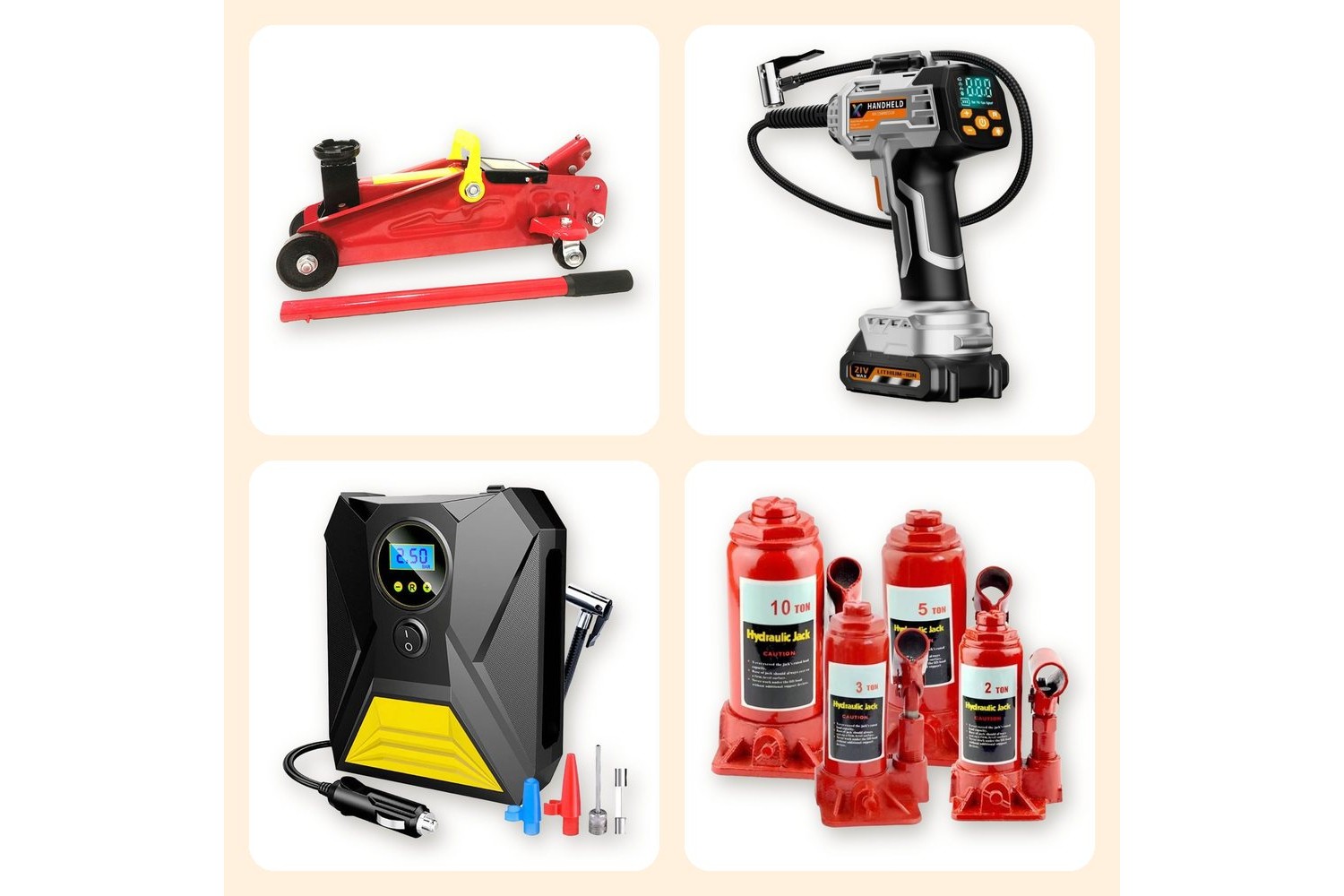
Roadside equipment. Compressors for inflating tyres are needed by every owner, do not depend on the model and sell well in the tyre-change season and before holidays.

Compressor for the 12 V socket with a gauge – a universal item that needs no matching to the car.
Garage equipment. Jacks – bottle and trolley types – are bought by private owners and workshops alike. The range is built by lifting capacity: from passenger cars to commercial vehicles.

Bottle jacks in several capacities: one line covers passenger cars and heavy vehicles.
Hand tools – spanner and socket sets, pullers – complement the equipment. Oils, technical fluids and car chemicals are a separate group with their own labelling and storage requirements; they are usually bought from local distributors. A selection of fast-moving items is in the article on the core range of parts and consumables.
What the starting budget consists of
The amounts depend on floor space and depth of stock; the cost items for goods are these:
- frequently replaced service items in popular sizes;
- equipment: compressors, jacks, tools;
- model-specific parts – a small stock for common cars and working capital for items supplied to order;
- delivery: jacks and other metal equipment are heavy, and the cost is calculated per consignment;
- shelving, a storage system by number, software or a catalogue for matching;
- a reserve for exchanging parts that did not fit and for reorders.
Rent, registration, the till and advertising are budgeted separately. In the first order it is sensible to invest in universal goods and add model-specific parts as enquiries come in.
Supplier and first order
EnjoyCommerce works with companies and entrepreneurs in EU countries. The minimum order value is EUR 500 net per item, so equipment and service items can be taken in one order, each item from EUR 500 net.
- Open the buyer’s guide and complete the wholesale registration – this shows net prices by volume tier.
- Prepare the request. For equipment, state the model and quantity; for parts, the original number, make, engine and year. The manager sends a quotation with the delivery calculation.
- Once agreed, a pro forma invoice is issued. The available payment method is bank transfer in EUR or PLN.
- The consignment is dispatched or produced; quality control is carried out before shipment.
- You receive a tracking number and documents. Delivery takes an estimated 20–60 days – build this into the plan.
Invoices are issued by a Polish company (EU VAT). EU companies with a valid EU VAT number can use intra-Community supply (reverse charge); check the accounting treatment with your accountant.
Documents and product requirements
Business registration, taxes, trading rules and warranty obligations to the buyer depend on the country – check them with an accountant or the local authority. Product requirements are common across the EU, and in this niche they are stricter than for accessories.
Jacks are lifting equipment: they need the CE marking, the lifting capacity shown on the product and instructions in the language of the country of sale. Compressors are electrical products: CE and RoHS, and for cordless models compliance with EU battery rules. Type-approval rules apply to a number of safety-related parts; find out before payment whether a part has the required approval. Ask the manager for documents in advance. Under the GPSR, the product or packaging shows the details of the manufacturer and of the responsible person in the EU. Original numbers and model names are used as fitment information, without car makers’ logos.
Seasonality and the purchasing calendar
The rhythm is set by tyre changes. In spring and autumn customers buy jacks, compressors and wheel wrenches – the order for these is placed 2–3 months before the season, that is in midwinter and midsummer. Towards autumn and winter demand grows for wiper blades, bulbs and everything connected with cold starting. Before the summer holidays, compressors and roadside kits sell.
Scheduled service items sell evenly all year, and stock is topped up with regular orders without waiting for an empty shelf: the lead time does not allow a gap to be closed in a week.
Typical mistakes at the start
- Trying to stock parts for every make: money gets tied up in rare items.
- Managing parts by name rather than by original number – hence matching errors and returns.
- Ordering heavy equipment without including delivery in the unit cost.
- Selling jacks and compressors without documents and instructions in the buyer’s language.
- Placing the seasonal order when the season has already begun.
Frequently asked questions
What is the supplier’s minimum order?
EUR 500 net per item. The consignment can combine several items: several models of compressors and jacks, wiper blades in different lengths, individual parts, each ordered from that amount.
Is it necessary to stock parts for every car?
No. The shelf holds service items and parts for the most common cars in the area. The rest is ordered for the customer, who is told the lead time in advance.
Which documents are needed for jacks and compressors?
Confirmation of the CE marking and instructions; for electrical products also RoHS compliance, and for cordless ones compliance with battery rules. Ask the manager to send the documents before payment.
How can parts returns be reduced?
Match by original part number and vehicle data rather than by appearance, and list all cross-reference numbers and fitment in the listing.
Start with universal equipment and service items and add model-specific parts as demand appears. The items are gathered in the section goods for car parts shops; releasing equipment under your own name is covered in the article on an own brand for a car parts shop.
