
An eyewear shop starts with a boundary: what you sell and what you do not. Corrective glasses and prescription lenses are optics – a separate, regulated field with its own requirements for staff and goods; the rules depend on the country. Without it, a large and clear part of the market remains: sunglasses, fashion glasses, computer glasses and sports eyewear, cases and accessories. Below: how to choose a format, build the first range and place the order so that summer stock arrives before the first sunshine.
In brief
- This article covers the unregulated part of the range; glasses with corrective lenses and contact lenses are sold under the rules for optics.
- The range rests on sunglasses, surrounded by children’s, sports and fashion models and accessories.
- Sunglasses in the EU are personal protective equipment: CE marking and a filter category are required. Ask for the documents before payment.
- Summer stock is ordered 2–3 months before the season, which means in winter.
- The minimum order value is 500 EUR net per item, so several frame shapes can be tested, each ordered from that amount.
Customer and format
There are four types of buyer. The first buys ‘for the weather’: the sun is out, the holiday has begun, and a pair is needed today. The second chooses glasses as part of a look and comes for a particular frame shape. The third is parents who need children’s models for summer. The fourth buys for an activity: the pool, skiing, motorcycling.
Formats differ in how you get in. A kiosk in a shopping centre or a shop in a resort town lives on impulse purchases and needs mirrors, light and an open display: glasses are bought after trying them on. An online shop and marketplaces such as Amazon, eBay or Etsy suit the niche less well than it seems: nothing can be tried on, so photos on a face, frame dimensions in millimetres and clear return terms decide. The third format is an extra shelf in a clothing, accessories or sports shop. The fourth is seasonal markets and beach stalls.
Starting range
Build the range from the main group and add the others to suit your location. What such a shop usually stocks is covered in the overview ‘Buying eyewear wholesale’.
Sunglasses carry the turnover. Core: a few recognisable frame shapes in black and brown with dark lenses. Trial: coloured lenses, unusual shapes, bright frames. Take several shapes rather than one in every colour: the shape has to suit the face, and the colour is chosen afterwards. The selection is in the ‘Glasses’ category.

Round glasses in a thin metal frame – a recognisable shape for the core shelf, available in six versions.
Children’s models are bought by parents before summer and holidays. A flexible frame and documented lens protection matter here.

Children’s sunglasses in a flexible silicone frame: seven colours make a whole shelf from one model.
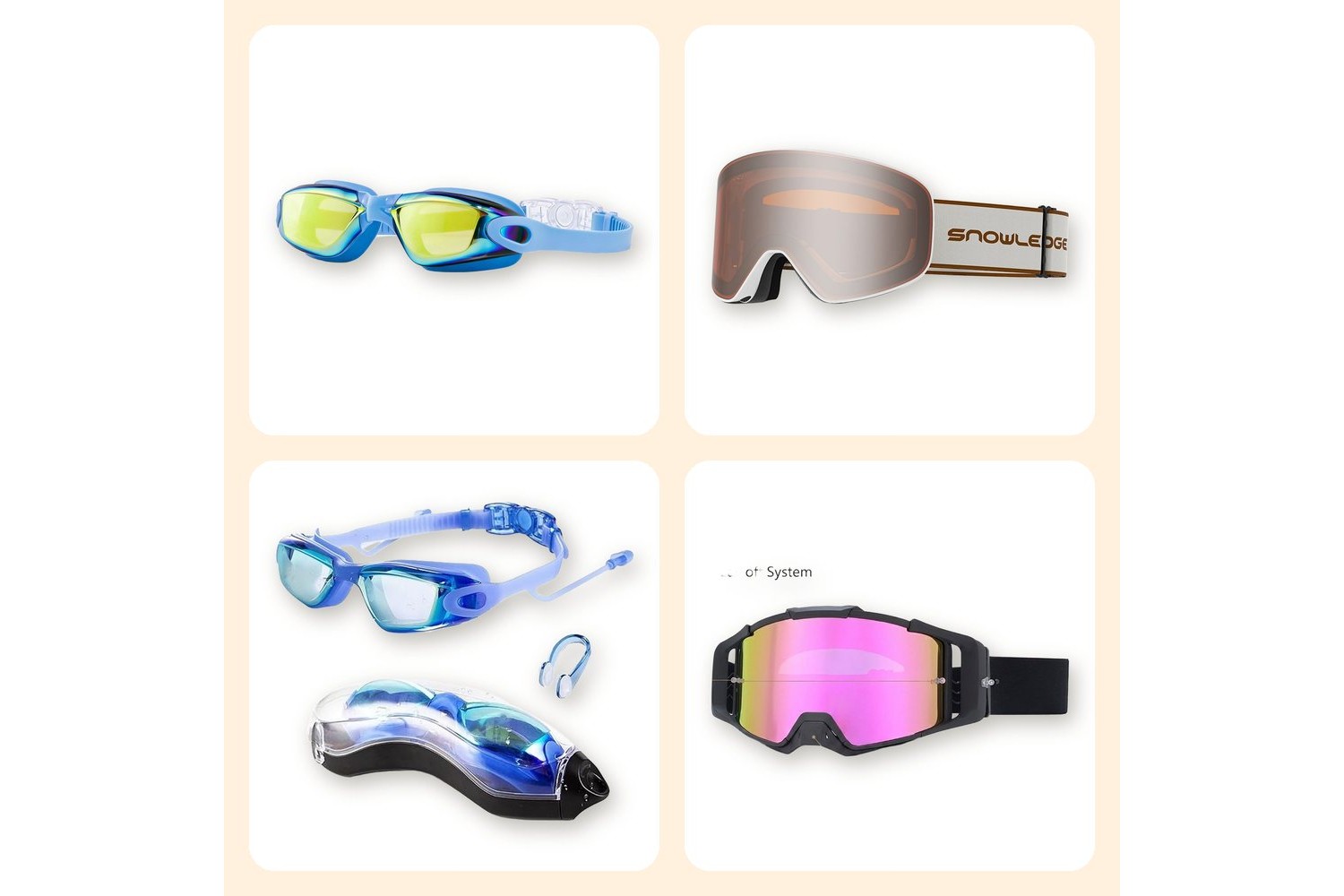
Sports goggles and masks extend the season: swimming goggles sell all year, ski goggles in winter. Not every shop needs them, but they work well near a pool, in a sports outlet or in a mountain region. See the categories ‘Swimwear, caps, goggles and fins’ and ‘Goggles/masks’.

Adult swimming goggles with mirrored lenses – a year-round line that smooths out seasonality.

Ski goggles with a polarised lens – stock for the winter season, when sunglasses sell more slowly.
Fashion and computer glasses – models with clear non-corrective lenses – and accessories: cases, cords, cleaning cloths. Accessories add to the basket and sell all year; ask the manager for a selection to match your range.
What the starting budget consists of
The amounts depend on the format and the town, but the items are the same:
- business registration and a till – under the rules of your country;
- rent and fittings: rotating stands, mirrors, lighting, a lockable display case;
- for the online channel – a website or marketplace account, photos on a model, rigid packaging for posting;
- the first batch of goods for the coming season and delivery, which is quoted per batch;
- cases or pouches if the model is supplied without them;
- a reserve for reordering best-selling shapes and for buying the next season;
- promotion: signage, advertising, window display.
Allow for losses: glasses on open display get scratched and broken when tried on, and some display pieces will have to be written off.
Supplier and first order
- Complete the wholesale buyer registration – after that you see net prices by volume tier.
- Put together a list of models, colours and quantities and send a request. The process is described in the buyer’s guide.
- The manager sends a quotation with prices, lead time and delivery cost. At this stage, ask for the product documents.
- Once agreed, you receive a pro forma invoice and pay by bank transfer in EUR or PLN.
- The goods are shipped or produced; before dispatch they go through quality control.
- You receive a tracking number and documents. The indicative lead time is 20–60 days; details are on the page about delivery within the EU.
Invoices are issued by a Polish company; for EU companies with a valid EU VAT number, an intra-Community supply under the reverse charge is possible.
Documents and product requirements
Business registration and taxes depend on the country – check with your accountant. Product requirements are stricter here than in many niches. Sunglasses in the EU are personal protective equipment: they must carry the CE marking, and the accompanying information must state the filter category from 0 to 4. The darkest, category 4, is not intended for driving, and the buyer is warned of this. Protective sports goggles and masks also fall under the requirements for protective equipment. Wording such as ‘UV400’ or ‘polarised’ is acceptable only with evidence. Under the General Product Safety Regulation, the product or packaging carries the details of the manufacturer and of the responsible person in the EU. Ask the manager for the declaration of conformity and test reports before payment.
Glasses with corrective lenses, including ready-made reading glasses, and contact lenses are medical devices, and selling them requires permits or a qualified specialist in some countries – check the rules with your local authority. Sell non-corrective computer glasses without health promises. And do not take models with other companies’ logos: they cannot be sold without a licence.
Seasonality and the buying calendar
The main season is spring and summer. Sunglasses sales rise with the first bright sun and hold until the end of the holidays; the order goes out in January–February so that the goods are on display by early spring. Children’s models are bought before the school holidays. Ski goggles are needed by the start of winter – the order goes out in late summer. Swimming goggles and accessories sell steadily and are reordered as stock runs down. At the end of summer it is better to clear bright fashion shapes and keep the core ones for next year.
Typical mistakes at the start
- Ordering summer stock in spring: with a 20–60 day lead time it arrives mid-season.
- Buying a batch without documents – and finding out during an inspection or a customer complaint.
- Taking one shape in every colour instead of several shapes in best-selling colours.
- Saving on mirrors and light: glasses are not bought without trying them on.
- Selling glasses without a pouch or case – and getting returns because of scratches.
Frequently asked questions
Is a licence needed to sell sunglasses?
It is usually ordinary retail, but registration rules depend on the country – check with your local authority. Separate requirements apply to the goods themselves: CE marking and documents from the manufacturer.
Can you sell prescription glasses?
That is a different field. Corrective glasses and lenses are medical devices, and each country sets the conditions for selling them. If that is your plan, start by consulting the local regulator.
Is it possible to start online only?
Yes, but you will need photos on a face, frame dimensions in the listing and rigid packaging. There will be more returns than in a physical shop – allow for this in your calculations.
How many models should the first order include?
A few frame shapes in two or three colours are enough, plus children’s models and accessories. Small minimum batches let you test more shapes for the same order value.
Start with the calendar and the documents: count back 2–3 months from the start of the season and put your request together in the ‘Eyewear Shops’ section. Once it is clear which shapes sell best, the next step is your own label – see the article ‘How to create your own eyewear brand’.
