
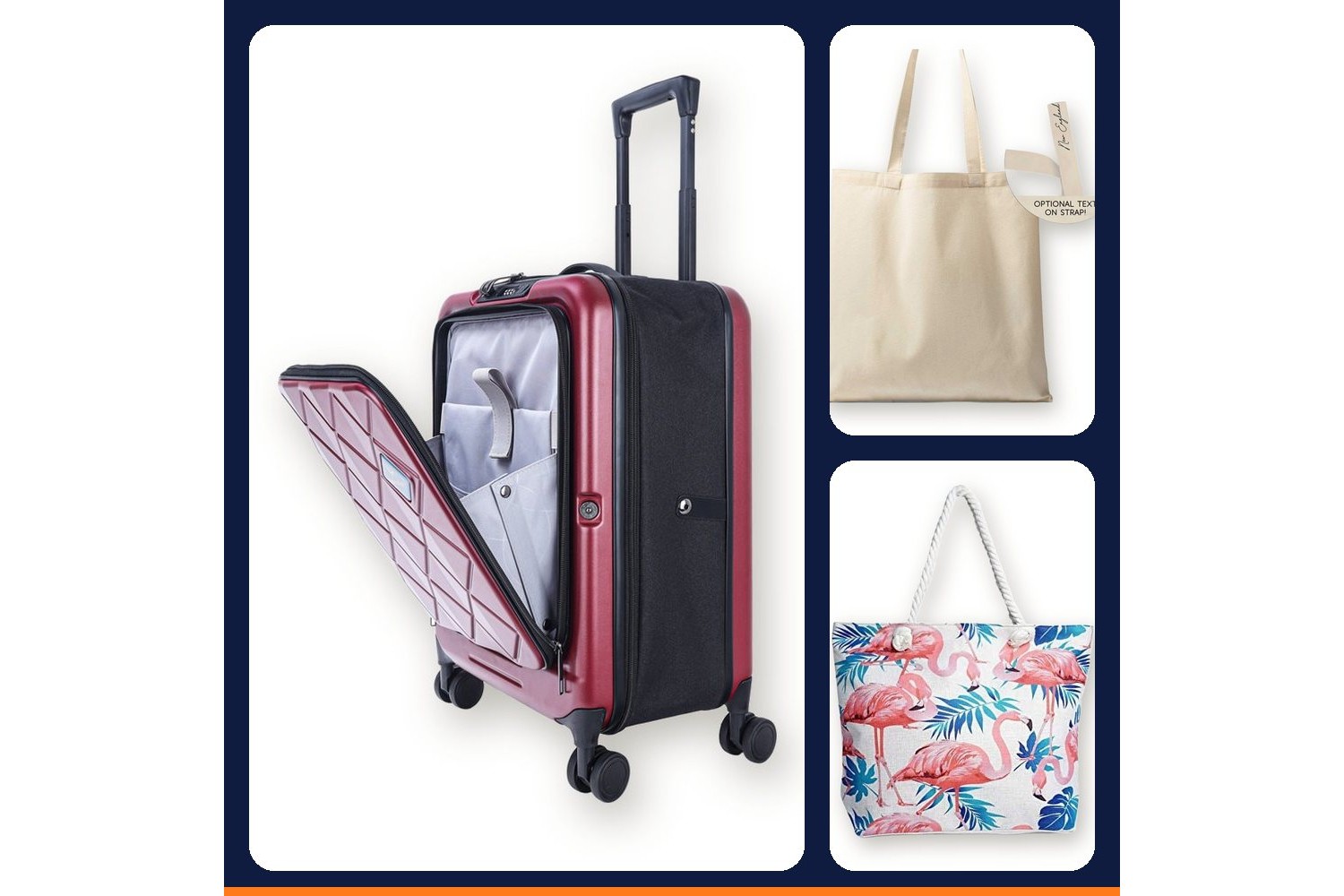
A bag brand of your own is best started with simple fabric items – shoppers, totes, crossbody bags: they offer a large area for decoration, a straightforward construction and a small minimum quantity. The first step is a logo or print on a ready-made model plus your own label; your own pattern and branded suitcases come later, once the name is recognised. Below: which items to choose, how to handle the name and packaging, and how to get from sample to shipment.
In brief
- Shoppers, tote bags, crossbody bags and city backpacks suit a start: they sell all year round and need no complex paperwork.
- Three levels: a logo on a ready-made item, your own packaging and labels, production to your requirements (OEM/ODM).
- The name is checked for availability and registered as a trade mark – with a national office or with the EUIPO for the whole EU.
- The product or packaging carries the details of the manufacturer and the responsible person in the EU, and the material is named accurately.
- Branding lengthens the lead time, so a seasonal shipment is planned with a margin.
Why a brand in this niche
A bag is worn in plain view, and customers do not choose it by capacity alone. Without a name the seller competes on price: on Amazon or eBay the same backpack with the same factory photo appears in dozens of listings. A brand creates a difference – your own colour, hardware, lining, label, photography – and a name by which the item is found again and recommended to friends.
The niche has a convenient feature: bags are bought in sets for different occasions. Someone who liked the backpack later looks for a crossbody bag, a laptop sleeve, a shopper. If one brand's items share a palette and material, the next purchase comes back to you. In a physical shop, a line under your own name sets you apart from neighbours using the same supplier. Corporate clients can be offered bags either with their logo or under your brand.
Which items in the niche suit your own brand
There are three criteria: the item has room for decoration, the construction is proven and needs no rework, and demand holds all year.
Shopper bags are the simplest way in. Canvas takes screen printing, heat transfer and embroidery, the item is flat and takes little storage space, and fabric weight and handle length can be chosen.

A blank shopper ready for printing: a clean surface for a first test of logo and prints without a large outlay.
The tote bag differs from a shopper in its heavier fabric, base and pockets. It is a product in its own right: it can be sold in print collections and refreshed for the season.

A cotton tote printed to your artwork: the basis for a print collection under your own brand.
Nylon crossbody bags suit a brand with an urban character. The logo goes on a sewn patch, a rubber badge or the zip puller; the colour of the strap and hardware makes the model recognisable.

A nylon crossbody bag with custom logo: a compact model for an urban line.
Backpacks are the next step. The item is more complex and needs more checking: seams, straps, zips, the laptop compartment. In return the backpack becomes the lead product around which the rest of the line is built.

A city laptop backpack in four colours: a ready-made base that can be released under your own name.
Suitcases under your own brand are possible, but they are bulky and have many components; move on to them once the brand is already selling.
Three levels: logo, packaging, OEM/ODM
The first level is a logo on a ready-made item. The method depends on the material: printing and embroidery on fabric, embossing on leather and its substitutes, engraving on metal hardware. It is the fastest route, available on the platform for more than 8,000 items; the terms are set out on the page about private label.
The second level is your own packaging and labels: a swing tag, a sewn-in label with the name, a dust bag or pouch in your design, a care leaflet. For a bag this often matters more than a large logo on the outside: a neat sewn-in label looks more convincing than lettering across the whole panel.
The third level is OEM/ODM production: your own pattern, fabric and colour, lining, number of pockets, hardware with your mark. It makes sense once reviews show what ready-made models lack. The deeper the changes, the larger the batch and the longer the preparation.
Name and trade mark
The name should be easy to pronounce in the languages of your markets, legible on a small label and not reminiscent of well-known fashion houses. Before ordering labels, check that the name is free: public trade mark databases, marketplaces, domains, social media. A mark can be registered with a national office – for one country – or with the EUIPO, in which case protection covers the whole EU. Choosing classes and filing is best left to a trade mark attorney. On some marketplaces a registered mark gives access to brand protection tools; check the terms on the platform itself.
One rule specific to the niche: do not copy other companies' recognisable patterns, shapes and hardware. Resemblance to a famous brand is not an advantage but a risk of claims.
Packaging and labelling
On the tag customers look for dimensions, capacity, outer and lining material, the laptop size that fits the compartment, and care instructions. Name the material accurately: faux leather must not be described as genuine. Texts are needed in the language of the country of sale.
Under the General Product Safety Regulation (GPSR), the product or packaging carries the details of the manufacturer and the responsible person in the EU. If the item contains electronics, ask the manager for CE and RoHS documents before payment. Packaging should protect the shape: structured models travel with filling, soft ones folded, which reduces shipment volume and delivery cost.
From sample to shipment
- Sample. Choose models and ask the manager for a sample or a small trial batch – this is arranged by agreement. Carry the bag loaded: check seams, zips, strap and colour fastness.
- Artwork. Prepare the logo in vector format and the label and packaging design to the manufacturer's template.
- Approval. Confirm the size and position of the decoration, fabric and hardware colour, and labelling texts. Changes are made at this stage, not later.
- Production. Once the pro forma invoice is paid, the batch is made; the artwork and production stage is added to the usual lead time.
- Inspection. Before dispatch the goods pass quality control: say in advance what to check – decoration, seams, hardware, labels, packaging.
- Delivery. After dispatch you receive a tracking number and documents; the guide figure for delivery times is 20–60 days.
What the budget consists of and common mistakes
A brand budget is made up of the stock itself, decoration, labels and packaging, samples, delivery, trade mark registration, photography on a model and in the city, and listing copy. Set aside a separate reserve for a repeat batch: a brand that is out of stock loses the positions it has gained.
What to avoid:
- launching a wide line at once instead of two or three proven models;
- printing labels and packaging before checking that the name is free;
- putting your name on an item you have not carried yourself;
- repeating the patterns and shapes of famous brands;
- ordering many colours in small quantities: leftovers in unpopular shades eat up the reserve;
- planning a seasonal shipment without a margin for the artwork stage.
Frequently asked questions
What is the minimum quantity for bags with a logo?
The minimum batch for decoration depends on the item and the branding method; the manager states it in the quotation. The general condition is a minimum order value of 500 EUR net. Questions about a specific model can be sent via the contact page.
Which decoration method should be chosen?
It depends on the material and the design. Printing works well on canvas, embroidery and patches on heavy fabric and nylon, embossing on faux leather. Ask the manager to list the options for the chosen model.
Does the trade mark have to be registered before the first batch?
The law does not require it, but the name should be checked before labels are printed. Many file the application in parallel with the first batch so as not to invest in a name that has to be changed.
How much does branding lengthen delivery?
The artwork, approval and production stage is added to the indicative 20–60 days. A logo on a ready-made item is quicker than custom packaging or changes to the pattern. The manager gives the exact timing.
Choose two or three models that already sell for you and look at the options in the section of goods for luggage and bag shops. If the shop is still at the planning stage, start with the article on how to open a luggage and bag shop.
