
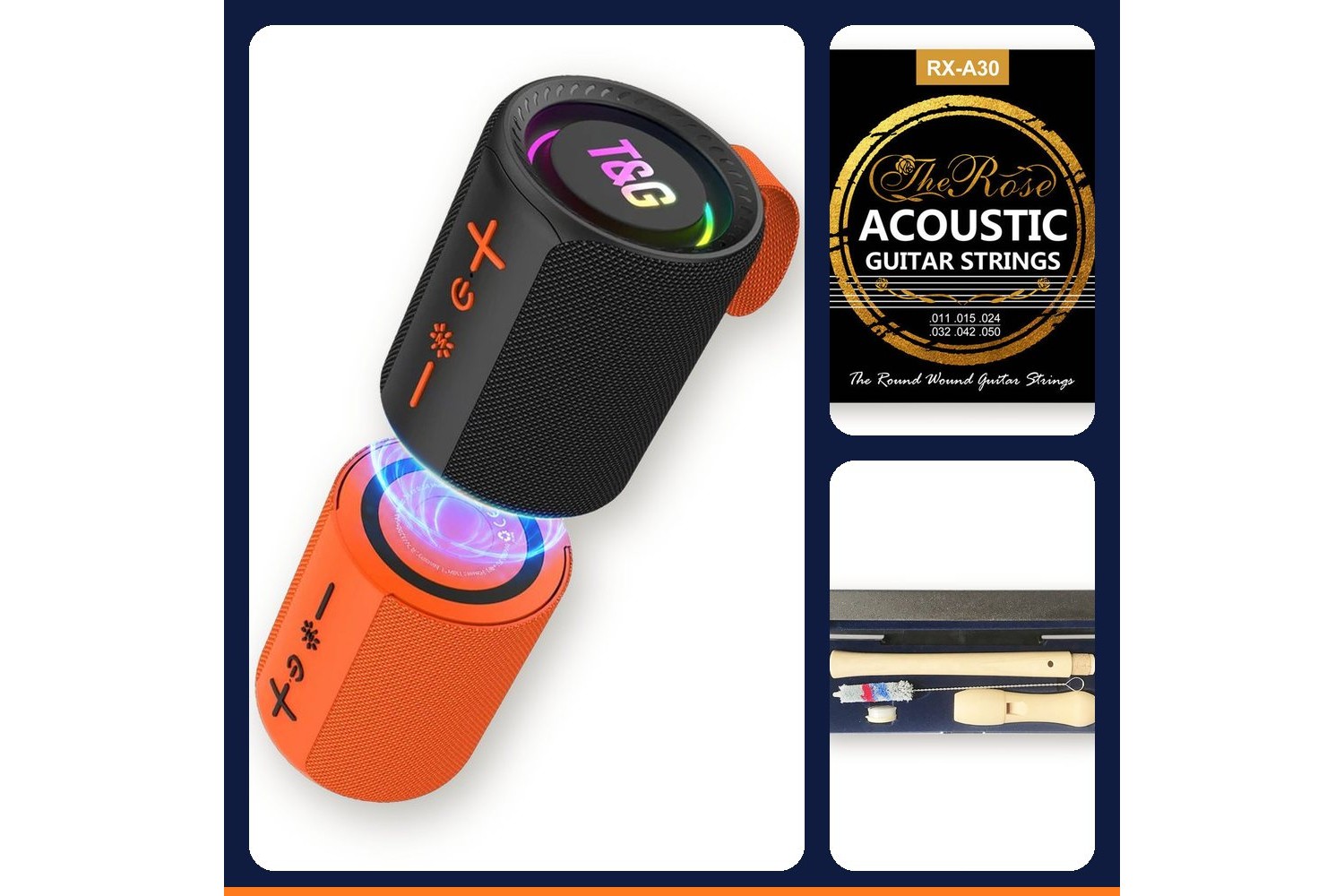
Your own brand of music products is best started with consumables and inexpensive beginner instruments: strings, recorders, microphones for home use and for filming. Here the customer chooses not by a maker's name but by a clear description and neat packaging, so there is room for a new brand. The first step is a logo and your own packaging on a ready-made product; a model of your own comes later. Below: which items to choose, how to handle the name and packaging, and how to get from sample to batch.
In brief
- Products with repeat purchase and a simple choice suit a brand: strings, teaching instruments, microphones, portable speakers.
- Three levels: a logo on a ready-made product, your own packaging, production to your requirements (OEM/ODM).
- The name is checked for availability and registered as a trade mark – with a national office or with the EUIPO for the whole EU.
- The packaging carries the details of the manufacturer and the responsible person in the EU; electronics need CE and RoHS documents.
- Branding lengthens the lead time, so a batch for the school year or December is planned with a margin.
Why a brand in this niche
In expensive instruments a brand is built over decades, and a newcomer has no reason to compete with it. In consumables and teaching instruments the situation is different: on Amazon or eBay there are dozens of identical listings with a factory photo, and the customer goes by price and reviews. A brand provides the difference – your own photos, packaging and a name by which the product is found again.
The niche has two particular features. The first is repeat purchase: strings are changed regularly, and a guitarist who liked a set looks for it by the name on the packet. The second is recommendation: a teacher names a specific instrument to pupils, and the school orders it by the class. A product with a name and consistent quality is easy to recommend. Music schools and studios can be offered a teaching set under your brand.
Which products in the niche suit your own brand
There are three criteria: the product is bought repeatedly or on recommendation, there is room for branding on it or on the packaging, and the quality can be checked on a sample.
In the Musical instruments category, strings are the best start. Here the packaging carries the brand: a packet or box with the gauge, the material and your name. The product is compact, cheap to ship and sells all year.

Acoustic guitar strings: the packet with the gauge carries the brand, and repeat purchases follow the name.
The recorder suits a brand focused on learning. The logo goes on the case and the insert, and the set includes what a pupil needs from the first lesson.

Recorder in a case: the basis of a teaching set that a teacher recommends to the whole class.
Microphones suit a brand with a clear specialism: parties at home or video filming. A karaoke model is bought as a gift, so the box does as much work here as the product itself.

Karaoke microphone: a body with room for a logo and a gift box that sells the product from the shelf.
Bluetooth speakers are the next stage. Under your name you are responsible both for the electronics documents and for customers' questions about connection, so they are added once the brand is already selling.

Detachable speaker in two halves: a distinctive design that helps the brand stand out among similar models.
Three levels: logo, packaging, OEM/ODM
The first level is a logo on a ready-made product. The method depends on the material: printing on plastic and fabric, engraving on metal and wood, embossing on faux-leather cases. This is the fastest route, available on the platform for more than 8,000 items; the terms are set out on the Private Label page.
The second level is your own packaging: a packet, box or case in your design, an insert with instructions, labelling for the market. For strings and small accessories the packaging matters more than a logo on the product: it is what people see in the display case and in the listing photo.
The third level is production under the OEM/ODM model: your own set of gauges, body colour and material, contents of the set, case construction. It is the step to take when reviews show what ready-made models lack. The deeper the changes, the larger the batch and the longer the preparation.
Name and trade mark
The name should be easy to pronounce in the languages of your markets, should not describe the product directly and should not resemble the names of well-known instrument makers or their models. Before ordering packaging, check whether the name is taken: public trade mark databases, marketplaces, domains. A mark can be registered with a national office – for one country – or with the EUIPO, in which case protection covers the whole EU. The choice of classes and the filing are best left to a trade mark attorney. On some marketplaces a registered mark gives access to brand protection tools; check the terms on the platform itself.
Packaging and labelling
The packaging of a music product should answer the questions the customer would otherwise ask the seller: gauge and material of the strings, tuning and fingering of the recorder, connector and compatibility of the microphone, battery life of the speaker. The texts must be in the language of the country of sale. Keep statements about sound verifiable: describe the material and construction rather than promising 'studio quality'.
Under the General Product Safety Regulation (GPSR), the product or packaging carries the details of the manufacturer and the responsible person in the EU. For microphones and speakers, CE marking, RoHS compliance and the rules for batteries are added; request the documents behind the marking from the manager before payment. If an instrument is aimed at young children and sold as a toy, find out which requirements apply to it.
From sample to batch
- Sample. Complete the wholesale registration, choose items and ask the manager for a sample or a small trial batch – this is arranged individually. Check the product in use: tuning, sound, build, packaging after transport.
- Artwork. Prepare the logo as a vector file and the packaging design; the manager confirms the branding method and permitted dimensions with the manufacturer.
- Approval. Approve the artwork, contents, quantity and deadline; receive a quotation and a pro forma invoice.
- Production. After payment, the batch is made with your branding and packaging.
- Inspection. Before dispatch the batch passes quality control: conformity with the artwork, completeness, working electronics.
- Delivery. After dispatch you receive a tracking number and documents; build the delivery terms and the 20–60 day lead time into the plan together with the time for artwork and production.
What the budget consists of and common mistakes
The brand budget consists of the batch of goods, branding and packaging, artwork preparation, samples, delivery, trade mark registration, and photos and sound recordings for the listings. The minimum order value is 500 EUR net per item; an order under your own brand starts at 5000 EUR.
- Starting with OEM without testing demand on a ready-made product with a logo.
- Ordering packaging before checking the name – and redoing it after registration is refused.
- Launching a wide line at once instead of two or three items that are easy to reorder.
- Not checking the sample by ear and by hand: reviews of music products are about sound and tuning.
- Leaving the artwork and production stage out of the plan and receiving the batch after the school year has begun.
Frequently asked questions
Which product should a brand start with?
With strings or a teaching instrument. They are inexpensive, bought repeatedly or on a teacher's recommendation, and need no electronics documents. Microphones and speakers are added as the next step.
Can a logo be applied to a small batch?
It depends on the product and the branding method. The manager states the minimum quantity in the quotation; for printed packaging it is usually higher than for a logo on a ready-made product.
Must the trade mark be registered before the first batch?
Checking the name is essential – before ordering packaging. It is best to file as early as possible, because registration takes time. Discuss the details with a trade mark attorney.
How much does branding lengthen delivery?
Artwork approval and production are added to the indicative lead time of 20–60 days. The exact time depends on the product and is stated in the quotation, so a batch for September or December is planned well ahead.
Choose two or three items in the section of products for musical instrument shops, check samples and start with a logo and packaging. If there is no shop yet, first read the article on how to open a musical instrument shop.
