
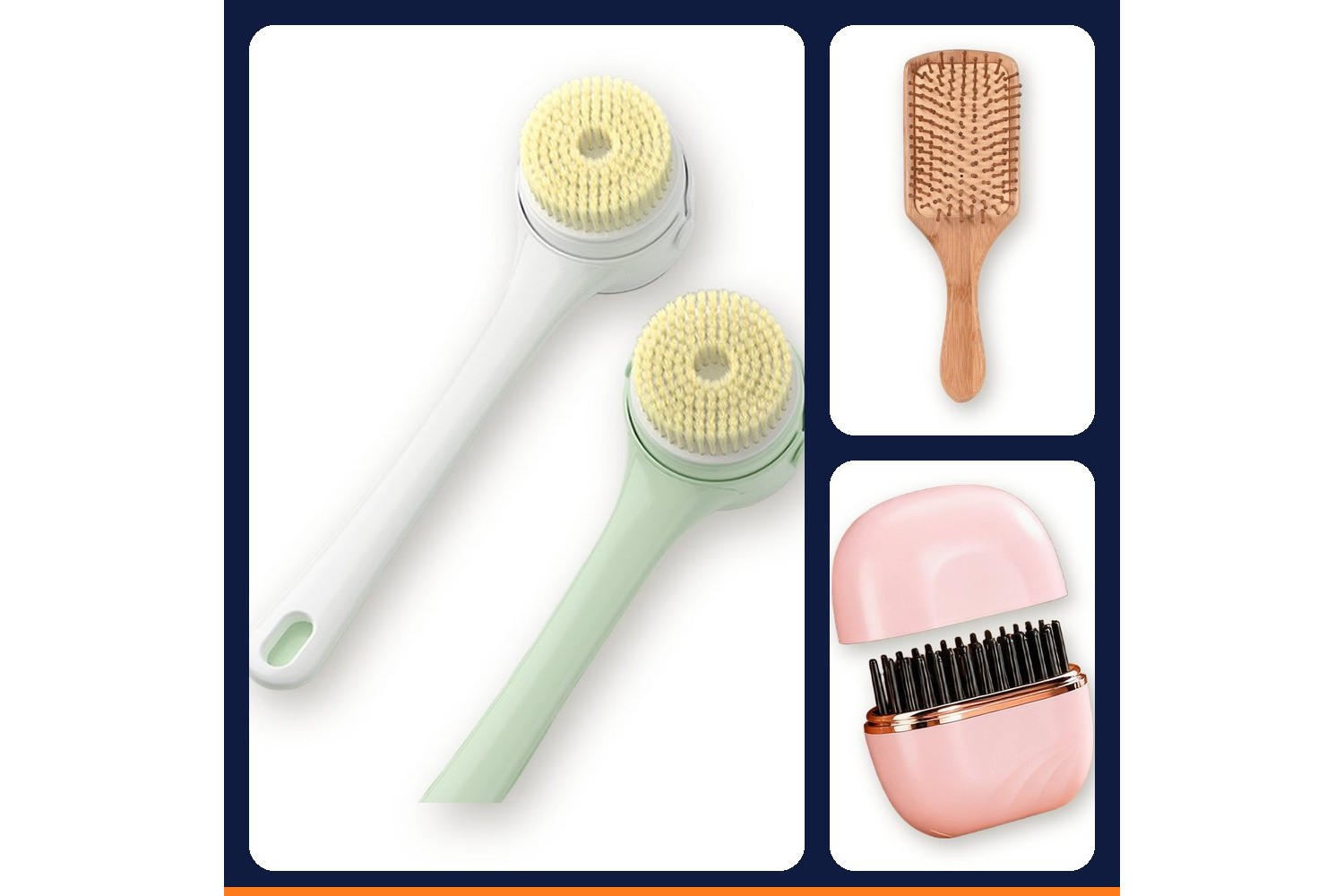
The easiest way to launch your own brand in beauty is not with jars and bottles but with what sits next to them: brushes, mirrors, hairbrushes, care textiles. These products need no formula development and none of the procedures that go with it – a finished item, a logo and well-considered packaging are enough. Below: which lines to choose, how to approach the name and the box, and the stages on the way to a first batch.
In brief
- Brushes, mirrors, hairbrushes, towels and turbans, and tools suit a brand well: no shelf life and no formulation requirements.
- There are three levels: a logo on a finished item, your own packaging, and production to your specification (OEM/ODM).
- The name is checked for availability and registered as a trade mark – with a national office or with the EUIPO for the whole EU.
- Packaging states the manufacturer and the responsible person in the EU; powered appliances also need the CE mark.
- Cosmetic products under your own name are a separate project with dedicated EU rules – do not combine it with the accessories launch.
Why a brand matters in beauty
In this sector people buy with their eyes. An unnamed brush in a clear bag and the same brush in a neat box with a logo are seen as products of different classes, although the bristles and handle are identical. A brand turns a scatter of small items into a line: a mirror, brushes and a turban in one style make a gift, and a gift is bought more readily than a single item.
On Amazon, eBay or Etsy, a name removes direct price comparison and gives the buyer a reason to come back to you specifically. For a beauty salon or a stylist, an accessories line brings extra revenue and works as a reminder: the client holds a brush with your logo every day. For a shop, a brand means stock the neighbour does not have.
Which products suit your own brand
Look for items with a flat surface for decoration, a clear purpose and year-round demand.
Makeup brushes. The logo goes on the handle, but the packaging does most of the work: a case, tube or box turns a few brushes into a set with its own name.

A fan brush in four colourways: a handle for the logo and a ready-made part of a branded set.
Mirrors. The lid of a pocket mirror is a ready-made print area, and the product works equally well at retail and as a corporate gift.

A hand mirror with space for a logo: a low-cost brand carrier that is carried every day.
Textiles. Embroidered towels, turbans and face-wash headbands are bought by salons, spas and studios – for work and for resale to clients.

Terry towels with an embroidered logo: the basis of branded textiles for a salon or spa.
Wooden and bamboo hairbrushes and combs. Engraving on a natural material looks premium and does not wear off, and the material itself supports a ‘natural’ brand image without loud claims.

A bamboo hairbrush: a wide handle for engraving and an everyday product.
Styling appliances under your own brand are also possible, but as a second step: they need documents, instructions and testing in use. The catalogue also contains make-up marked ‘for private label’, yet placing a cosmetic product on the market under your name brings different obligations – more on that below.
Three levels: logo, packaging, OEM/ODM
The first level is decorating a finished product. The method depends on the material: printing on plastic, engraving on metal and wood, embossing on the faux leather of cases, embroidery on textiles. Branding is available for more than 8,000 catalogue items; the process is described on the Private Label service page.
The second level is your own packaging with labelling for the market: a box, a case, a paper band around a towel, an insert. In beauty this often matters more than the logo itself: the product is chosen on the shelf and photographed for social media in its packaging.
The third level is OEM/ODM manufacturing: your own handle and bristle colours, set composition, mirror shape, towel size and weight. It comes once the line is selling and it is clear what should change in the existing models. The deeper the changes, the larger the batch and the longer the preparation.
Name and trade mark
A good name is short, reads the same in the languages of your markets and does not describe the product literally – descriptive words are hard to protect. Avoid resemblance to well-known cosmetics brands: there are many in this sector, and claims from rights holders are routine. Before printing packaging, check the name in public trade mark databases, on marketplaces, and among domains and social media accounts.
A mark is registered with a national office if you trade in one country, or with the EUIPO – then protection covers the whole EU. It is best to draw up the list of classes with a trade mark attorney and to consider straight away whether appliances or cosmetics will join the line later.
Packaging and labelling
Under the General Product Safety Regulation (GPSR), the product or packaging must carry the details of the manufacturer and the responsible person in the EU. Powered appliances additionally need the CE mark and RoHS compliance, and rechargeable models the symbols required by EU battery rules. Ask the manager for the documents behind the labelling before payment: when your name is on the box, questions from platforms and authorities come to you.
Keep the front to the name, the product type and one key property – bristle material, size, fabric composition. Texts are needed in the language of the country of sale. Do not credit an accessory with anything that belongs to cosmetics or medicine: a brush applies a product; it does not ‘rejuvenate’.
If you later decide to release cosmetic products under the brand, bear in mind that in the EU they are regulated separately, with requirements on composition, labelling and the responsible person. Prepare that project with a specialist and discuss the documents with the manager before ordering.
From sample to batch
- Sample. Select the items and agree a sample or a small trial batch with the manager – this is arranged case by case. Assess bristles, seams, the mirror surface, the smell of materials.
- Artwork. Supply the logo as a vector file and lay out the packaging on the manufacturer’s template.
- Approval. Confirm the position and size of the decoration, colours and texts. No changes are made after approval.
- Production. It starts once the pro forma invoice is paid; the artwork and manufacturing stage extends the usual lead time.
- Inspection. Before shipping, the batch undergoes a quality check – list in advance what to look at: logo sharpness, completeness of sets, condition of boxes.
- Delivery. After dispatch you receive a tracking number and documents; the delivery time is an estimated 20–60 days.
What the budget consists of, and common mistakes
The budget covers the batch itself, decoration, packaging design and printing, samples, delivery, trade mark registration, and photos and copy for listings. Set aside funds for a second run separately: in beauty, customers come back for a product they liked, and an empty shelf wipes out the effort of the launch.
Frequent mistakes:
- starting with a dozen lines rather than a set of three or four items in one style;
- choosing a name that resembles a known brand and printing packaging before checking it;
- economising on the box: in this sector it sells as much as the product does;
- attributing a cosmetic or therapeutic effect to accessories;
- launching cosmetics and accessories as one project without understanding the requirements for cosmetics;
- ordering a gift line for the holidays with no time margin for artwork.
Frequently asked questions
What is the minimum run for a product with a logo?
It depends on the item and the method; the manager states the exact quantity in the quotation. The platform’s general condition is an order from EUR 500 net.
Can I start with packaging only, without a logo on the item?
Yes. For brushes, files and other small tools, a branded case or box often replaces decoration of the product itself: the brand is visible and preparation is simpler.
How much time does branding add?
The artwork, approval and production stage is added to the estimated 20–60 days. Decorating a finished item takes less time than custom packaging or changes to the product; the manager gives the specific lead time.
Can I release a lipstick or blusher under my own brand?
Technically yes, but that is a cosmetic product with dedicated EU requirements. It is not the place to start: build the accessories line first and move on to cosmetics with specialist advice and a full set of documents.
Choose three or four items in the section of products for cosmetics and perfume shops, check the name and request a quotation. Wholesale registration unlocks prices, and questions about decoration can be sent via the contact page. If the shop is not open yet, start with the article on opening a cosmetics and accessories shop.
