
The easiest way to start your own fashion accessories brand is with an item where the label shows at once: a scarf with your own print, a hat or gloves with a patch, a card holder with engraving. Choose one or two groups, keep them in a shared palette, add a label and packaging, and you have a capsule that can grow from season to season.
In brief
- In accessories the logo sits on the item itself: print, patch, sewn-in label, engraving, embossing.
- Start with a capsule of one or two groups in a single palette, not with the whole range.
- Check the name and file a trade mark application before labels are produced.
- Fibre composition is mandatory on textiles; GPSR details go on the item or packaging.
- A seasonal collection under your brand is ordered earlier than usual: artwork and production are added to the lead time.
Why a brand matters in accessories
An accessory is worn in plain view, so the brand on it works like advertising: the patch on a hat is seen in the street, the scarf in photos. At the same time the item is technically simple, and a shopper has little to tell one knitted hat from another beyond colour, fit and name. A brand gives the choice a meaning and means you need not compete on price alone.
There is a practical reason too. Accessories are bought as sets: a hat with gloves, a scarf with a scrunchie. When pieces share a label and a palette, the set puts itself together. Finally, seasonality: without a brand you start from zero every autumn, while a shopper who remembers the name comes back for the new colour. On marketplaces, goods under your own brand are easier to set apart from identical offers; check the brand registration terms in the rules of the platform, such as Amazon or Etsy.
Which products suit your own brand
A brand sits best on items made to order with your artwork. The first group is neckerchiefs and scarves: digital printing allows your own design, which itself becomes the mark of the brand.

Square neckerchief with custom digital print: your own design as the basis of the capsule.
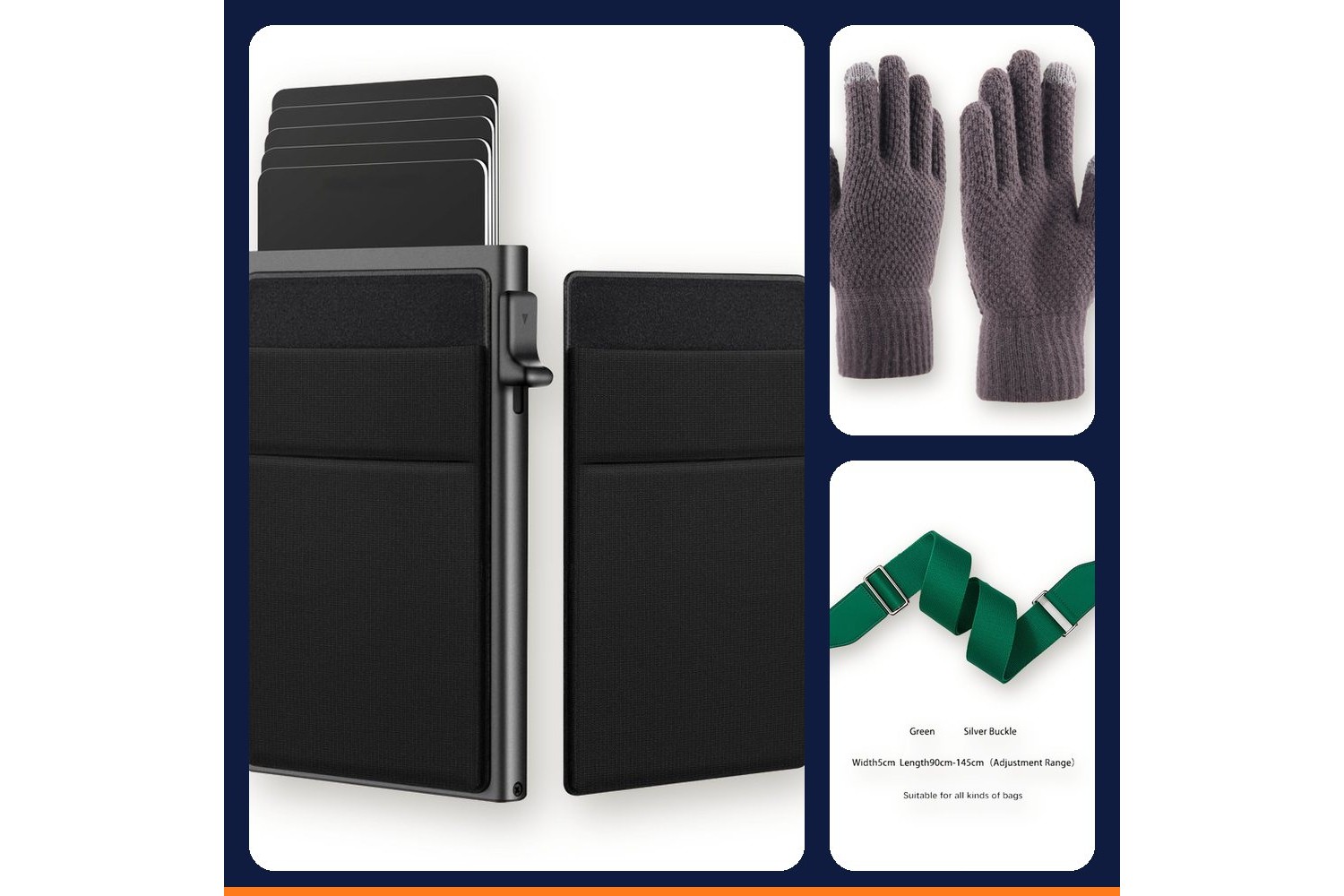
The second is gloves: knitted models have room for a patch, and the colour is matched to the hat.

Warm touchscreen gloves with a logo patch: a ready basis for a winter line.
The third is hats. A cuffed beanie is a familiar carrier for a logo: a patch or embroidery on the cuff is visible and does not get in the way.

Ribbed cuffed beanie in ten colours: a wide palette from which a brand collection is built.
The fourth is wallets and card holders: metal is usually engraved, PU embossed. This is a year-round gift line that balances the seasonal textiles.

Metal card holder with money clip: a year-round gift item in a line under your own brand.
Be careful with items where fit matters and with sunglasses: separate requirements apply to them, and they are not the place to start a brand.
Three levels: logo, packaging, OEM/ODM
A logo on stock goods. Patch, embroidery, sewn-in label, engraving or embossing: the material decides the method. At EnjoyCommerce, private label covers more than 8,000 items; a manager will say which option is available for the chosen model and from what quantity.
Your own packaging. A card swing tag, a band for a hat, an envelope for a scarf, a box for a card holder. Accessories are packaged more modestly than jewellery, but the tag has to hold composition, care and labelling details, so plan it as part of the design.
OEM/ODM. Your own knit pattern, your own yarn colours, an original buckle, a scarf in a non-standard size. Production to your requirements is justified once the capsule has shown demand: the run is larger and the lead time longer.
Name and trade mark
Test the name in embroidery: a long word in small letters blurs on a patch, and fine lines of a logo get lost in the thread. A short name and a simple mark win. Make sure the name is free: search the databases of the national office and the EUIPO, domains and accounts.
A mark is registered with the national office for one country or with the EUIPO for the whole EU. File before ordering labels and patches. Prints need particular care: do not use third-party characters, logos or recognisable house patterns. The rights belong to their owners, and you will answer for any infringement.
Packaging and labelling
For textile products the label states the fibre composition in the language of the country of sale; shoppers expect care symbols too. Under the General Product Safety Regulation (GPSR), the goods or packaging must carry the details of the manufacturer and of the responsible person in the EU. When goods go out under your brand, discuss with the manager and a legal adviser whose details to state.
Check the label text against the manufacturer's documents: the composition on the tag must match the actual one. For metal parts that touch the skin, ask for documents on nickel. All this is done before the batch is paid for, together with artwork approval. A sewn-in logo label and a composition tag are different carriers: the first builds recognition, the second holds the mandatory information.
From sample to batch
- Capsule. Settle on two or three models and a palette, then write to a manager. A sample or a small trial batch is by agreement.
- Artwork. Supply the logo in vector format, the print design at the required resolution and the label texts. The manager will confirm file requirements and the minimum run with the manufacturer.
- Approval. Sign off yarn or fabric colours, patch size and position, and the print proof. A shade differs between screen and fabric, so go by the sample.
- Production. It starts once the pro forma invoice is paid. Artwork and manufacturing are added to the usual lead time.
- Batch inspection. At the quality control stage, evenness of embroidery, colour match, label stitching and completeness are checked.
- Dispatch. You receive a tracking number and documents; how delivery within the EU works is set out on a separate page.
What the budget is made of and common mistakes
The budget covers the batch itself, decoration (patches, embroidery, print, engraving), labels and tags, packaging, delivery, trade mark registration, a shoot of the collection and a reserve for reordering popular colours. The calculation depends on the method and the run and is prepared by the manager.
- Launching ten colours at once: the run is split up, and leftovers in unpopular shades sit for years.
- Approving a print on screen, without a sample on fabric.
- Ordering a winter collection in September: with artwork and production it will arrive after the first cold.
- Using other people's recognisable motifs in a print.
- Forgetting composition and care on the tag and relabelling a finished batch.
Frequently asked questions
Patch or embroidery for hats and gloves?
A patch is easier to approve and looks the same on different colours; embroidery looks more integrated but renders fine detail less well. The manager confirms the options and minimum quantities for the model.
Can a scarf be ordered with my own design?
Yes, for models with custom digital printing. You will need a design file to the manufacturer's requirements and approval of a proof. The rights to the image must be yours.
When should a winter collection under my brand be ordered?
Seasonal goods are ordered 2–3 months ahead, and branding adds time for artwork and production. The winter line is therefore discussed with the manager in spring or early summer.
Is separate packaging needed if the logo is already on the item?
A box is not essential, but a tag is almost always needed: it carries composition, care, labelling details and price. For gift items such as card holders, a box noticeably improves presentation.
Start with a capsule of two or three models, test it on your own customers and widen the palette according to actual sales. Items for the line are in the section of products for fashion accessory shops; launching the outlet itself is covered in the article how to open a fashion accessories shop.
