
A dealer's own brand is not a sticker over the factory one; it is a decision to stand behind a machine with your own name. The buyer of a walk-behind tractor under your brand will come to you with questions, parts requests and warranty claims – not to a factory they have never heard of. That is why a brand is launched once sales, service and parts stock are already in place. Below: which machinery to start with, how the branding levels differ, which documents to request before payment and what you must provide after the sale.
In brief
- An own brand makes sense once the dealer knows demand by model and can service machinery.
- Start with one or two fast-selling models and the tools for them, not a full line.
- CE documents for the machine – declaration of conformity, test reports, instructions – are requested before payment, not after the batch arrives.
- Whoever sells a machine under their own name takes on responsibility for it – clarify the scope of obligations with a certification specialist.
- Parts and service under the brand are an obligation to the buyer for years, not an option.
Why a dealer needs an own brand
The first reason is escaping direct comparison. The same factory model is sold by several dealers and online shops, and the buyer compares them on price. A model under your brand, with your specification and warranty, has nothing to be compared with directly.
The second is that parts sales come back to you. The owner of a machine of your brand searches for parts by its name and finds you. Parts stock turns from a cost into a steady sales channel.
The third is control over specification. You decide which wheels, tines and hitch come as standard, based on the soils and habits of your region, and drop what gets replaced after purchase anyway.
The fourth is independence from a single supplier. The brand belongs to you; if the factory changes its terms, the line can move to another producer while the name and the customers stay. There is a flip side: every complaint is addressed to you as well.
Which machinery suits an own brand
Choose what you already sell, know how to repair and know the fast-moving parts for. Whether a specific model can be produced under your mark is confirmed with the manager.
Walk-behind tractors. The brand's main machine: it is seen in the field, the nameplate is visible, and tools are bought for it. A platform with several power versions is convenient – one line under one name. Models are in the “Walk-behind tractors” category.

A diesel walk-behind tractor in three power versions – the type of machine dealers usually start an own-name line with.
Cultivators. The brand's entry item for hobby gardeners. They sell singly every day and make the name familiar quickly. Cordless models need separate attention to battery documents. The range is in the “Cultivators” category.

A cordless mini cultivator with two types of tines – a volume item through which hobby gardeners remember the brand.
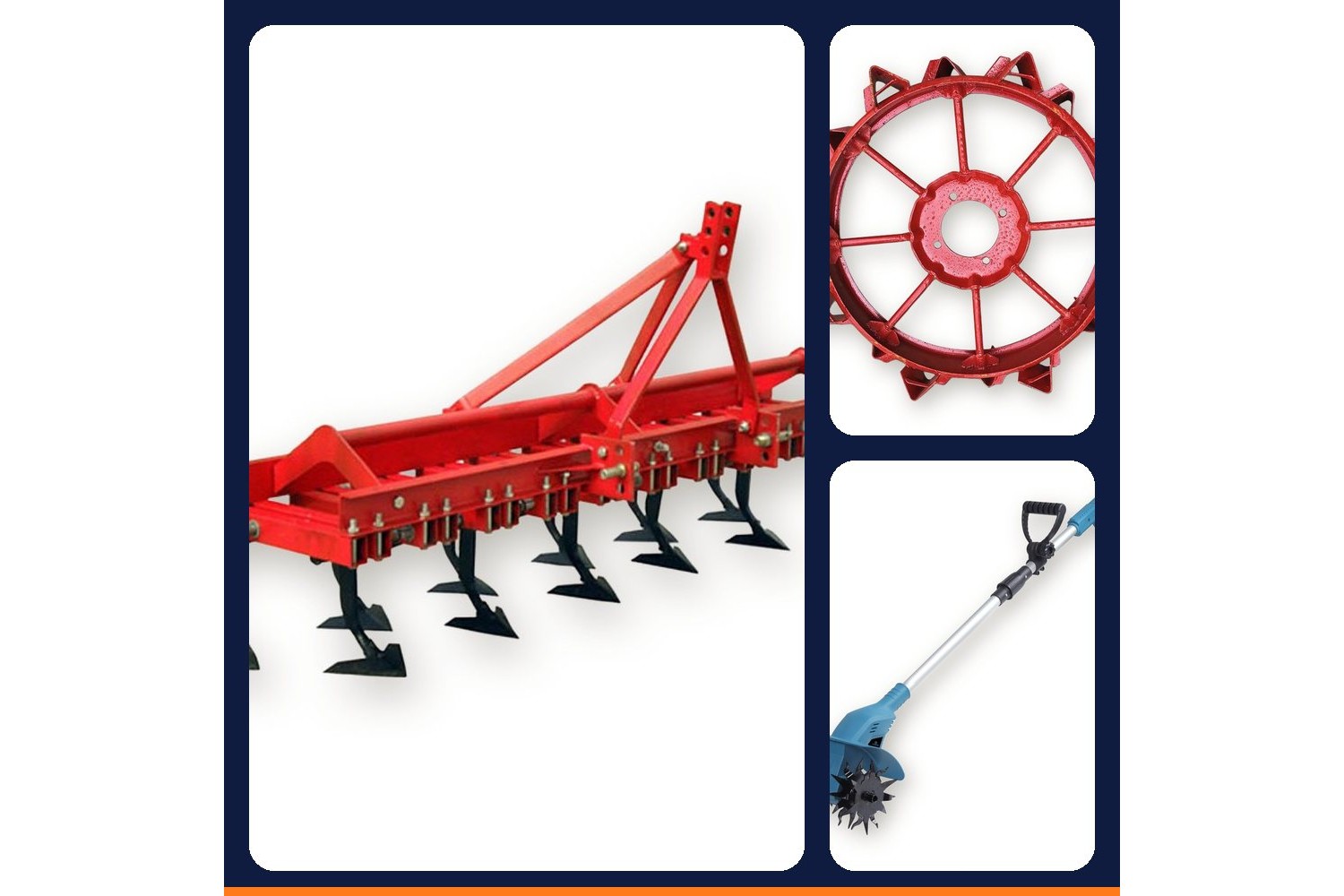
Implements. The simplest entry: implements have fewer assemblies that need servicing and a long life. Colour and a nameplate make them part of the line, and a tractor buyer adds tools of the same brand. The category is “Implements”.

A trailed disc harrow is an example of an implement that extends the dealer's machinery line in the brand colour.
Three levels: logo, packaging, OEM/ODM
Logo on a finished product. A nameplate, engraving or print of your mark on a series model – depending on the material and as agreed with the manufacturer. It is a quick way to test how the market takes the name. The terms are on the Private Label page.
Your own packaging and document set. Transport packaging with your mark, instructions and a warranty card in your design, market-specific marking. For machinery this level matters more than it seems: the manual and the parts catalogue are part of the product.
OEM/ODM. A machine to your requirements: colour, specification, wheels, hitch, controls. The batch is larger and the lead time longer, but the model can no longer be bought from the dealer next door. The process is described on the OEM/ODM page.
Name and trade mark
The name must be easy to read on a nameplate and to say over the phone: parts will be searched for by it. Avoid names resembling well-known tractor and engine makes – a direct route to a claim. Do not use other makers' names in descriptions either; compatibility of parts with other manufacturers' machinery is stated only as compatibility.
Check the name in the databases of the national office and the EUIPO. A mark is registered with the national office or with the EUIPO for the whole EU. The application is filed before nameplates and packaging are ordered; a trade mark attorney will advise on the classes.
Packaging, marking and CE documents
This is the main difference between machinery and most goods. Machines are sold in the EU with CE marking, a declaration of conformity and instructions in the language of the country; the machine must carry a data plate. Engines are subject to emission requirements, outdoor equipment to noise requirements, cordless models to the rules for batteries and electrical equipment. Tractors that go on public roads are subject to separate approval rules.
Ask the manager before payment for: the declaration of conformity for the specific model, test reports, a sample data plate and the instructions. Check that the model and specification in the documents match the order. When your name is on the machine, you generally take on the manufacturer's obligations; which documents must be issued in your name should be clarified with a certification specialist before the batch is launched. The product or packaging shows the manufacturer and the responsible person in the EU.
Parts and service as an obligation
Towards consumers the seller bears the legal guarantee under national rules, and under an own brand there is no one to pass it on to. Before the first sale the following must be ready: a parts catalogue with numbers, a stock of fast-moving items from the “Spare parts” section, a workshop or a service contract, and a complaints procedure. Order a parts kit with every batch of machines and ask how long the manufacturer is prepared to supply parts for the model.
From sample to batch
- Complete wholesale buyer registration and send a request: model, quantity, specification requirements, mark file.
- A sample or a small trial batch is arranged with the manager. Assemble the machine in your workshop, work with it, strip the assemblies that fail most often.
- Artwork: position of the mark, colour, data plate, instructions, packaging.
- Checking the CE documents and agreeing the parts list for the batch.
- Pro forma invoice, payment by bank transfer in EUR or PLN, production.
- Quality control before dispatch: completeness, marking, conformity with the artwork.
- Dispatch with a tracking number; the indicative time is 20–60 days, and branding extends it. Details are on the delivery page.
What the budget consists of and typical mistakes
The budget consists of trade mark registration, the sample and its testing, artwork and translation of the manual, certification advice, the batch of machines, the parts stock for it, delivery and a reserve for warranty cases. The minimum order value is EUR 500 net.
- Launching a brand without service and parts.
- Paying for a batch without receiving the documents for the model.
- Starting with a wide line instead of one proven machine.
- Not testing the sample at work.
- Ordering the spring batch in February.
- Choosing a name that sounds like a well-known make.
Frequently asked questions
From what batch size is an own brand possible?
It depends on the model and the level: a logo on a series product is available at smaller volumes than a design change. The manager will give the terms for a specific item.
Who counts as the manufacturer?
It depends on whose name is on the machine and in the declaration. Discuss this with the manager and a certification specialist before ordering.
Can a mini tractor be produced under an own brand?
Technically it is the same OEM, but the approval rules for tractors are more complex. It is wiser to start with walk-behind tractors and implements.
When should the order for the spring season be launched?
Seasonal goods are ordered 2–3 months ahead, and branding adds artwork and production: plan from the autumn.
Start with one model you know down to the last bolt and put together a request in the “Agri Dealers” section. If the shop is only just opening, first read the article “How to open a small farm machinery and parts shop”.
