
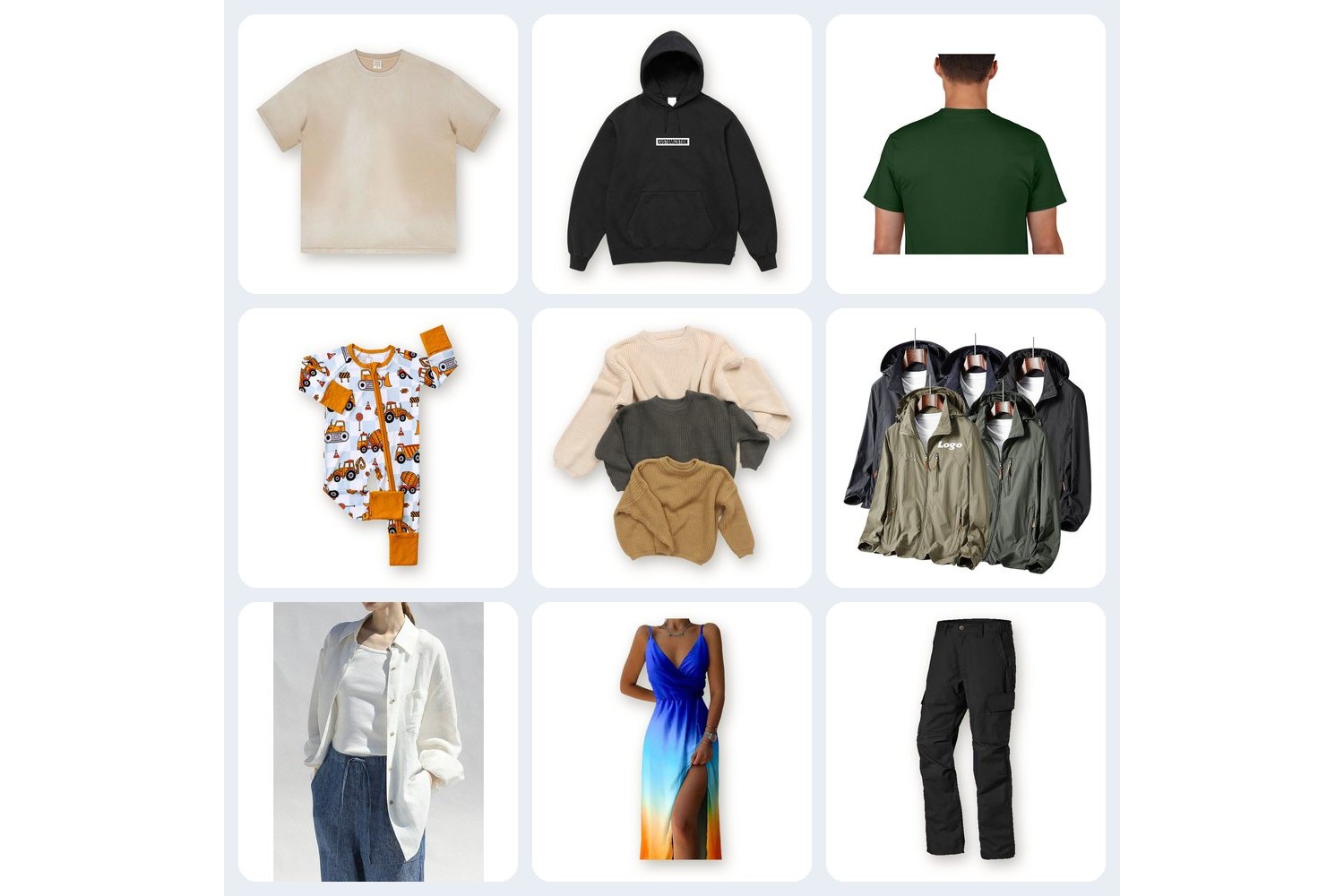
In 2027, what sells best in wholesale clothing is a clear basic range: a heavyweight plain T-shirt, a loose-fit hoodie, a light windbreaker, soft knitwear for babies. Buyers look at fabric composition and weight more closely than at the print, and companies order the same basics with their own logo. Below are six directions visible in the EnjoyCommerce catalogue and in general demand, with product examples and advice on testing each one with a small batch.
In brief
- Heavyweight cotton and relaxed fits remain the core of an everyday range.
- Plain garments for decoration are bought by clubs, cafés and companies – in runs, not single pieces.
- In childrenswear, soft fabric and an easy fastening decide; the composition label is the first thing parents read.
- Every factory has its own sizing: ask for the measurement chart in centimetres before ordering.
- Clothing is seasonal: a collection is ordered 2–3 months before sales begin.
Clothing trends for 2027
1. Heavyweight cotton and oversized fits
A T-shirt in heavy jersey keeps its shape and is not see-through, so fabric weight in grams per square metre has become as strong an argument as colour. A relaxed cut forgives an imprecise size choice, which means fewer returns. A washed finish gives a soft, muted shade with no print at all. Put the fabric weight and composition in the listing title. Models are in the T-shirts and sweatshirts subcategories.
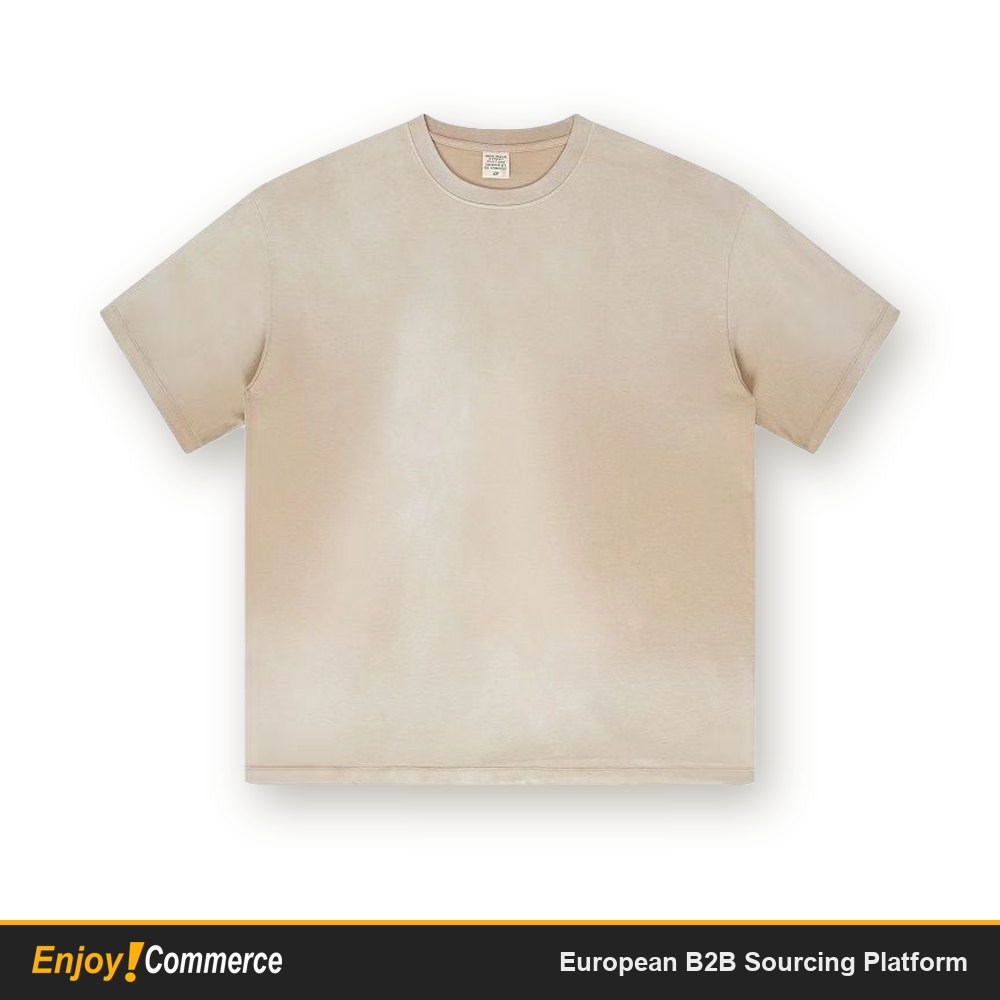
Men's washed oversized T-shirt in 240 gsm cotton: a heavyweight basic for an everyday line.

Oversized hoodie in 500 gsm cotton with custom colour and print: heavy jersey for your own collection.
2. Blank basics for printing
Sports clubs, cafés, schools and event organisers order clothing with their own artwork in small runs. They need a plain garment with a smooth surface and a wide size range, so the whole team can wear one model. For the seller, such a basic brings repeat orders: the client comes back for the same item. Decoration can be done in-house or ordered from the factory as Private Label, together with your own sewn-in label.

Plain cotton T-shirt in sizes XS–5XL: one model for the whole team, for print and embroidery.
3. Soft knitwear for babies
Clothing for the first years is chosen by touch and by composition: bamboo fibre, cotton, flat seams. The zip on a sleepsuit matters more than the pattern, because it saves time at changing. Knitted cotton pieces are often bought as gifts and need neat packaging. Check how the fibre is declared: “bamboo” usually means viscose made from bamboo, and that is how it is stated on the label. The range is in the children's clothing section.

Baby zip sleepsuit in bamboo fibre, 0–3T: a soft piece for every day and for gifting.

Kids' oversized knitted sweater in 100% cotton: warmth without scratchy wool.
4. A light jacket for the whole year
A thin nylon windbreaker covers the months between seasons, cool summer evenings and travel: it weighs little and fits into a backpack. Unisex models simplify buying – one size run instead of two. Smooth chest and back panels take a logo well, which is why the windbreaker is bought as staff uniform and as merchandise. See the jackets subcategory.

Unisex nylon windbreaker with a detachable hood, ready for a logo: staff uniform and merchandise.
5. Linen and loose summer shapes
In summer, shoppers look for fabrics that stay cool and cuts that do not restrict movement: a linen-blend shirt worn over a vest top, a long strappy dress. A linen blend creases less than pure linen – explain this in the description. A wrap dress suits different figures, and several prints of one model let you build a display from a single item. Models are in the dresses subcategory.

Women's oversized linen-blend shirt in three colours: a summer piece also worn as a cover-up.

Strappy wrap maxi dress with a slit, 8 prints: one model fills a summer display.
6. Cargo trousers and workwear in town
Trousers with patch pockets in sturdy twill left the building site and the warehouse long ago: they are worn in town, while workshops and service businesses buy them as uniform. A wide choice of colours lets you sell one model to private customers and to companies. Check the sizing: such trousers often follow US sizes by waist in inches. Items are in the workwear section.

Men's twill cargo trousers in 10 colours: for town and as uniform for a workshop or warehouse.
How to test a trend with a small batch
The minimum order value at EnjoyCommerce is EUR 500 net per item. For clothing, a trial order means two or three models in a full size run, not ten models in one size.
- Choose two or three directions and one model in each, in one or two basic colours.
- Register as a wholesale buyer and ask for each model's measurement chart in centimetres: chest width, body length and sleeve length. Compare it with the sizing your customers know – Asian sizes often run smaller than European ones.
- Split the batch unevenly across sizes: more of the middle sizes, one or two pieces of the outer ones. Adjust the ratio after the first sales.
- Wash one piece of each model as the care label says and measure it again: check shrinkage, colour and seams.
- Compare the sewn-in label with the declared composition and note which sizes come back and why.
When to order: seasonality and timing for 2027
The indicative delivery time is 20–60 days, and the cost of delivery is calculated per batch. Print, embroidery and your own label add an artwork and production stage; early in the year, allow for the factory break at Chinese New Year.
- Spring and summer – dresses, linen, windbreakers. Order in December–January so that stock arrives by March–April.
- Autumn and winter – hoodies, sweaters, beanies, down jackets. Order in June–July.
- Back to school – children's basics and sets. Order in May–June.
- Blank basics – sell all year round; count back from the date of the event.
Frequently asked questions
What must a clothing label show in the EU?
Textile products state their fibre composition in the language of the country of sale; buyers also expect care symbols. Under the EU General Product Safety Regulation, the product or its packaging carries the details of the manufacturer and of the responsible person in the EU. Childrenswear has separate requirements, for example for cords and small parts. Ask the manager for documents and a label sample before payment; before dispatch, the batch goes through quality control.
How do I avoid sizing mistakes?
Do not rely on the letters S, M and L: different factories attach different measurements to them. Ask for the chart in centimetres, compare it with garments that already sell well for you and publish it in the listing. Confirm children's sizes by height, not only by age. A sample or a small trial batch is available by agreement with the manager.
Can I order my own colour, print or label?
Yes, many models are available with print, embroidery, a sewn-in label and branded packaging. Send the manager your artwork, colours and quantities per size, and they will confirm the minimum quantity and lead time with the factory. Branding lengthens delivery, so order a seasonal collection with a logo earlier than usual.
The bottom line
The clothing trends of 2027 are heavyweight cotton basics, garments for decoration, soft children's knitwear, light jackets, linen and cargo. Open the “Clothing” section, pick models for a trial batch and write to the manager, who will prepare an offer with prices and lead times.
